
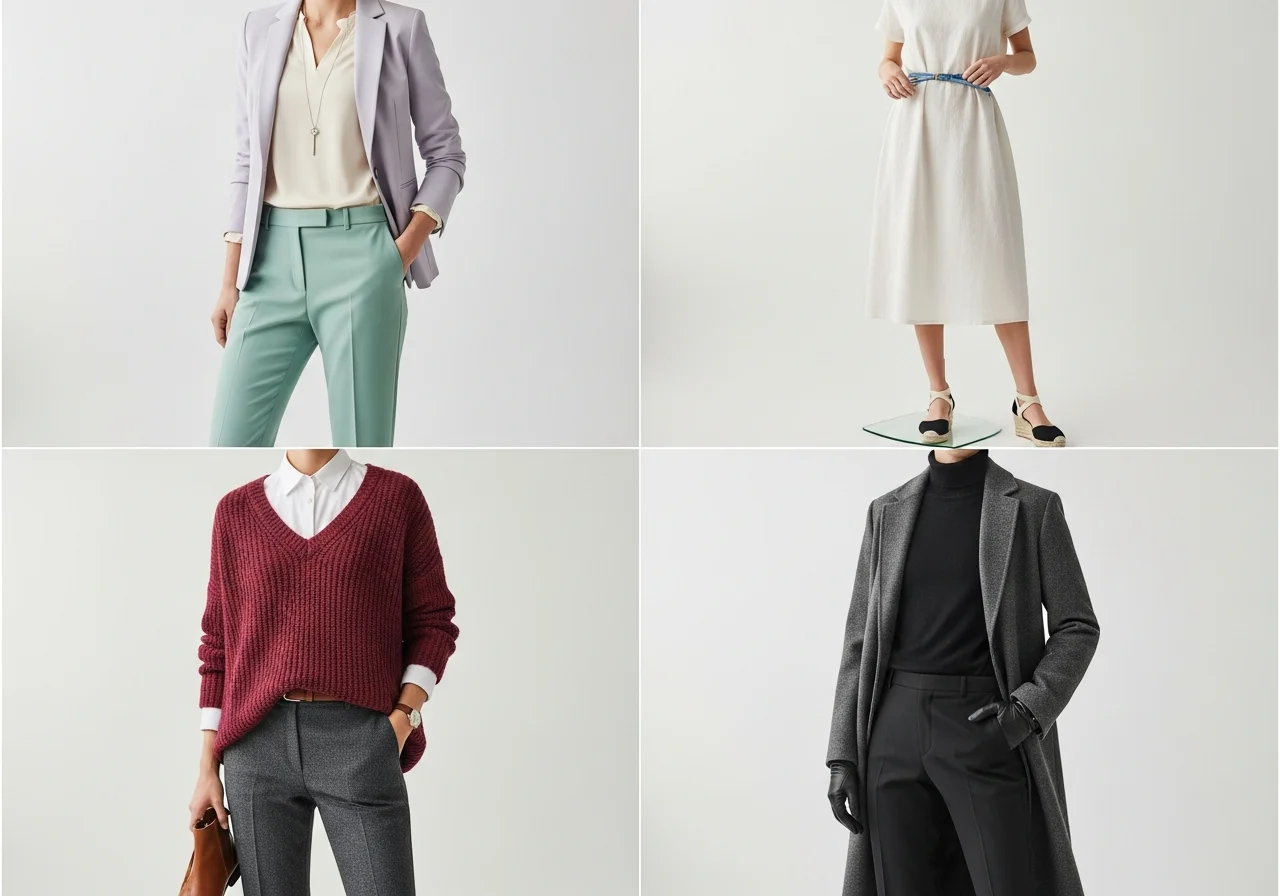
The Ultimate Guide to 15 Work Outfits for Every Season
- Dressing for work has evolved dramatically over recent years. The traditional boundaries between formal and casual have blurred, creating a landscape where personal style meets professional expectations. Whether you face icy winter mornings or sweltering summer afternoons, building a versatile collection of work outfits that transitions seamlessly through every season requires strategic planning and smart wardrobe choices.
This comprehensive guide explores how to create polished, professional looks regardless of temperature changes, office environments, or personal style preferences. From understanding dress codes to mastering the art of seasonal layering, you’ll discover practical strategies for assembling work outfits that make getting dressed each morning effortless rather than stressful.
Understanding Different Work Outfit Dress Codes
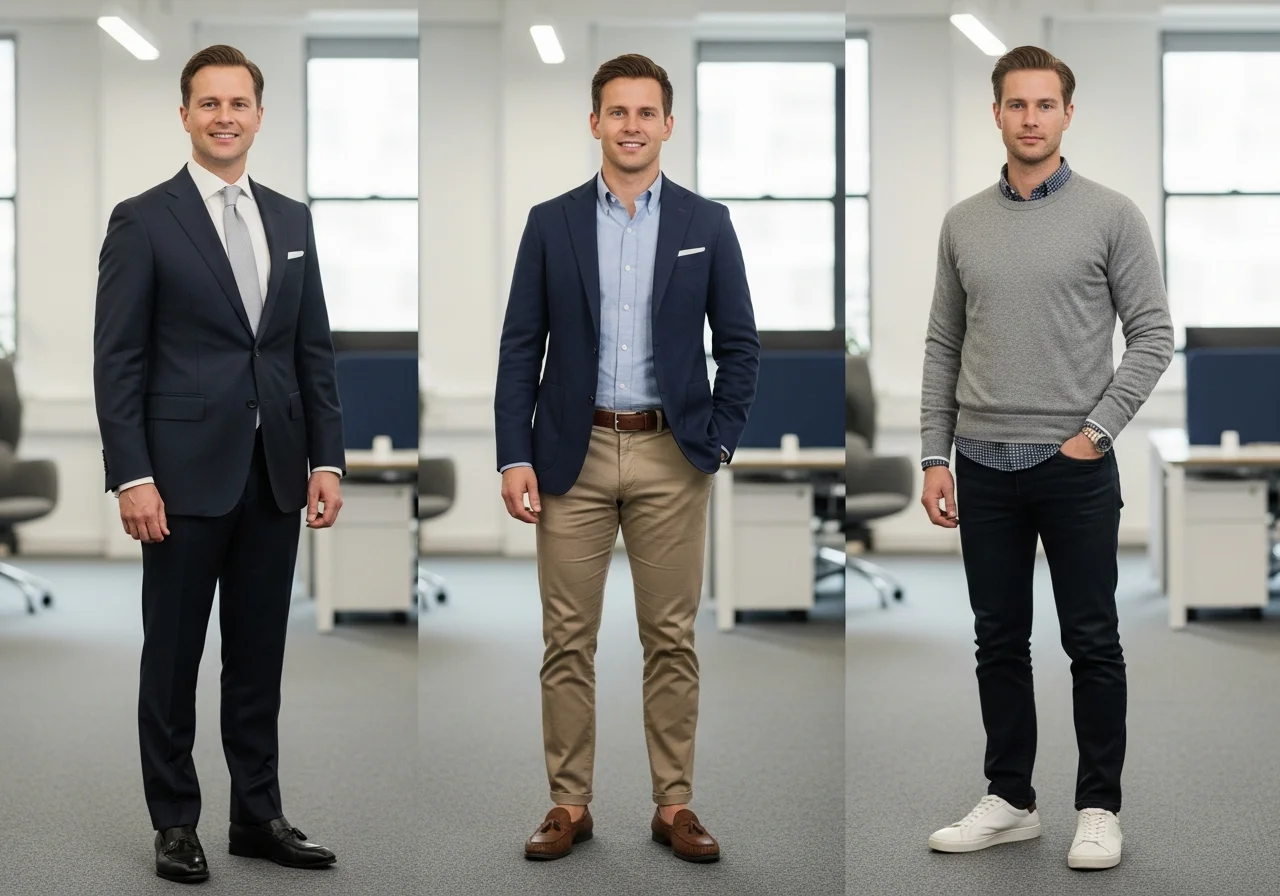
Before assembling your seasonal wardrobe, understanding your workplace dress code provides the foundation for appropriate work outfits. Most offices fall into one of three categories: formal business attire, business casual, or casual work environments.
Formal business attire traditionally requires structured suits, dress shoes, and conservative accessories. This dress code appears most commonly in corporate law firms, financial institutions, and executive-level positions. Business casual represents the middle ground where most modern offices operate, allowing greater flexibility while maintaining professionalism. Casual work environments permit jeans, sneakers, and relaxed pieces, though appropriate judgment remains essential.
The key to successful work outfits lies in recognizing where your office falls on this spectrum and dressing slightly above expectations rather than below them. When uncertain, observing what senior colleagues wear provides valuable guidance for calibrating your professional wardrobe appropriately.
Building Your Foundation with Work Outfit Essentials
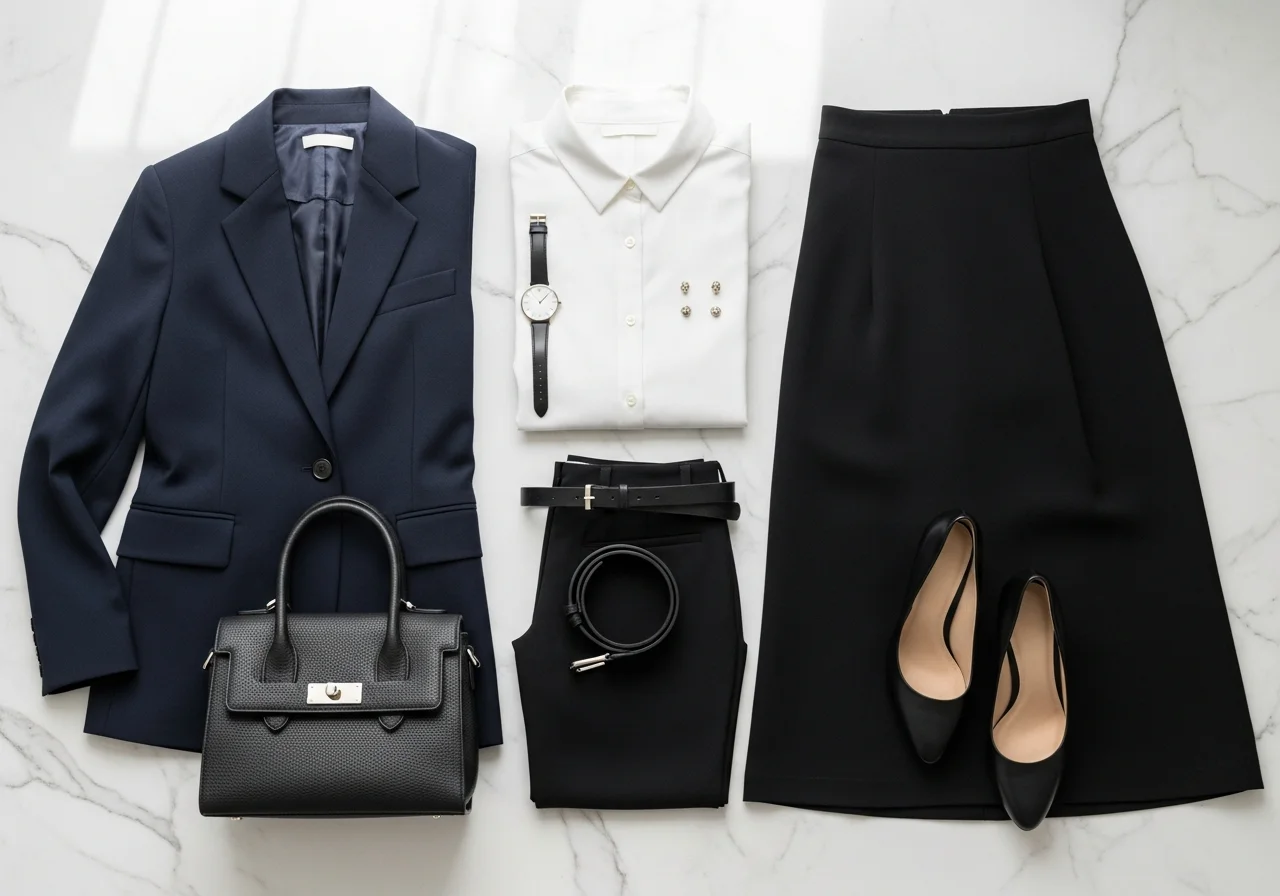
Creating effective work outfits for every season begins with establishing a solid foundation of versatile pieces. These wardrobe essentials form the backbone of countless outfit combinations, reducing decision fatigue while ensuring you always appear polished and prepared.
Quality tailored trousers in neutral colors like black, navy, and grey serve as reliable bottoms for professional settings. Wide-leg styles offer contemporary sophistication, while slim-fit options provide classic elegance. Investing in multiple fits allows you to adapt work outfits to different body types and personal preferences throughout the year.
Blazers represent perhaps the most transformative element in professional dressing. A well-fitted blazer instantly elevates casual pieces into acceptable work outfits. Consider maintaining at least three blazers in your rotation: one classic black or navy for formal occasions, one lighter neutral for transitional seasons, and one in an interesting texture or subtle pattern for adding personality to everyday work outfits.
Button-down shirts and blouses provide endless styling possibilities across seasons. White remains indispensable, but incorporating soft blues, subtle patterns, and quality fabrics creates visual interest in your work outfits. During warmer months, sleeveless or short-sleeved versions maintain professionalism while offering comfort.
Spring Work Outfits That Balance Fresh and Professional
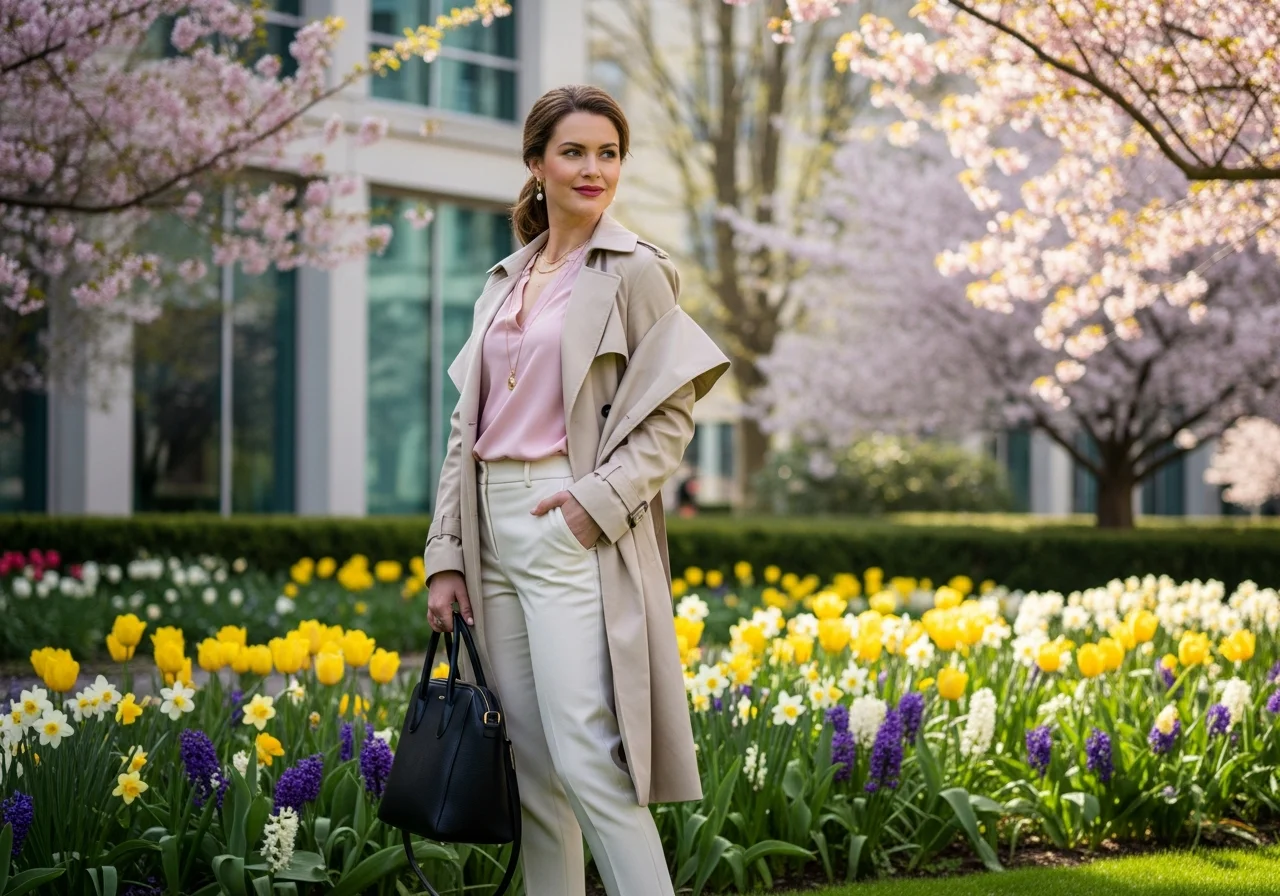
Spring work outfits navigate the tricky territory between lingering winter chill and emerging warmth. Layering becomes your best strategy during this transitional season, allowing you to adjust throughout the day as temperatures fluctuate unpredictably.
Light wool or cotton blazers provide perfect coverage for spring mornings without causing afternoon overheating. Pair these with midi skirts or ankle-length trousers for flattering proportions that work beautifully in professional settings. Incorporate pastel colors and soft neutrals that reflect the season’s freshness while maintaining workplace appropriateness.
Dresses offer excellent one-piece solutions for spring work outfits. Opt for knee-length or midi styles in lightweight fabrics like cotton or jersey blends. A sheath dress with a cardigan creates polished work outfits suitable for meetings, while shirt dresses provide relaxed professionalism perfect for casual Fridays.
Footwear choices expand during spring as closed-toe flats, loafers, and low-heeled pumps replace winter boots. Ballet flats have resurged in popularity, offering comfortable elegance that complements most spring work outfits. Keep a neutral pair at your desk for transitioning from commute shoes to office-appropriate footwear.
Summer Work Outfits That Stay Cool and Professional

Summer work outfits present the unique challenge of maintaining professionalism while combating heat. Breathable fabrics become non-negotiable, with linen, cotton, and moisture-wicking blends offering salvation during sweltering months.
Lightweight trousers in fabrics like linen-cotton blends provide structure without suffocating in high temperatures. Wide-leg styles promote air circulation better than fitted options, making them ideal for summer work outfits. Stick with neutral colors or subtle patterns that hide wrinkles, as linen naturally creases throughout the day.
Sleeveless blouses and shell tops form the core of summer work outfits, but ensure shoulders and undergarments remain appropriately covered. Layering a lightweight blazer or cardigan provides options for over-air-conditioned offices while maintaining the flexibility to remove outer layers when transitioning outdoors.
Summer dresses deserve special consideration in warm-weather work outfits. Choose styles with modest necklines and appropriate lengths, typically hitting at or below the knee. Structured fabrics help dresses maintain professional shapes rather than clinging uncomfortably. Patterns and colors can be bolder during summer, bringing energy and personality to work outfits without crossing into inappropriate territory.
Fall Work Outfits Featuring Layered Sophistication

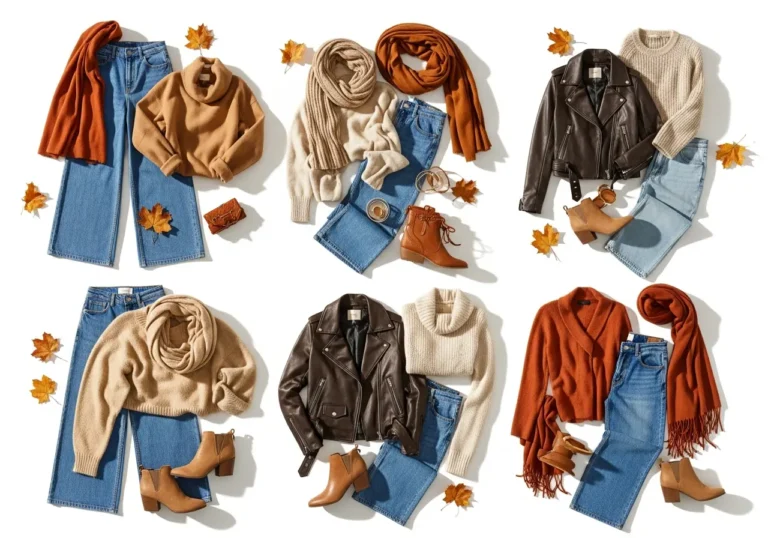
Fall work outfits embrace layering opportunities as temperatures gradually decline. This season rewards creativity in combining pieces, allowing you to showcase personal style while building practical warmth into professional ensembles.
Knit dresses paired with blazers or structured cardigans create quintessential fall work outfits. Turtleneck styles offer particular elegance, eliminating the need for additional neckwear while providing coverage against autumn breezes. Wear these with ankle boots or closed-toe heels for polished sophistication.
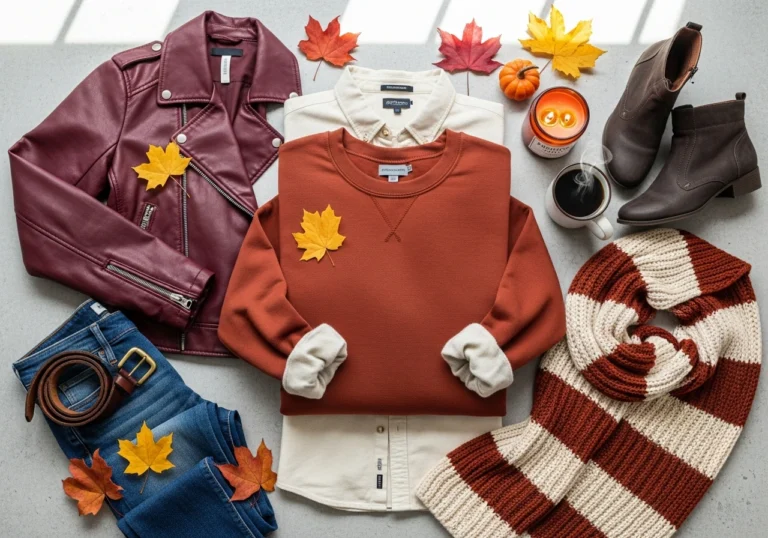
Trousers in heavier fabrics like wool blends become appropriate as fall deepens. Pair these with button-down shirts layered under sweaters or vests for dimensional work outfits that photograph well in professional settings. Earth tones, burgundy, and rich jewel tones reflect seasonal aesthetics while remaining workplace-appropriate.
The transition from summer to fall offers opportunities to reimagine existing pieces through different combinations. That white button-down worn alone during July gains new life layered under a camel sweater in October, demonstrating how strategic thinking extends your work outfits across multiple seasons without constant purchasing.
Winter Work Outfits Built for Warmth Without Bulk

Winter work outfits require careful consideration of insulation without sacrificing silhouette. Bulky layers create unflattering shapes and appear sloppy, while insufficient warmth leaves you uncomfortable during commutes and in drafty offices.
Wool trousers provide essential warmth for winter work outfits. Mid-weight wool with smooth finishes offers comfort without itchiness while maintaining crisp professional lines. These pair excellently with cashmere or merino wool sweaters that provide substantial warmth in surprisingly lightweight packages.
Layering becomes an art form in winter work outfits. Start with thermal underlayers when necessary, then build outward with structured pieces. Turtlenecks serve as excellent base layers under blazers, while cardigans can substitute for jackets in heated office environments. Quality fabrics matter significantly during winter, as cheap materials provide less insulation and wear poorly under friction from outerwear.
Outerwear deserves substantial investment for winter work outfits. A knee-length wool coat in a neutral color protects your professional appearance during commutes while providing versatility across multiple seasons. Structured styles that accommodate blazers underneath without restricting movement serve best for workplace needs.
Transitional Work Outfits for Between-Season Success
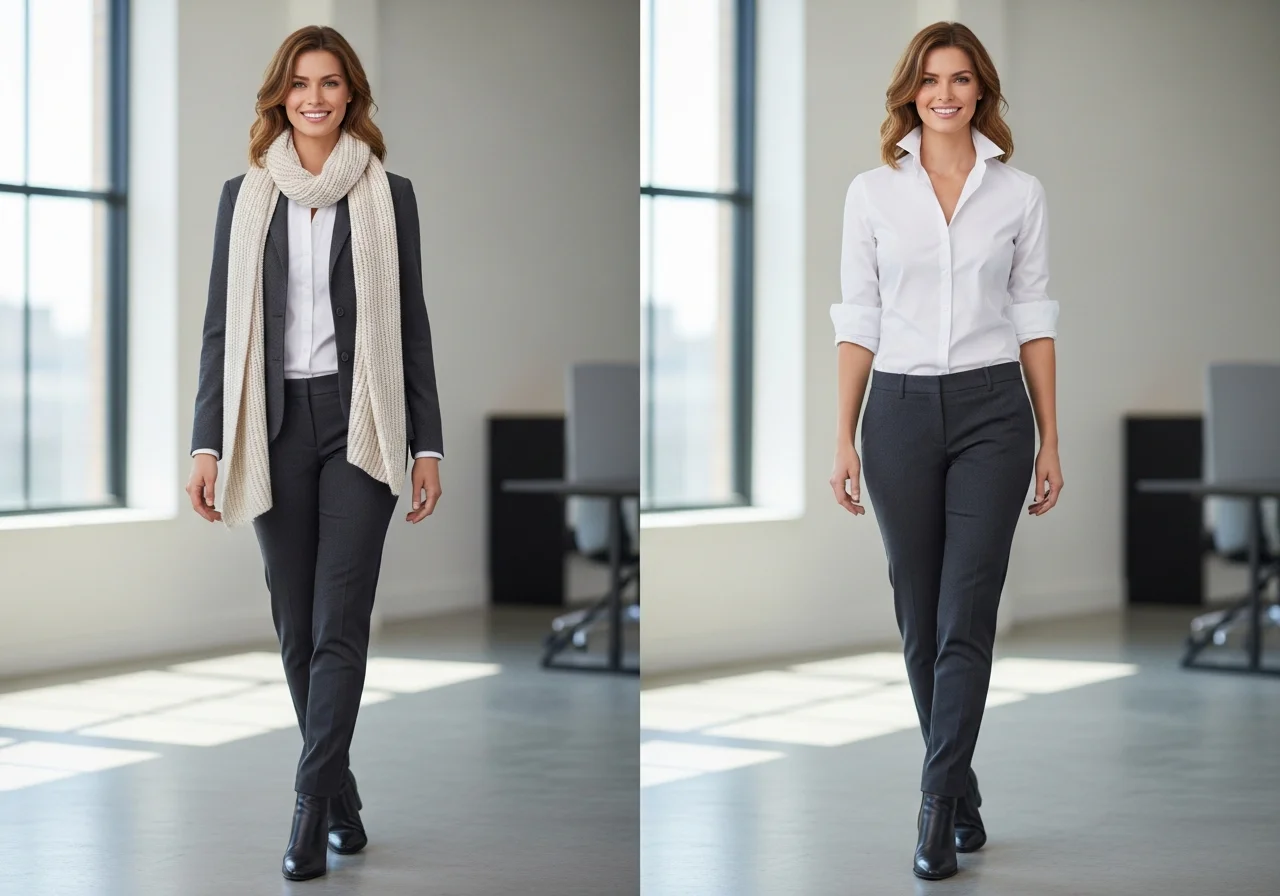
The weeks bridging major seasons often prove most challenging for work outfits. Morning frost gives way to afternoon warmth, requiring adaptable layers that function across extreme temperature ranges within single days.
Versatile pieces become heroes during transitional periods. Lightweight sweaters, three-quarter sleeve blouses, and layerable vests allow you to adjust work outfits throughout the day. Keep a blazer or cardigan accessible for temperature regulation in unpredictable office climates.
Tailoring represents the most effective tool for adapting work outfits to specific bodies. Off-the-rack pieces rarely fit perfectly, but simple alterations transform adequate clothes into excellent ones. Hemming trousers, adjusting sleeve lengths, and taking in waists costs relatively little while dramatically improving appearances.
Proportion awareness guides effective work outfits regardless of body type. Balancing fitted and relaxed pieces creates flattering silhouettes across all shapes. Pairing wide-leg trousers with fitted tops, or wearing structured blazers over flowing dresses, demonstrates this principle in action.
Consider fabrics carefully when selecting transitional work outfits. Cotton-blend knits, lightweight wool, and technical fabrics designed for temperature regulation perform best during these unpredictable periods. Avoid pieces that only function in specific weather conditions, instead prioritizing versatility for maximum wardrobe efficiency.
Accessorizing Work Outfits for Polish and Personality

Accessories transform basic work outfits into memorable professional ensembles. Strategic selections communicate attention to detail while allowing personality to emerge within workplace-appropriate boundaries.
Jewelry should enhance rather than dominate work outfits. Simple stud earrings, delicate necklaces, and classic watches project professionalism across all office environments. Reserve statement pieces for creative industries or casual Fridays where bolder choices align with company culture.
Footwear significantly impacts overall impressions created by work outfits. Quality shoes in good repair demonstrate professionalism and attention to personal presentation. Maintain several pairs in rotation to extend longevity while ensuring appropriate options for different seasonal conditions and outfit combinations.
Bags represent both functional necessities and style statements in work outfits. Structured totes or professional briefcases accommodate laptops and documents while complementing polished appearances. Neutral colors offer maximum versatility, though quality construction in any shade surpasses trendy but cheaply made alternatives.
Fabric Selection for Comfortable Work Outfits
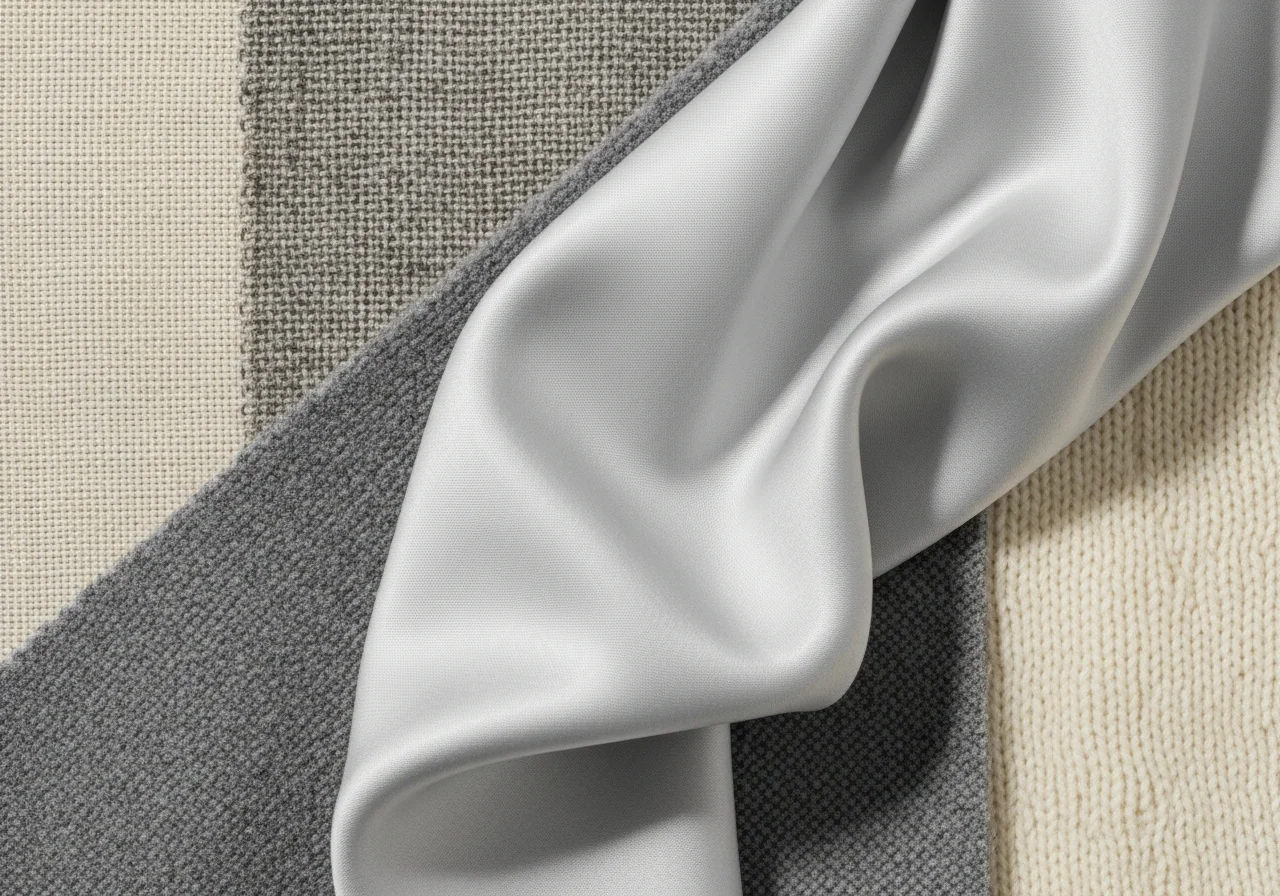
Fabric choices dramatically affect both comfort and appearance of work outfits. Understanding which materials perform best in different seasons ensures you feel as good as you look throughout workdays.
Natural fibers generally outperform synthetics for work outfits, offering superior breathability and temperature regulation. Cotton, linen, wool, and silk provide comfort across seasons when selected in appropriate weights. Cotton works beautifully for warm weather, while wool blends offer winter warmth without excessive bulk.
Technical fabrics have earned places in modern work outfits through innovations in moisture-wicking, wrinkle-resistance, and stretch. These perform particularly well in trousers and blouses, maintaining professional appearances despite long commutes or active workdays. Seek blends that incorporate small percentages of elastane for comfortable movement without sacrificing structure.
Avoid fabrics prone to wrinkling, pilling, or clinging when building work outfits. Your professional image suffers when clothes appear worn or unkempt by midday. Investing in quality fabrics reduces replacement frequency while ensuring consistently polished appearances.
Maintaining Professional Work Outfits Through Proper Care
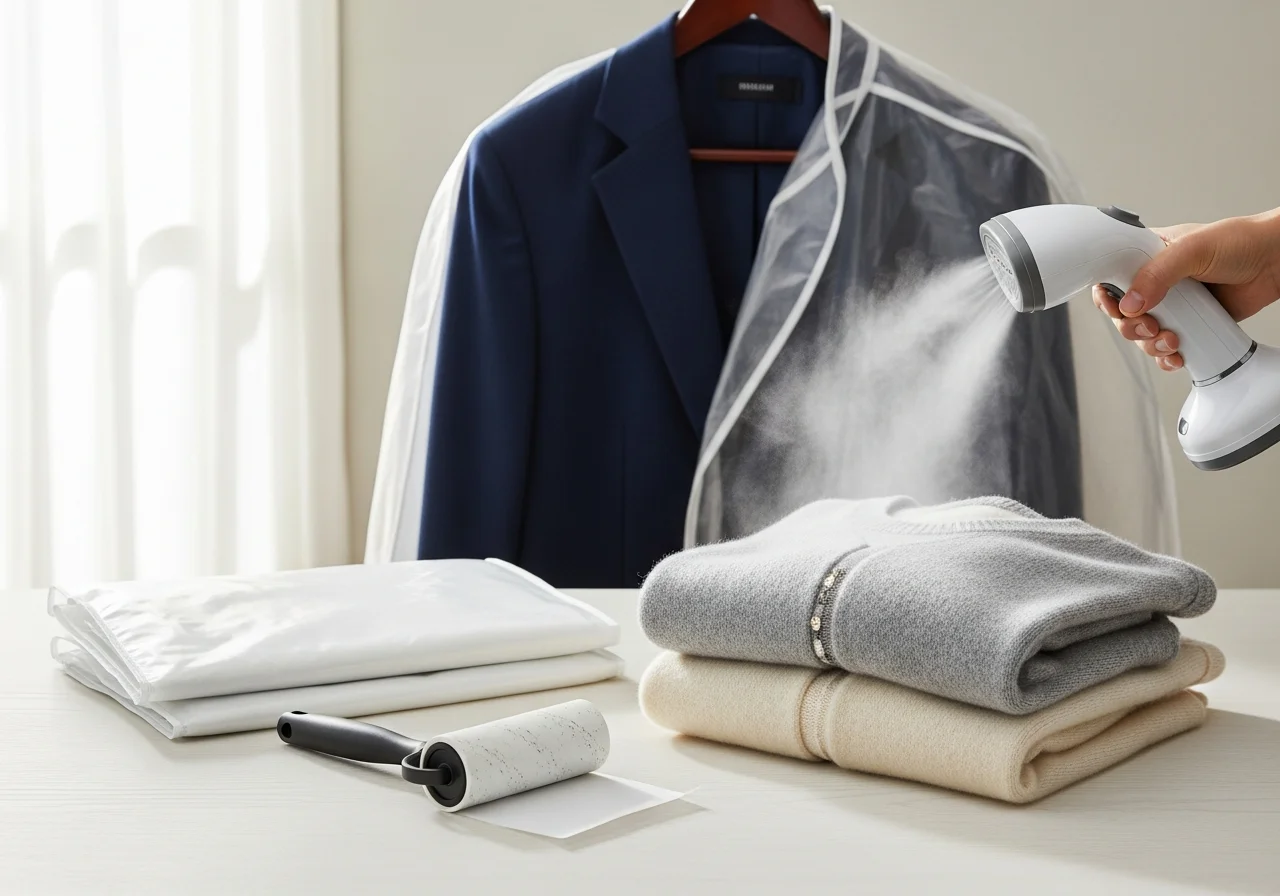
Even the most carefully selected work outfits falter without proper maintenance. Establishing care routines extends garment lifespans while ensuring clothes always present their best appearance.
Regular dry cleaning preserves structured pieces like blazers and wool trousers, though excessive cleaning damages fabrics over time. Spot cleaning and proper hanging between wears reduces cleaning frequency. Allow garments to air out fully before returning to closets, preventing odor buildup and fabric degradation.
Proper storage protects work outfits from unnecessary wear. Wooden hangers maintain garment shapes better than wire alternatives, particularly for blazers and dress shirts. Fold heavy knits rather than hanging them to prevent shoulder distortion. Cedar blocks naturally repel moths while adding pleasant scent to storage areas.
Addressing minor repairs immediately prevents small issues from becoming garment-ending problems. Replace loose buttons promptly, mend small tears before they expand, and maintain shoe soles before complete replacement becomes necessary. These small investments preserve work outfits significantly longer than neglecting maintenance.
Building a Capsule Wardrobe for Work Outfits
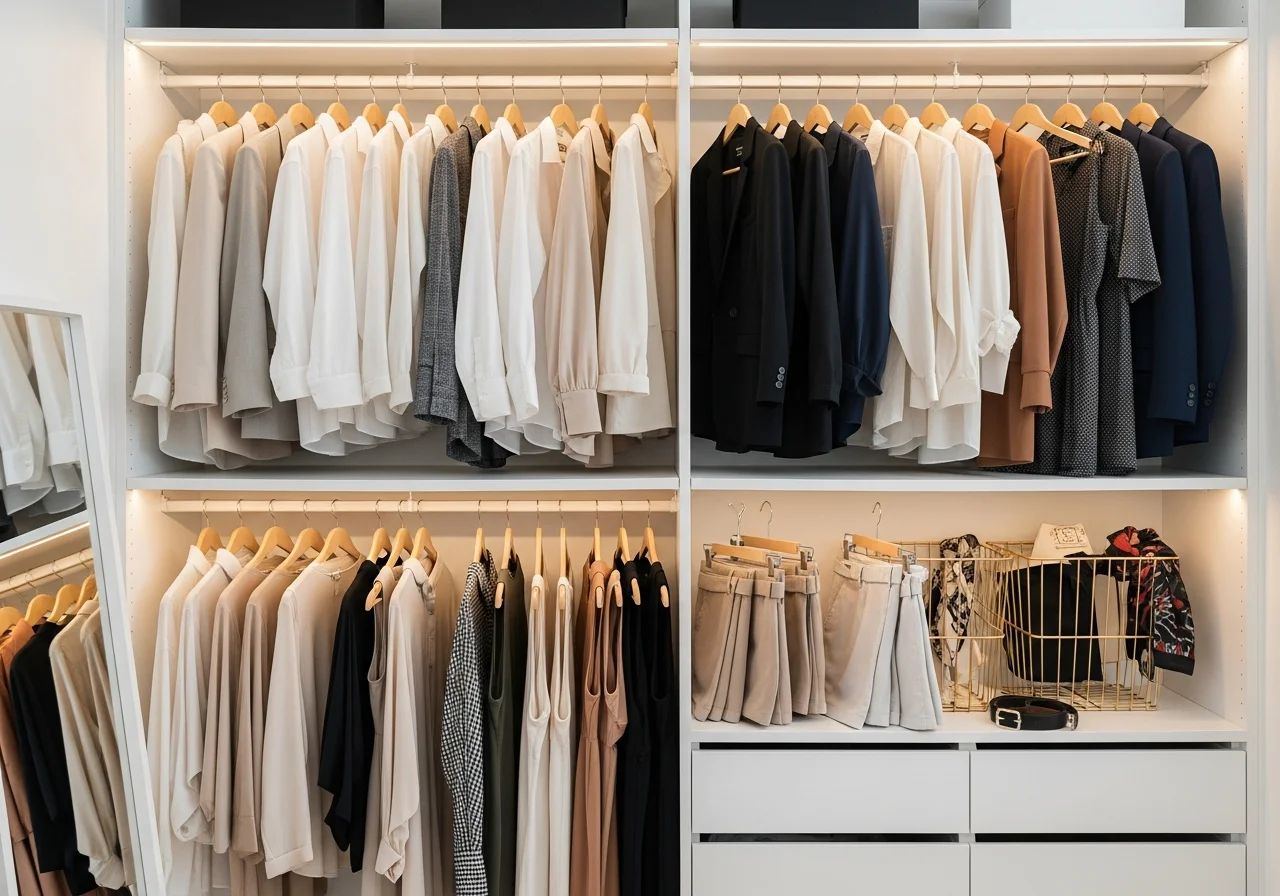
Capsule wardrobes streamline work outfits by focusing on versatile pieces that mix effortlessly. This approach reduces closet clutter while ensuring you always have appropriate options regardless of season or occasion.
Start with approximately thirty pieces including tops, bottoms, dresses, outerwear, and shoes. Select neutral foundations that pair with multiple items, then add personality through accent pieces and accessories. This ratio ensures adequate variety without overwhelming daily decisions.
Quality trumps quantity in capsule wardrobes for work outfits. Investing in well-constructed pieces that withstand frequent wearing provides better value than purchasing numerous cheap alternatives. Classic styles outlast trends, maintaining appropriateness across years rather than single seasons.
Regularly evaluate your capsule wardrobe, removing pieces that no longer fit, suit your current role, or align with personal style. Replace these thoughtfully rather than impulsively, ensuring new additions truly enhance existing work outfits rather than creating isolated pieces that rarely get worn.
Creating Work Outfit Formulas That Save Time
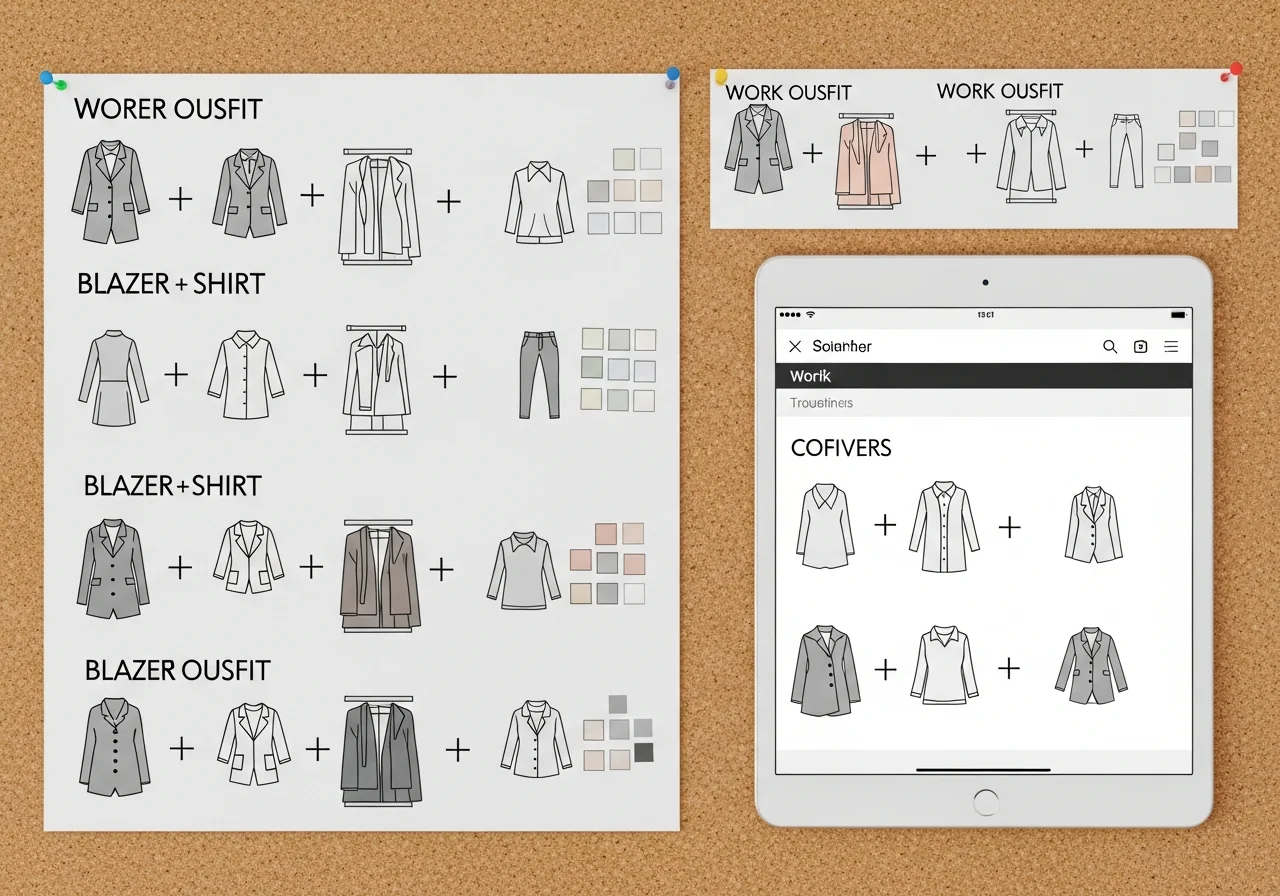
Establishing reliable outfit formulas eliminates daily decision fatigue while ensuring consistently polished work outfits. These tried-and-true combinations provide starting points that you can personalize through accessories, colors, and specific piece selections.
The classic corporate formula pairs a blazer with a button-down shirt and tailored trousers. This combination works year-round by swapping seasonal fabrics: linen blazers for summer, wool for winter. Smart casual Fridays benefit from knit polos paired with chinos and loafers, balancing relaxation with professionalism in comfortable work outfits.
For those preferring single-piece dressing, the seasonal dress formula offers simplicity. Shirt dresses dominate summer work outfits, while sweater dresses transition beautifully into fall and winter. Layering tights, cardigans, or blazers adjusts these pieces for appropriate coverage and warmth across temperature ranges.
Pattern mixing adds interest to basic formulas without requiring extensive wardrobe expansion. Striped shirts pair effectively with subtle plaid trousers, while printed blouses complement solid blazers. Keep patterns balanced by ensuring one remains dominant while others play supporting roles in your work outfits.
Adapting Work Outfits for Different Body Types

Successful work outfits flatter individual body types while maintaining professionalism. Understanding which cuts and proportions work best for your shape ensures confidence in every outfit.
Tailoring represents the most effective tool for adapting work outfits to specific bodies. Off-the-rack pieces rarely fit perfectly, but simple alterations transform adequate clothes into excellent ones. Hemming trousers, adjusting sleeve lengths, and taking in waists costs relatively little while dramatically improving appearances.
Proportion awareness guides effective work outfits regardless of body type. Balancing fitted and relaxed pieces creates flattering silhouettes across all shapes. Pairing wide-leg trousers with fitted tops, or wearing structured blazers over flowing dresses, demonstrates this principle in action.
Embrace cuts designed for your proportions rather than forcing trending styles that may not suit your shape. Petite individuals benefit from ankle-length pants and cropped jackets, while taller people wear longer hemlines and full-length coats beautifully. Work outfits should enhance rather than fight against natural proportions.
Staying Current While Maintaining Professional Work Outfits

Balancing current trends with workplace appropriateness challenges many professionals building modern work outfits. The goal involves appearing contemporary without seeming costume-like or inappropriate.
Incorporate trends through accessories and accent pieces rather than foundational garments. Trendy shoes, bags, or jewelry update classic work outfits without requiring complete wardrobe overhauls when styles shift. This approach maintains professionalism while demonstrating awareness of current fashion.
Observe how fashion-forward colleagues successfully integrate trends into work outfits. Learning from those who navigate this balance well in your specific workplace provides practical guidance more valuable than general style advice.
Remember that classic, well-tailored work outfits never truly go out of style. While adding contemporary elements keeps appearances fresh, the foundation should remain timeless pieces that project professionalism across years rather than months.
Conclusion
Mastering work outfits for every season requires strategic thinking, quality investments, and understanding how pieces work together across changing conditions. By building a foundation of versatile essentials, learning effective layering techniques, and adapting outfits to both seasonal demands and professional requirements, you create a wardrobe that serves you reliably throughout the year.
The most successful work outfits balance personal style with workplace expectations, comfort with polish, and trendiness with timelessness. Rather than viewing professional dressing as restrictive, embrace it as an opportunity to present your most confident self while navigating diverse seasonal challenges with prepared grace.
Remember that developing an effective collection of work outfits represents an ongoing process rather than a destination. As your career evolves, roles change, and personal style matures, your professional wardrobe should adapt accordingly. Regular evaluation, thoughtful additions, and proper maintenance ensure your work outfits continue serving you well across all seasons and situations.
Discover more trendy sweatpants outfit ideas!!
Frequently Asked Questions About Work Outfits
What are the essential pieces needed for a basic work outfit wardrobe?
The foundation includes tailored trousers in black and navy, a versatile blazer, button-down shirts in white and neutral colors, a professional dress, quality closed-toe shoes, and a structured bag. These pieces mix and match to create numerous combinations suitable for most office environments.
How can I transition work outfits between seasons without buying entirely new wardrobes?
Focus on layering strategies and fabric weights. Add cardigans, blazers, or light sweaters to summer pieces for fall, then incorporate heavier coats for winter. Store seasonal-specific items and rotate them as weather changes, maximizing use of transitional pieces that work across multiple seasons.
Are jeans acceptable for work outfits in business casual environments?
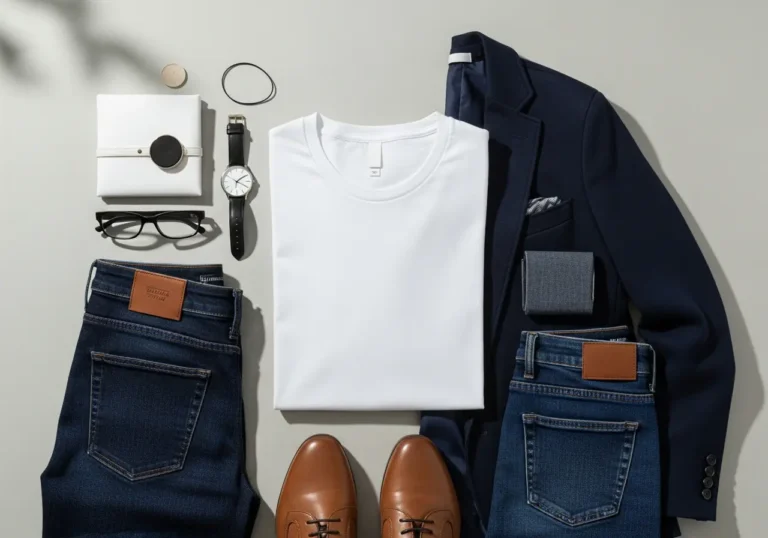
Many business casual offices now permit dark-wash jeans without distressing or excessive fading, particularly on casual Fridays. Pair jeans with blazers, structured tops, and professional footwear to elevate them into acceptable work outfits. Always observe office culture before introducing denim.
How many work outfits should I have in rotation?
Aim for two weeks of distinct outfits without repeating exact combinations. This typically requires around ten to fifteen tops, five to seven bottoms, two to three dresses, and three blazers or cardigans. This rotation prevents outfit fatigue while allowing adequate time between wears for proper garment care.
What fabrics work best for comfortable yet professional work outfits?
Natural fibers like cotton, wool, and linen offer excellent breathability and temperature regulation. Modern technical blends incorporating stretch provide comfortable movement while maintaining professional structure. Choose fabrics appropriate for each season: lightweight cotton for summer, wool blends for winter, and transitional weights for spring and fall.

2 Comments