

Tired of Burnout? A Self Care Menu Is the Fix
There is a quiet exhaustion that creeps in before you even realize it. You wake up tired. You power through the day on caffeine and sheer willpower. You tell yourself the weekend will fix it. But the weekend arrives, and instead of feeling restored, you spend two hours staring at the ceiling wondering what you are supposed to do to feel like yourself again. Sound familiar? That is what burnout actually looks like in real life, and it is far more common than most people admit.
The standard advice is always some version of “take better care of yourself.” But no one tells you what that means when you are already running on empty and cannot muster the mental bandwidth to make one more decision. That is exactly where the self care menu changes everything. It is one of the most practical, underrated wellness tools available, and once you build one, the way you approach your own restoration will never be the same.
What Is a Self Care Menu and Why Does It Work
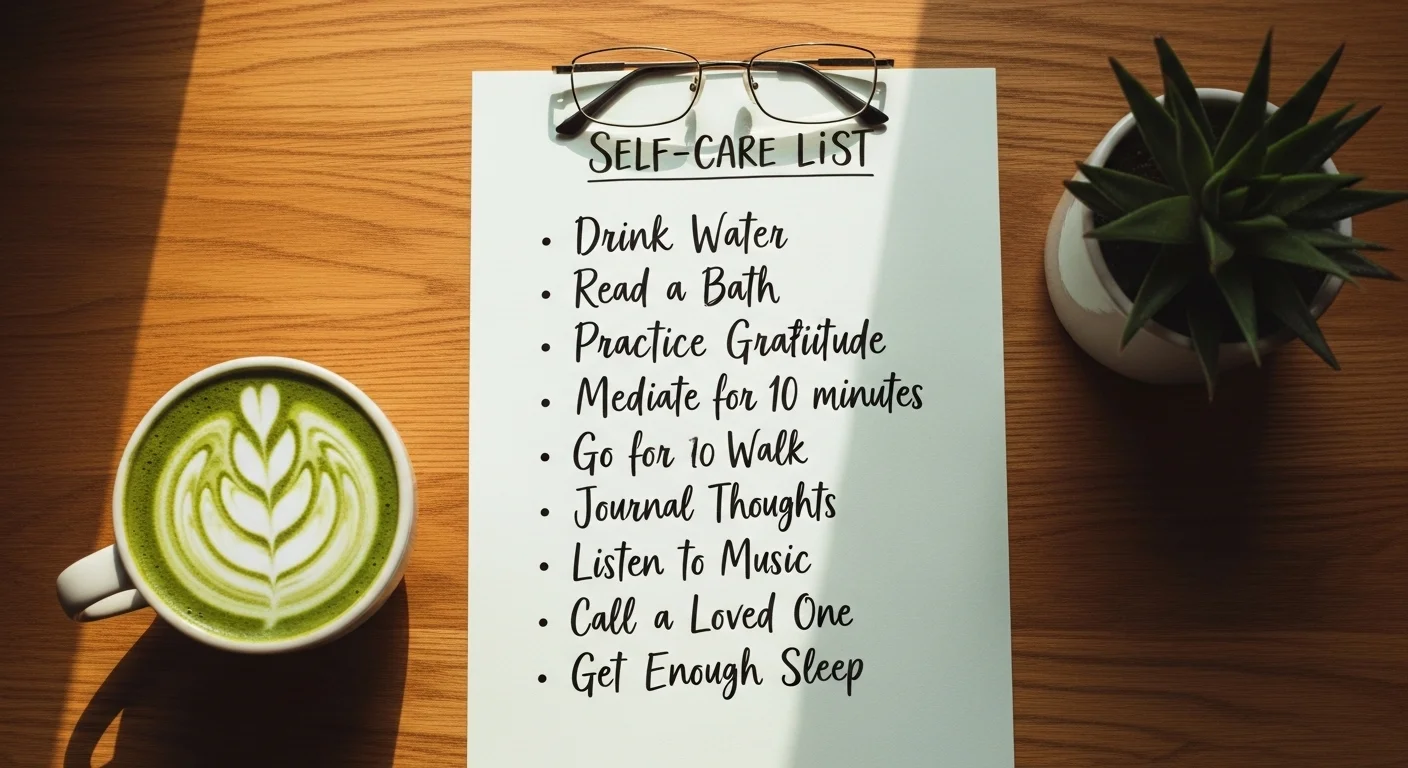
A self care menu is exactly what it sounds like. It is a personalized, organized list of activities that replenish your energy, arranged by how much time they require. Think of it the same way you would think of a restaurant menu. You walk in, you look at what is available, and you choose based on your appetite and how much time you have. Some days call for a five-minute appetizer. Other days, you have the luxury of a full three-course meal.
The genius of this concept is that it removes decision fatigue from the equation entirely. Decision fatigue is the mental depletion that comes from making too many choices throughout the day. By the time most people get to the end of a workday, their brains are so exhausted from decision-making that even choosing a self care activity feels like a task. The self care menu solves this by doing the thinking in advance, during a calm, clear-headed moment, so that all you have to do in a depleted state is pick something from a list you already trust.
The 5 Most Common Signs You Are Already Burned Out

Before building a self care menu, it helps to understand what burnout actually looks and feels like. It is not just tiredness. Burnout is a prolonged state of physical, emotional, and mental exhaustion that occurs when chronic stress goes unmanaged for too long.
The first sign is persistent fatigue that sleep does not fix. You can get eight hours and still wake up feeling like you never rested. The second sign is emotional detachment, where things that used to matter to you start to feel meaningless or far away. The third sign is reduced performance. Tasks that were once effortless begin to feel overwhelming, and your focus becomes nearly impossible to hold. The fourth sign is irritability or cynicism that has become your default setting rather than an occasional response to a hard day. The fifth sign is physical symptoms such as frequent headaches, muscle tension, or a weakened immune system that keeps knocking you down with minor illnesses.
If any of these resonate, a structured self care menu is not just a nice idea. It is genuinely necessary.
Why a Self Care Menu Is Better Than a Self Care Day

The idea of a self care day is well-meaning but fundamentally flawed for most people. When self care is treated as a special event, it becomes something you reach for only after you have already hit a wall. It becomes reactive rather than proactive. And because it is rare and unplanned, you often end up spending the first half of it paralyzed by indecision about what to actually do, which defeats the whole purpose.
A self care menu, on the other hand, makes self care a daily and weekly practice instead of an emergency measure. It creates a framework that fits around your actual life rather than requiring a perfectly free day to execute. When self care becomes routine, it acts as a buffer against burnout rather than a bandage after the fact. You are not waiting for the tank to run dry. You are refueling a little every day. Check out our post on: Waking Up Hotter Starts with This Ugly Night Time Routine.
How to Build a Self Care Menu That Actually Fits Your Life

The most important thing about building a self care menu is that it needs to reflect you, not an idealized version of what wellness is supposed to look like. If you genuinely hate meditation, putting it on your menu is only going to make you feel guilty when you skip it. Start from a place of honesty.
Begin by listing every activity that makes you feel genuinely restored. Not activities that look good on paper, but ones that actually work for you. That might mean a long bath, a solo walk, an afternoon of cooking, calling a friend, reorganizing a drawer, or sitting in silence with a cup of tea. All of it counts.
Once you have your list, divide it into three tiers based on time commitment. The first tier covers activities that take five to fifteen minutes. These are your micro-resets, the small interventions that can shift your mood or nervous system in the middle of a busy day. The second tier covers activities that take thirty minutes to an hour. These are your mid-range reset activities for evenings or lunch breaks. The third tier covers activities that take over an hour. These are your deep restoration practices for weekends or days off.
Write it down, save it somewhere accessible, and commit to actually using it. A self care menu only works if it leaves your notes app and enters your real life.
The 3 Tiers of a Self Care Menu Explained in Full

The first tier, or what some call the appetizers, is where most people will spend the most time because it is the most realistic for daily life. Activities in this range include deep breathing, a quick journaling session, a five-minute stretch or walk outside, listening to a song that shifts your energy, applying a face mask, drinking a glass of water away from your phone, or writing down three things you are grateful for. These activities are short, but their impact on the nervous system is real. Research consistently shows that even brief mindfulness practices can reduce cortisol levels and improve mood regulation.
The second tier, the main course equivalent, is where sustainable habits are built. These activities require a commitment of real time and real attention. A full workout, a walk through a park, cooking a meal you genuinely enjoy, reading a chapter of a book in a quiet room, journaling for clarity, decluttering one area of your home, or having a meaningful conversation with someone who fills you up rather than draining you. When you are building a weekly routine, aiming for at least two or three activities from this tier per week makes a measurable difference in how you manage stress over time.
The third tier, the deep resets, is where full restoration happens. These are the practices that feel luxurious but are actually essential when life has been particularly demanding. A long Epsom salt bath, a full spa morning at home with a hair mask and body scrub, a day at a float therapy center or infrared sauna, a solo date to a museum or favorite restaurant, a vision board session, a long hike, or planning a weekend getaway. These activities are not indulgences. They are investments in your long-term capacity to show up fully in your own life. Check out This Wake Up Routine Will Have You Starting Your Day Like A Billionaire.
10 Self Care Menu Ideas Most People Forget to Include

Many people default to the same few activities when building their menu and overlook practices that are equally restorative. Here are ten that are worth adding.
The first is a full digital detox for several hours, not just leaving your phone in another room but genuinely disconnecting from all screens. The second is spending time in nature without any agenda, no podcast, no destination, just walking and noticing. The third is somatic movement, which includes any practice that reconnects you to your body such as stretching, dance, yoga, or even shaking your hands and arms out for two minutes. The fourth is creative expression, whether that means painting, writing, playing an instrument, or baking, any act of making something with your hands returns you to the present moment in a way that few other activities can.
The fifth is setting one meaningful boundary and honoring it, because protecting your energy is a form of self care that most people undervalue. The sixth is sleep hygiene, which means creating a wind-down routine that signals to your body that rest is coming. The seventh is laughter, finding a show, a friend, or a memory that makes you laugh genuinely and without reservation. The eighth is learning something new for pure enjoyment, with no productivity attached. The ninth is sensory comfort, which could mean lighting a candle, wrapping yourself in a warm blanket, using a scented lotion, or anything that grounds you through your senses. The tenth is sitting quietly with your own thoughts for even five minutes, no phone, no input, no task. Just stillness.
How to Make Your Self Care Menu a Consistent Habit

Building the menu is the easy part. Using it consistently is where most people struggle. The key is integration. Self care activities need to be scheduled with the same seriousness as a work meeting or a doctor appointment. If they exist only in the realm of good intentions, they will always be the first thing that gets pushed aside when life gets busy, which is exactly when you need them most.
One of the most effective approaches is pairing a self care activity with something you already do. Stretching while your coffee brews, journaling for five minutes before bed, walking during a lunch break instead of eating at your desk. These anchored habits have a much higher success rate than stand-alone intentions.
It is also worth scheduling a weekly check-in with yourself to assess how you are feeling and choose two or three activities from your menu for the week ahead. This simple practice transforms self care from something vague and aspirational into something tangible and planned.
The Deeper Reason Self Care Menus Work

At the heart of the self care menu concept is a fundamental truth about human wellbeing. We do not struggle to take care of ourselves because we are lazy or selfish or do not know that we should. We struggle because the demands on our time and attention are relentless, and when we are depleted, even the smallest decision feels enormous. The self care menu removes the friction. It does the thinking for you so that the version of you who is tired and overwhelmed can still make a good choice for yourself without any additional mental effort.
More than a productivity hack or a wellness trend, a self care menu is an act of self-respect. It says that your restoration matters enough to be planned for. That your energy is worth protecting. That showing up depleted to every area of your life is not something you have to accept as normal.
Conclusion
Burnout is not a character flaw. It is the predictable result of giving too much without replenishing. The solution is not a dramatic lifestyle overhaul or an indefinite sabbatical. The solution is building small, consistent practices into your everyday life that remind your body and mind that they are worth caring for.
Create your self care menu during a calm, clear moment. Make it personal. Make it honest. And then actually use it, not just when things fall apart, but especially when they do not, because the real goal is never to recover from burnout. The real goal is to never get there in the first place.
Frequently Asked Questions
What is a self care menu?
A self care menu is a personalized list of activities that restore your mental, physical, and emotional energy, organized by how much time they require. It works like a restaurant menu where you choose based on how much time and energy you have available at any given moment.
How is a self care menu different from a self care routine?
A routine is fixed and scheduled at the same time every day. A self care menu is flexible and offers multiple options depending on your mood, energy level, and available time. It is better suited for people whose days vary significantly in structure and demand.
How often should I use my self care menu?
Ideally, you should choose at least one activity from your menu every day, even if it is something small from the five to fifteen minute tier. For deeper restoration, aim to incorporate activities from the longer tiers at least two to three times per week.
Can a self care menu actually help with burnout?
Yes. While severe burnout may also require professional support, a consistent self care practice is one of the most evidence-backed ways to both prevent and recover from burnout. Regular small acts of restoration reduce cortisol, improve mood, and build emotional resilience over time.
What if I do not know what self care activities I enjoy?
Start by thinking about the last time you felt genuinely relaxed and ask yourself what you were doing in that moment. Experiment with different activities across physical, creative, social, and sensory categories. Over time you will begin to recognize which ones leave you feeling restored versus which ones are things you think you should enjoy but actually do not.