
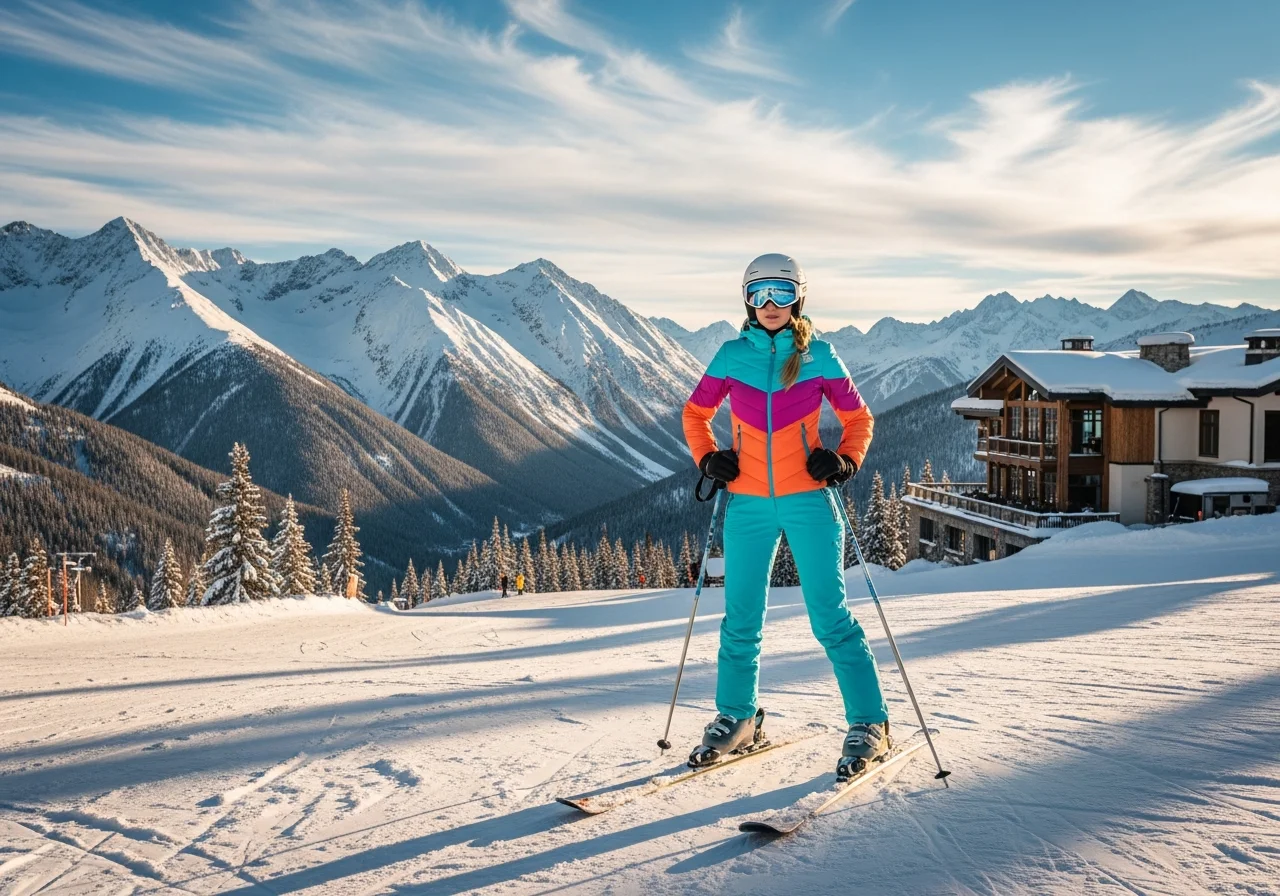
8+ Cute Ski Outfits Guaranteed to Upgrade Your Winter Getaway
The modern ski season represents far more than athletic prowess and technical skill. Today’s slopes have transformed into fashion runways where style meets performance, and winter getaways demand wardrobes that transition seamlessly from morning powder runs to evening lodge gatherings. Whether you’re planning your inaugural mountain adventure or refreshing your established ski wardrobe, the intersection of aesthetic appeal and functional design has never been more accessible.
Gone are the restrictive days when skiers faced a stark choice between staying warm and looking polished. Contemporary ski fashion embraces both priorities with equal enthusiasm, offering collections that feature innovative fabrics, flattering silhouettes, and eye-catching designs. From the resurgence of retro one-piece suits to sleek color-blocked separates, this season’s offerings prove that technical performance and sophisticated style can coexist beautifully.
This comprehensive guide explores eight distinct cute ski outfits each designed to blend style, warmth, and functionality. Each ensemble balances warmth, weather resistance, and visual impact while addressing different style preferences and skiing conditions. Beyond the slopes, these outfits transition effortlessly into après ski settings, ensuring you maintain your polished appearance throughout your entire winter escape.
The Classic All-Black Ski Suit
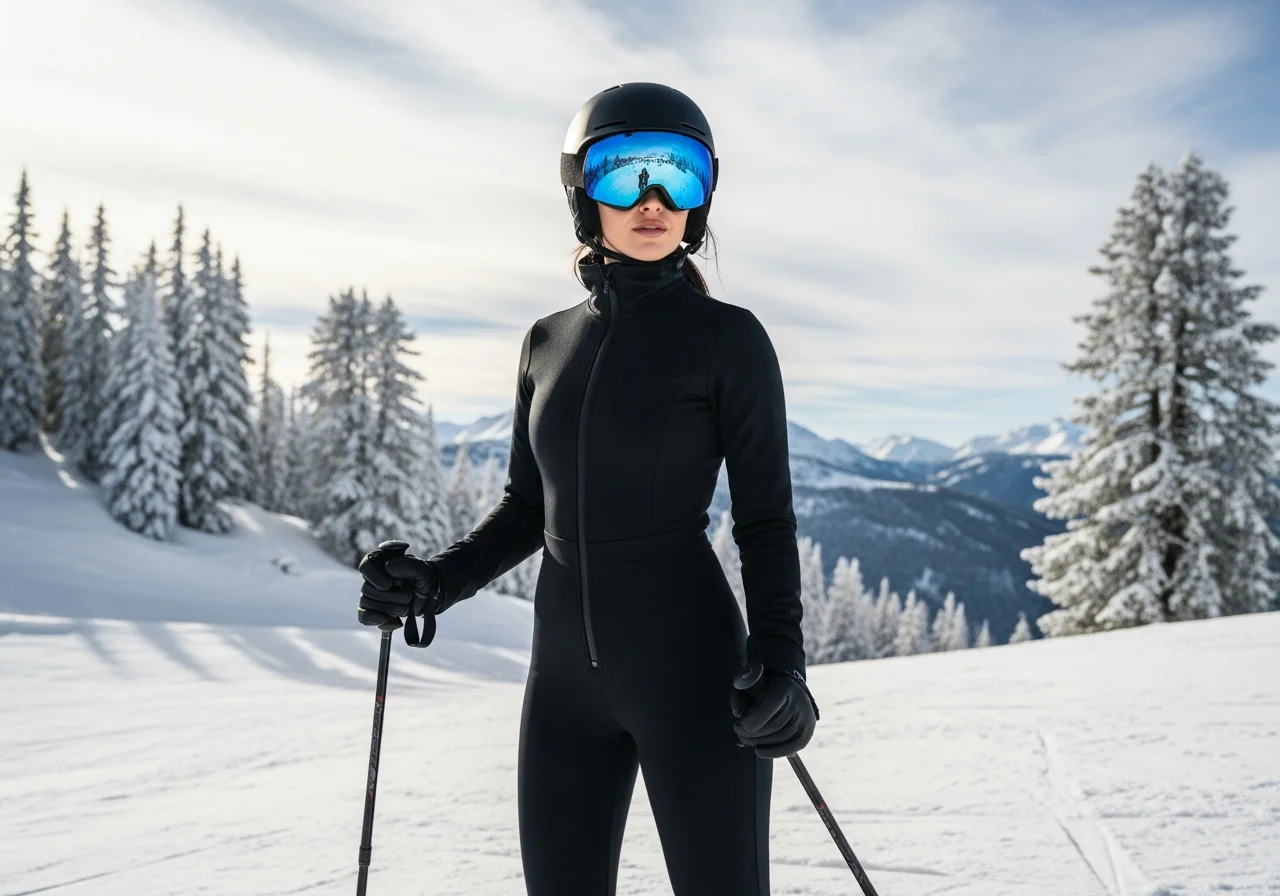
Timeless sophistication finds its ultimate expression in the all-black ski suit. This is one of the most timeless cute ski outfits for winter travelers. This wardrobe staple offers versatility that extends well beyond the slopes, creating a streamlined silhouette that flatters every body type while projecting understated confidence. The monochromatic approach eliminates outfit coordination stress, allowing you to focus entirely on your mountain experience.
Modern black ski suits incorporate technical features that previous generations could only imagine. Look for designs with four-way stretch fabric that moves naturally with your body, waterproof membranes rated at 10,000mm or higher, and strategic insulation that provides warmth without bulk. Many contemporary options include removable snow skirts, adjustable cuffs, and helmet-compatible hoods that maintain functionality without sacrificing style.
The beauty of an all-black ensemble lies in its customization potential through accessories. Bright goggles in neon yellow or electric blue create striking contrast, while metallic hardware adds subtle shimmer. Consider incorporating patterned base layers that peek through at the collar or wrists, introducing personality while maintaining the outfit’s sleek foundation. A statement beanie or luxury gloves complete this look, proving that simplicity serves as the ultimate form of sophistication.
Colorful One-Piece Statement
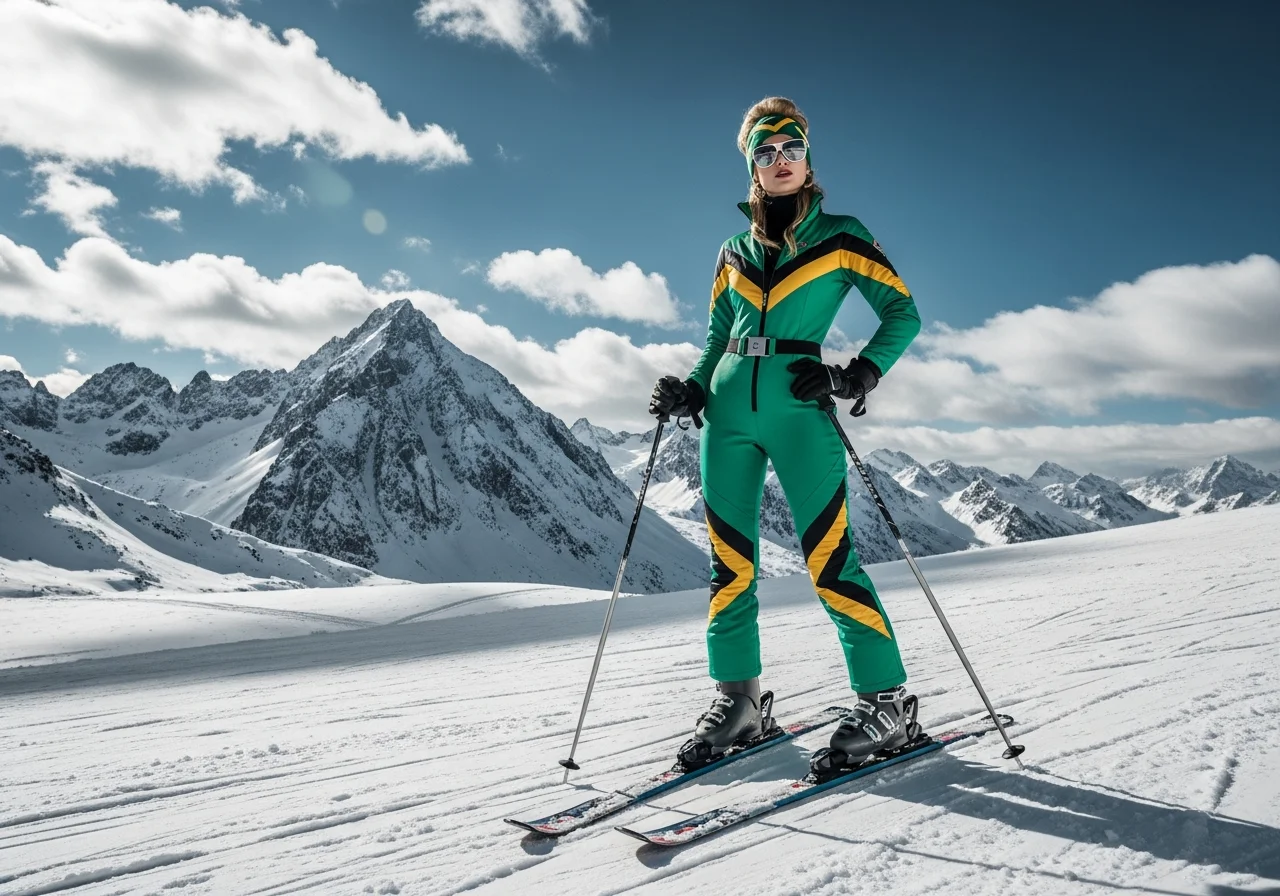
The one-piece ski suit has returned with remarkable force, reimagining retro silhouettes through contemporary design sensibilities. This season’s iterations feature bold color blocking, geometric patterns, and jewel-toned fabrics that demand attention across every ski run. The unified design eliminates the gap between jacket and pants, providing superior protection against snow infiltration while creating elongated, flattering proportions. Among modern cute ski outfits, this look balances fashion and performance.
Contemporary one-piece designs address practical considerations that plagued vintage versions. Modern suits incorporate strategic zippers that facilitate easy bathroom access without requiring complete disrobing. Adjustable waist belts allow for customized fitting, while articulated knees and stretch panels ensure unrestricted movement during dynamic skiing. Many options feature removable decorative elements like fringe or fur trim, allowing transformation from bold slope statement to refined lodge wear.
When selecting your one-piece, consider vibrant options that increase visibility on crowded slopes while reflecting your personal aesthetic. Emerald green with gold accents channels vintage glamour, while hot pink with navy contrast creates contemporary edge. Pair your suit with coordinating accessories, selecting goggles and gloves that complement rather than match exactly. The one-piece serves as your complete outfit, requiring minimal additional styling while delivering maximum visual impact.
Powder Pink Perfection for Cute Ski Outfits
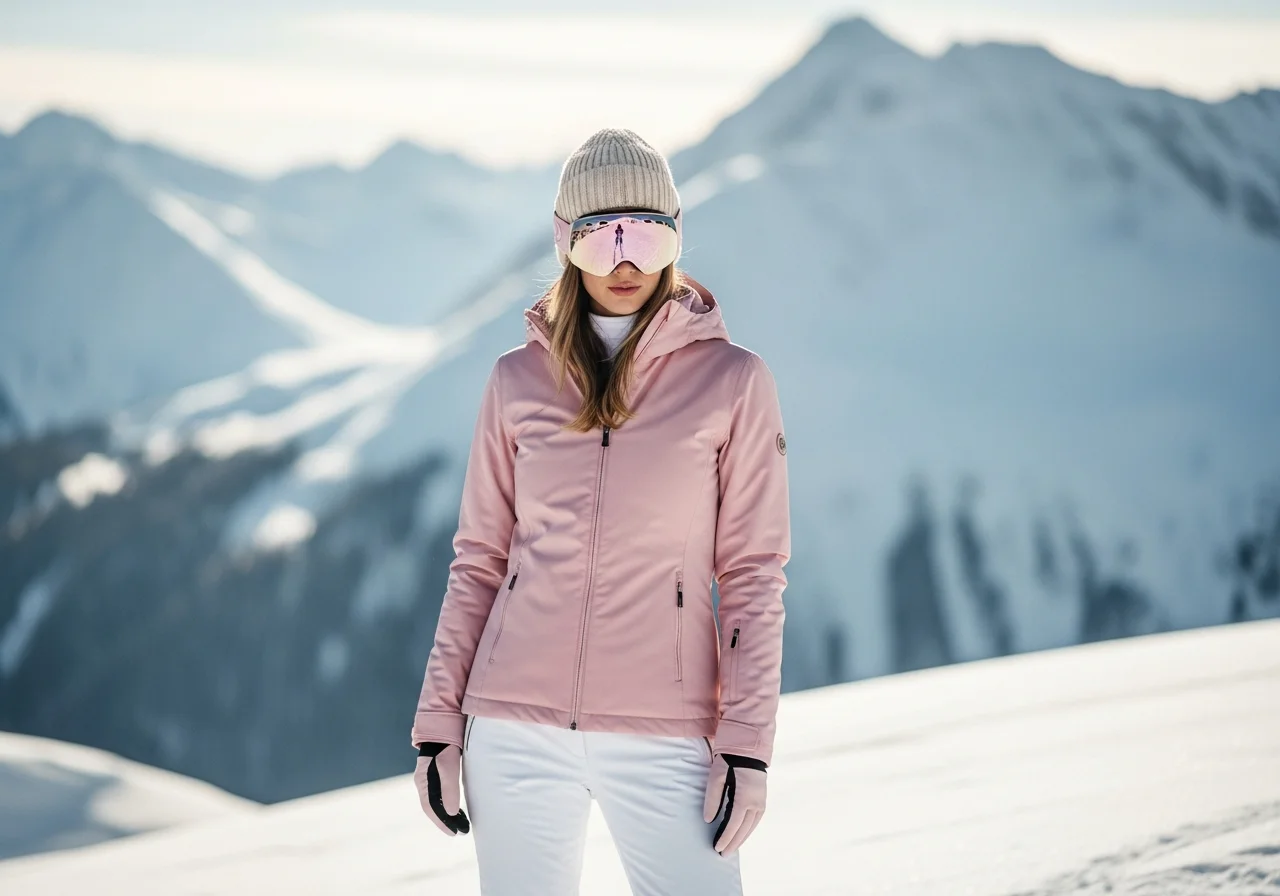
Soft pink tones have transcended their traditional associations to become a powerful statement in ski fashion. This outfit centers around blush or rose-colored ski jackets paired with coordinating or contrasting bottoms, creating a feminine aesthetic that never compromises on performance. The shade’s versatility allows it to complement various skin tones while photographing beautifully against snowy backdrops.
A powder pink jacket becomes the foundation for numerous styling possibilities. Pair it with white ski pants for a monochromatic look that evokes pristine mountain peaks, or contrast it with charcoal gray bottoms for sophisticated edge. The jacket should incorporate essential technical features including waterproof zippers, multiple pockets for essentials, and adjustable ventilation systems that regulate temperature during varying activity levels. Learn more about building functional ski outfits that balance
Complete this ensemble with thoughtfully selected accessories that enhance rather than overwhelm the primary palette. Opt for cream or ivory base layers that create subtle tonal variation, and choose a beanie in complementary shades like dusty rose or mauve. Mirrored rose gold goggles tie the entire look together while providing necessary eye protection. This outfit proves that soft colors can deliver bold style statements when executed with confidence and attention to detail.
Bold Pattern Mixing
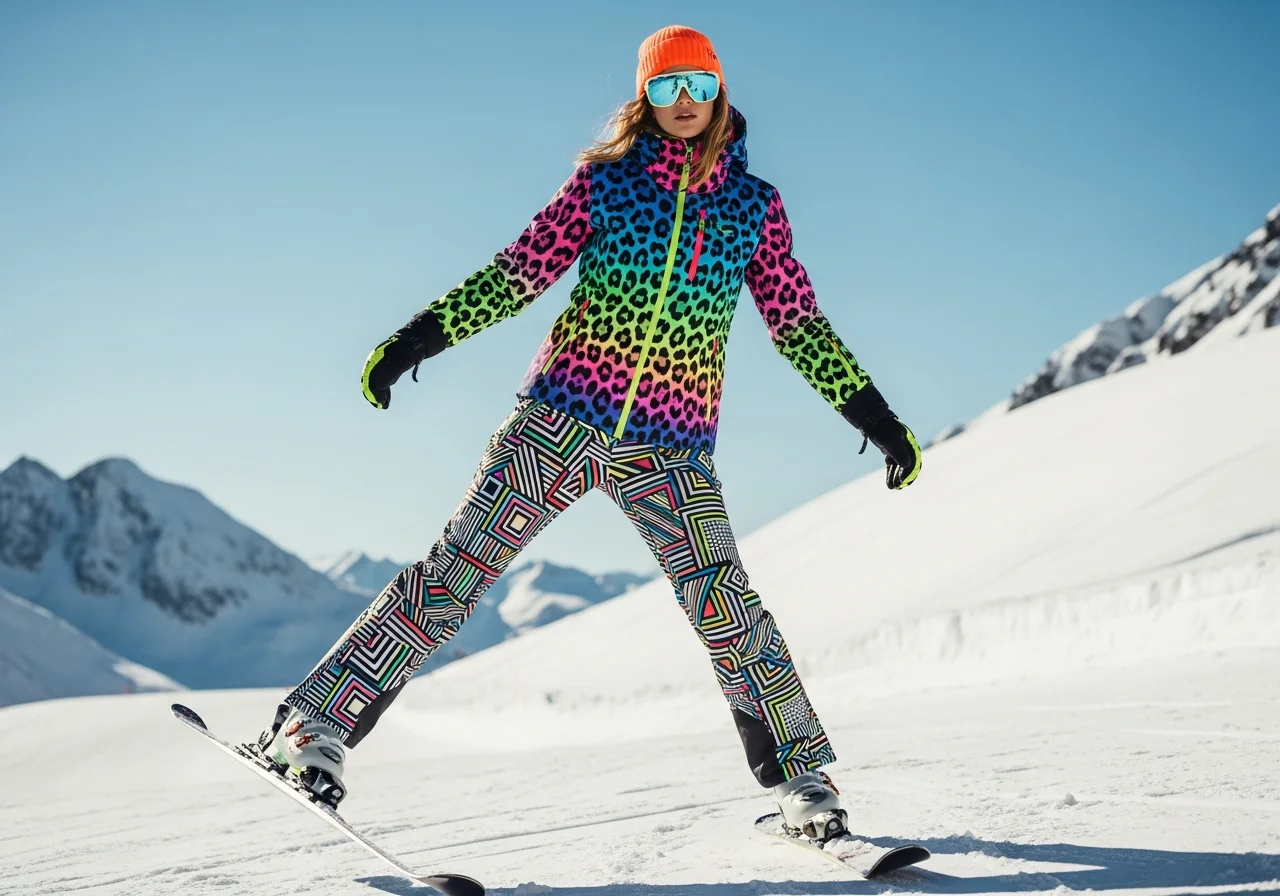
For the adventurous dresser, pattern mixing represents the ultimate expression of personal style on the slopes. This approach combines geometric prints, animal patterns, or abstract designs across jacket and pants, creating visually dynamic ensembles that refuse to fade into mountain backgrounds. Successful pattern mixing requires understanding scale, color coordination, and strategic balance.
Start with one dominant pattern as your foundation piece. A leopard print jacket or zebra-striped pants establishes your visual anchor, providing the outfit’s primary statement. Your second pattern should differ in scale and intensity, such as pairing large animal prints with subtle geometric designs or combining bold stripes with small polka dots. Ensure your patterns share at least one common color, creating cohesion that prevents the outfit from appearing chaotic.
Balance your patterned outerwear with solid-colored accessories that ground the ensemble. Black or white gloves provide visual rest, while neutral goggles maintain focus on your creative combinations. This outfit approach works particularly well for intermediate to advanced skiers who spend significant time on visible slopes, as the distinctive patterns make you easily recognizable to your group. Pattern mixing demonstrates confidence and creativity, transforming your ski outfit into wearable art.
Monochromatic White Winter
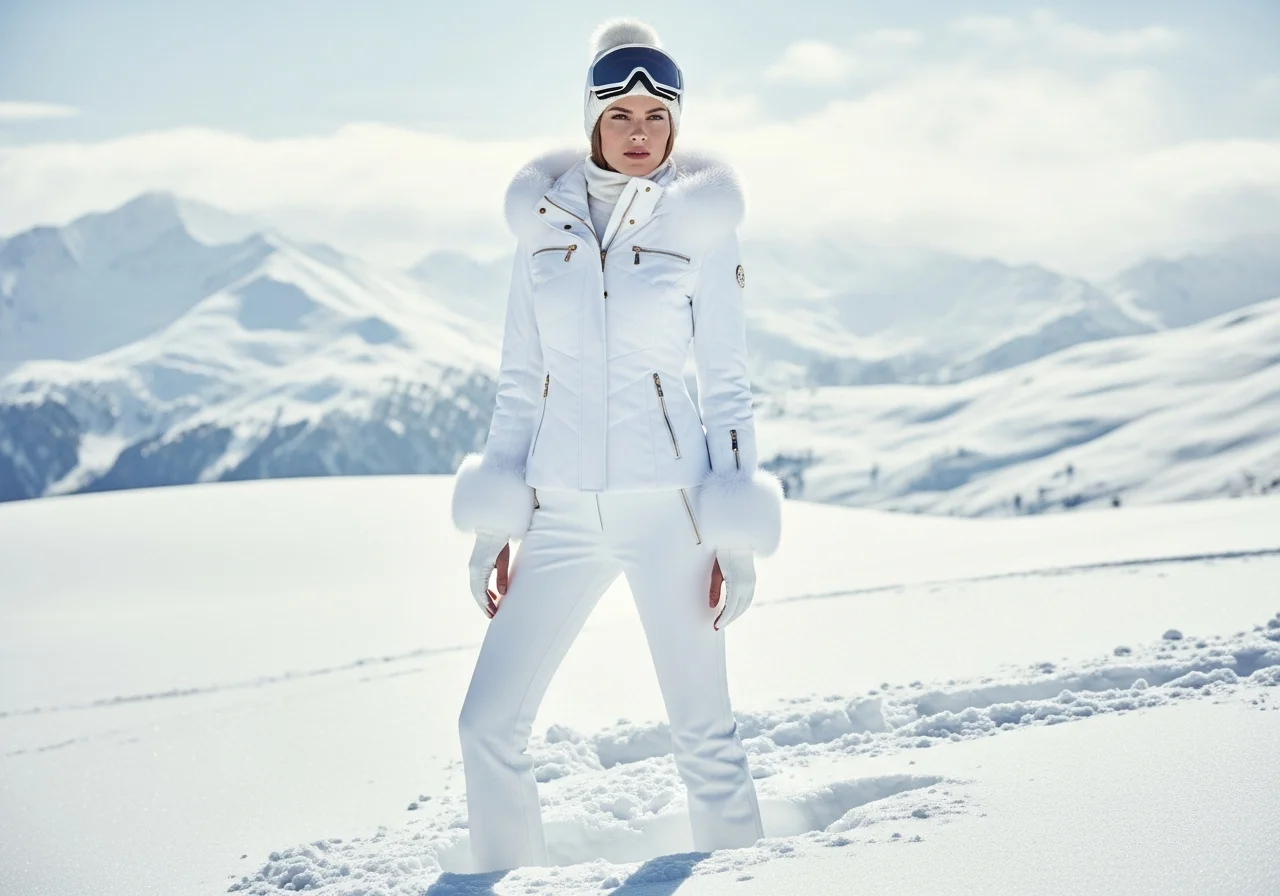
An all-white ski outfit channels the pristine beauty of fresh powder, creating an ethereal aesthetic that photographs exceptionally well while maintaining practical functionality. This look requires commitment to cleanliness and strategic fabric selection, but delivers unparalleled elegance that stands out dramatically against darker mountain landscapes and colorful lodge interiors.
When building an all-white ensemble, prioritize materials with stain-resistant treatments and easy-care properties. Modern ski gear often incorporates DWR finishes that repel water and dirt, extending the pristine appearance throughout your ski day. Select pieces in varied textures to create visual interest within the monochromatic palette, combining smooth shells with quilted details or matte fabrics with subtle sheen.
Layer ivory or cream base layers beneath your white outerwear to create dimensional depth while maintaining the cohesive color story. Add visual punctuation through hardware details like gold zippers, rose gold goggle frames, or silver boot accents. A faux fur collar or hood trim in white or cream adds luxurious texture while providing additional warmth around the neck. This outfit requires confidence and careful maintenance, rewarding your effort with stunning visual impact and timeless sophistication.
Retro Color Block Design
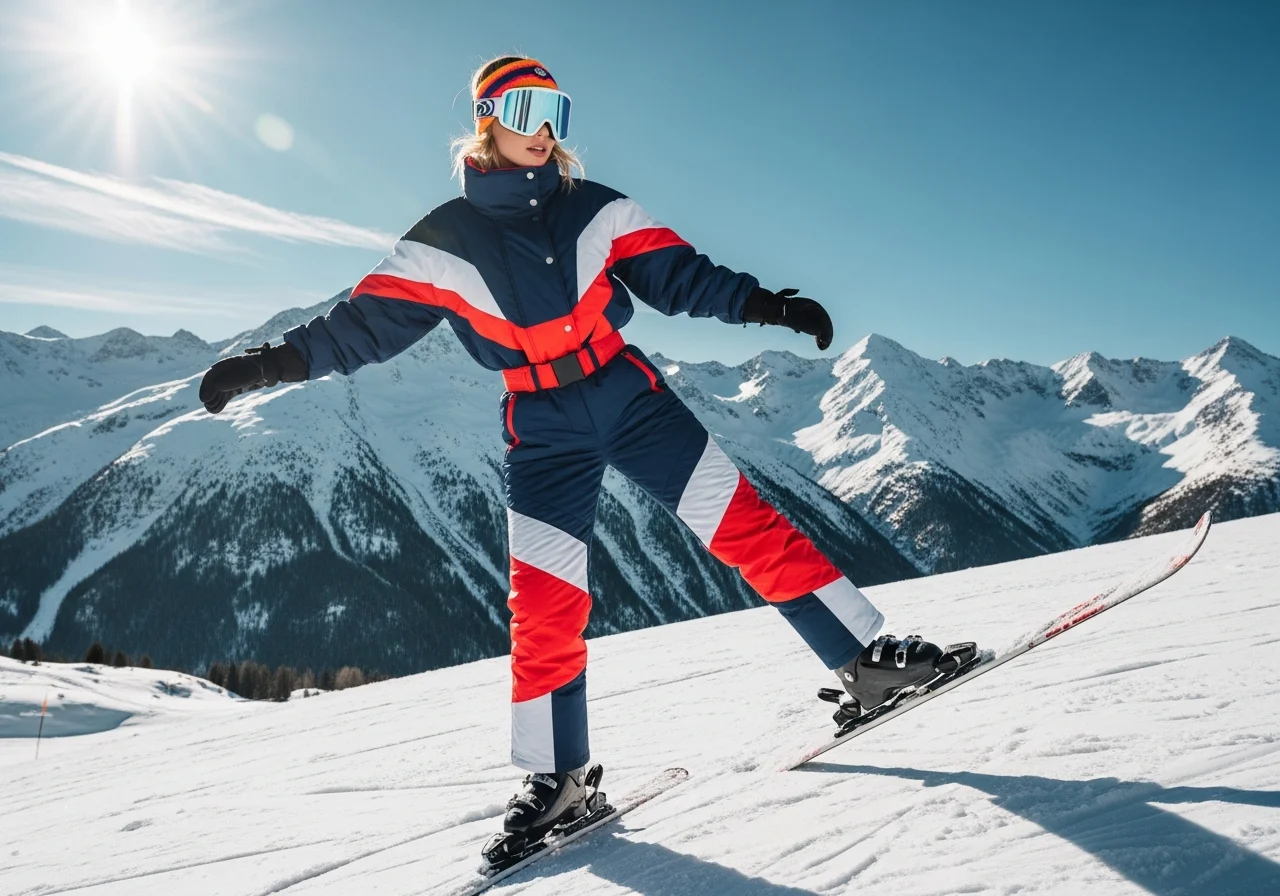
Vintage ski fashion returns with bold color blocking that defines this season’s most distinctive trend. This aesthetic combines large sections of contrasting solid colors, typically featuring bright or primary hues arranged in geometric configurations. The resulting look captures 1980s ski culture’s exuberant energy while incorporating contemporary performance technology.
Effective color blocking relies on strategic color selection and placement. Choose three to four colors maximum, ensuring they create pleasing contrast without overwhelming the eye. Classic combinations include navy, red, and white for nautical influence, or teal, purple, and yellow for vibrant retro appeal. The color divisions typically follow the garment’s natural seams, creating flattering proportions that elongate the torso and legs.
Modern interpretations of retro color blocking incorporate current fashion sensibilities, such as asymmetrical color placement or unexpected hue combinations like mustard yellow with burgundy and forest green. Pair your color-blocked jacket with solid pants in one of the jacket’s accent colors, creating cohesion without redundancy. Keep accessories relatively simple, allowing the outfit’s bold colors to dominate. This look celebrates skiing’s heritage while embracing contemporary style consciousness.
Sleek Minimalist Set
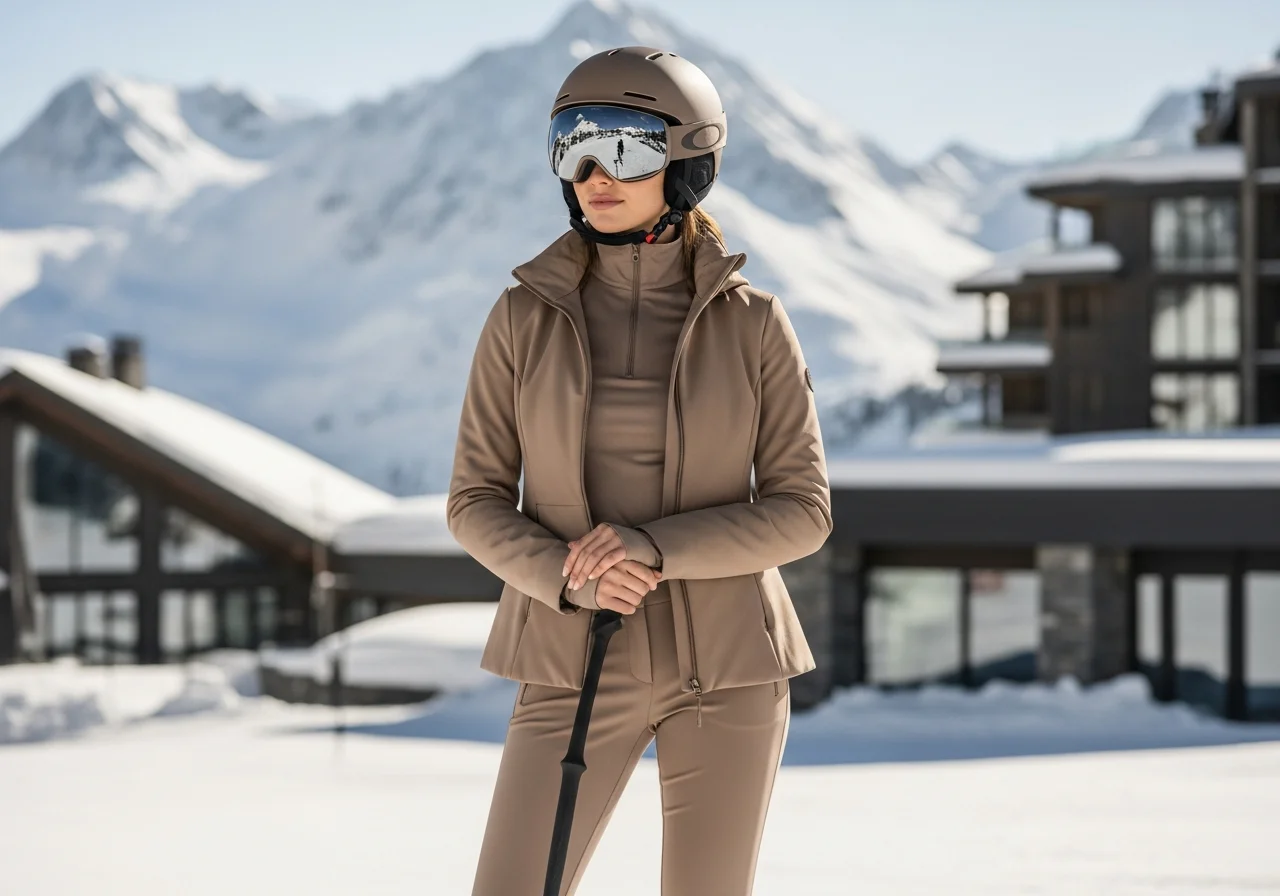
For those who prefer understated elegance, the minimalist ski outfit offers refined simplicity that never sacrifices functionality. This approach emphasizes clean lines, neutral color palettes, and subtle details that create sophisticated impact through restraint rather than embellishment. The resulting aesthetic transcends temporary trends, offering longevity that justifies investment in quality pieces.
Build your minimalist set around a perfectly fitted jacket in a neutral tone such as camel, gray, or navy. The silhouette should be streamlined without excess bulk, featuring minimal external pockets and discreet closures that maintain clean lines. Pair with matching or complementary pants in a slightly different shade, creating subtle tonal variation that prevents the outfit from appearing flat or one-dimensional.
The minimalist approach demands attention to fit and proportion, as these elements become primary focal points when decorative details are absent. Ensure your pieces fit properly through shoulders, waist, and legs, allowing for necessary layering without creating bunching or gaps. Select accessories in coordinating neutral tones, perhaps introducing one small pop of color through goggles or gloves. This outfit communicates confidence, sophistication, and appreciation for quality over quantity.
Luxury Metallic Accents
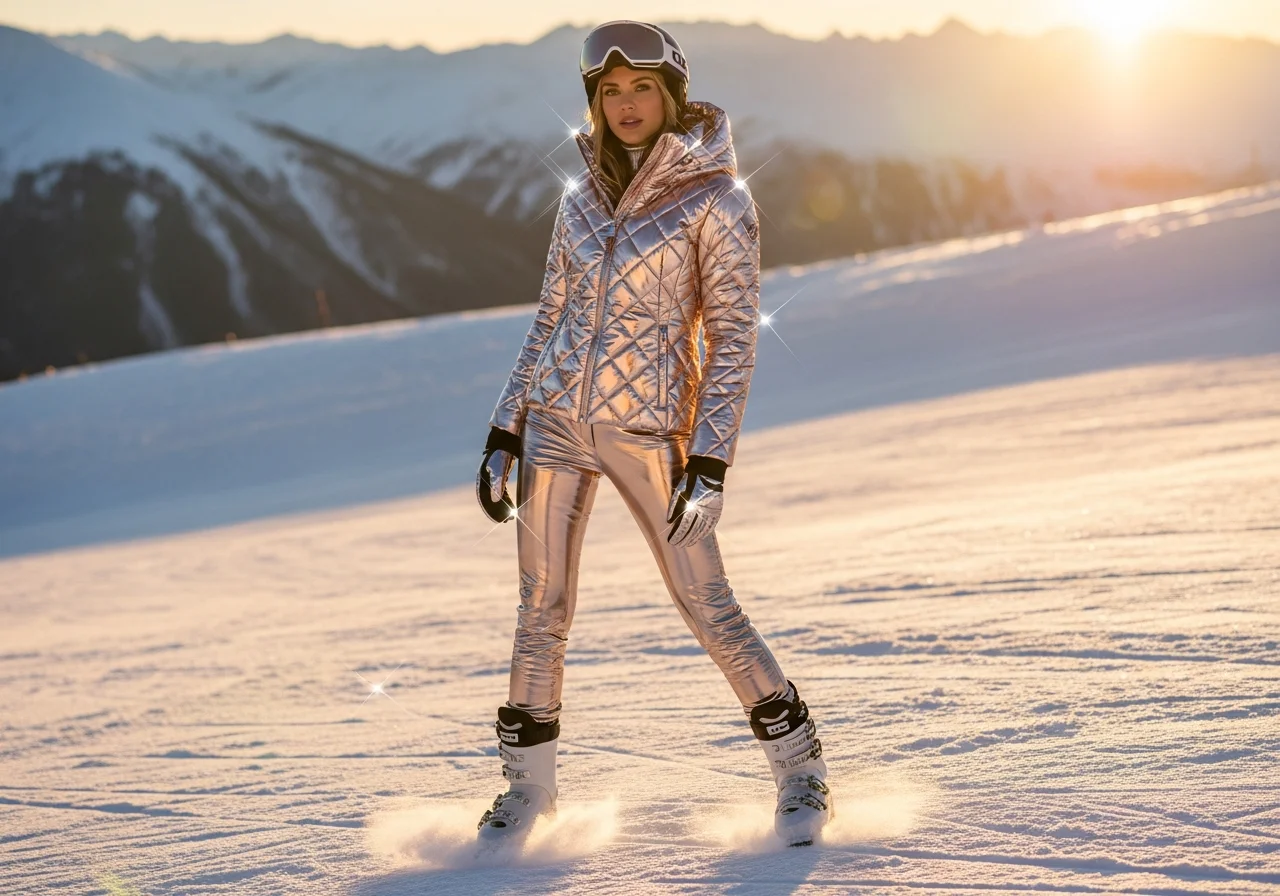
Metallic details have emerged as a defining characteristic of premium ski fashion, adding glamorous shimmer that elevates standard winter wear into statement pieces. This trend manifests through iridescent fabrics, metallic hardware, reflective paneling, or entire garments in silver or gold tones. The resulting outfits capture and reflect mountain sunlight, creating eye-catching effects that translate beautifully in photographs.
Incorporate metallics strategically to avoid overwhelming your overall look. A jacket with metallic quilting or reflective piping provides subtle shimmer, while metallic pants paired with a solid jacket create bold impact. Rose gold, bronze, and gunmetal tones offer sophisticated alternatives to bright silver or gold, complementing a wider range of skin tones and personal styles.
Balance metallic elements with matte textures and neutral tones that prevent the outfit from appearing costume-like. A metallic silver jacket pairs beautifully with matte black pants, while bronze accents complement deep navy or forest green bases. Choose accessories thoughtfully, perhaps selecting goggles with metallic frames or gloves with reflective details that echo your outfit’s shimmer. This approach to ski fashion celebrates glamour while maintaining practical functionality for serious mountain time.
Conclusion
The evolution of ski fashion has created an exciting landscape where personal style and technical performance unite seamlessly. These eight cute ski outfits demonstrate that winter mountain getaways no longer require choosing between looking good and staying comfortable. Choosing the right cute ski outfit enhances confidence both on the slopes and during après ski moments. From classic elegance to bold experimentation, contemporary options accommodate every aesthetic preference while delivering the warmth and weather protection essential for enjoyable skiing.
Building your ideal ski wardrobe involves understanding your personal style, recognizing quality construction, and investing strategically in pieces that serve multiple purposes. The outfits explored here provide starting points for creating looks that reflect your individuality while meeting practical demands of mountain environments. Whether you prefer minimalist sophistication, retro boldness, or feminine romance, current offerings ensure you find options that feel authentically yours.
As you plan your next winter getaway, remember that confidence remains your most important accessory. Select outfits that make you feel powerful and attractive, allowing you to fully embrace mountain experiences without self-consciousness about your appearance. The right ski outfit elevates your entire trip, creating memories captured not just in photographs but in the confidence you carry throughout every run and every après ski gathering. Your winter adventure deserves a wardrobe that matches its extraordinary nature.
Frequently Asked Questions
What should I wear under my ski jacket?
Under your ski jacket, wear a moisture-wicking base layer made from merino wool or synthetic materials, followed by a mid-layer like a fleece or lightweight down vest for insulation. This layering system allows you to regulate temperature throughout the day by adding or removing the mid-layer as needed.
Are one-piece ski suits warmer than jacket and pants?
One-piece ski suits provide slightly better protection against snow infiltration since there is no gap between jacket and pants. However, warmth primarily depends on insulation quality and layering beneath the suit rather than the style itself. One-pieces do offer the advantage of preventing cold air and snow from entering at the waist.
How do I choose the right ski outfit color?
Choose colors based on personal preference, visibility needs, and versatility. Bright colors help your group locate you easily on crowded slopes, while darker or neutral tones offer more styling flexibility and hide dirt better. Consider colors that complement your skin tone and photograph well in snowy environments.
Can I wear my ski outfit for après ski activities?
Absolutely. Many modern ski outfits transition beautifully to après ski settings. Remove your outer jacket to reveal stylish base and mid-layers, swap ski boots for fashionable snow boots, and add accessories like jewelry or sunglasses. Choose attractive base layers and invest in versatile pieces that work both on slopes and in lodge environments.
How often should I replace my ski clothing?
Quality ski clothing can last 5 to 10 years with proper care and maintenance. Replace items when waterproofing fails despite reapplication treatments, insulation becomes compressed and loses warmth, or visible damage compromises functionality. Base layers typically need replacement more frequently than outer shells, usually every 2 to 3 seasons depending on usage frequency.

2 Comments