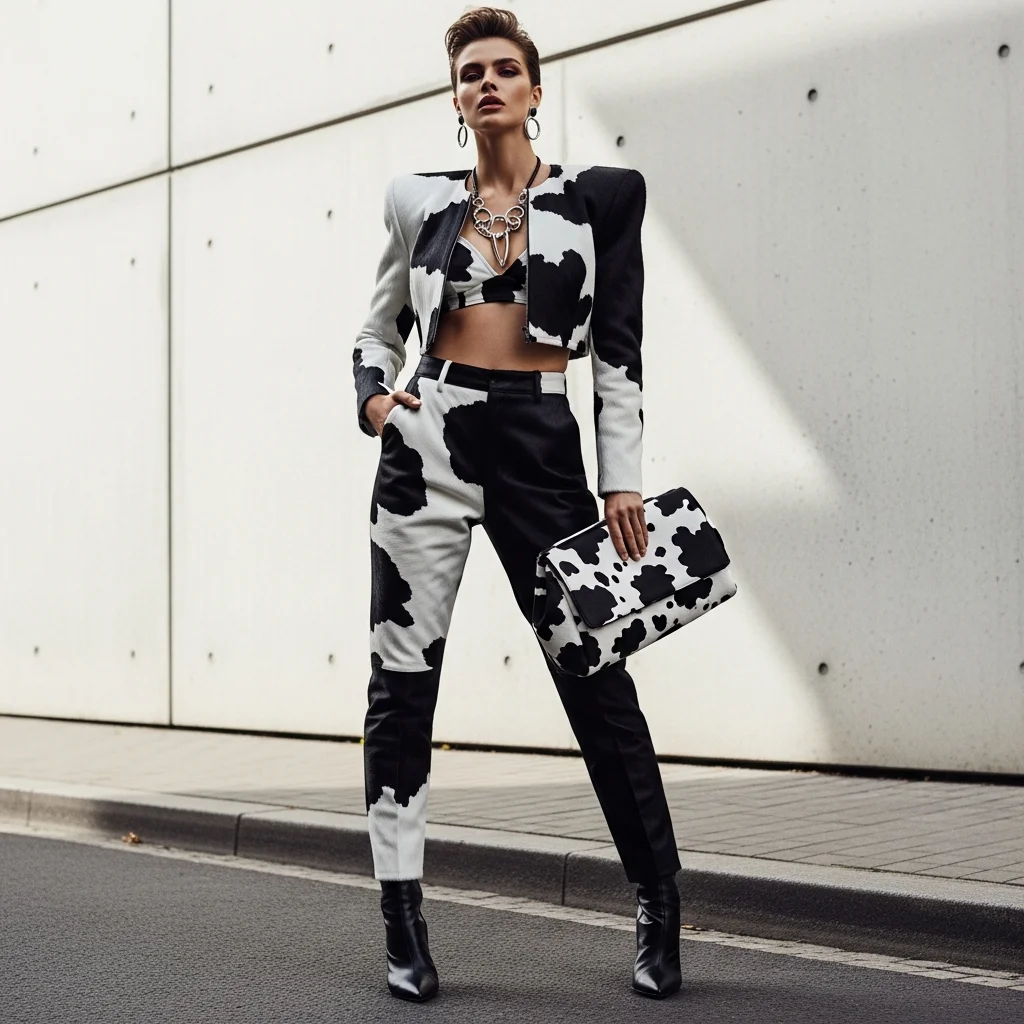
Why the Cow Print Trend Is Still Going Strong Into 2026
Walk into any fashion-forward boutique or scroll through social media style accounts, and you’ll notice something interesting. The cow print trend that exploded onto runways and street corners over the past year hasn’t faded away. Instead, it’s evolved, matured, and settled into a comfortable position as a wardrobe staple that continues to capture attention well into 2026. What started as an unexpected offshoot of Western-inspired fashion has transformed into something more nuanced and lasting than anyone initially predicted.
The staying power of cow print speaks to a larger shift happening in fashion cow print trend right now. Trends no longer follow the rigid seasonal cycles they once did. When something resonates with the way people actually want to dress, it sticks around and adapts rather than disappearing overnight. cow print trend has proven itself versatile enough to work across different aesthetics, practical enough to incorporate into everyday wardrobes, and distinctive enough to remain interesting season after season. This isn’t just another flash in the pan animal print moment. The bovine pattern has earned its place in contemporary style.
What makes this particularly fascinating is how cow print has managed to avoid the fate of so many trends that burn bright and fade fast. The pattern hasn’t oversaturated the market to the point of exhaustion. Designers continue finding fresh ways to interpret it. Shoppers keep discovering new applications that feel personal rather than prescriptive. As we move through 2026, the cow print trend offers a masterclass in how fashion can balance novelty with longevity, making bold statements while remaining surprisingly wearable.
The Cultural Momentum Behind Cow Print

Every major fashion trend has its cultural catalysts, and cow print benefited from perfect timing. The Western aesthetic had been building momentum for several seasons, driven by influences ranging from high fashion runways to popular culture. When Beyonce released her Cowboy Carter album, it solidified what had been percolating in style circles for years. The music, imagery, and entire aesthetic around that project gave permission for fashion to fully embrace its Western influences without irony or restraint.
Bella Hadid’s involvement in the rodeo world added another layer of credibility to Western-inspired fashion. Here was a globally recognized style icon genuinely participating in cowboy culture, not just appropriating its visual elements for a photoshoot. Her authentic engagement with the aesthetic made cow print trend feel less like costume dressing and more like legitimate style expression. When someone of her fashion stature wore cowhide pieces casually and confidently, it signaled that this trend had real staying power.
The timing coincided with collective leopard print fatigue. After years of the spotted pattern dominating everything from coats to accessories, fashion enthusiasts were ready for something different. cow print trend offered a fresh alternative that still provided the visual interest of animal patterns without feeling overdone. The black and white or brown and tan colorways gave it a different energy than leopard, one that felt more grounded and less overtly glamorous. This distinction helped cow print carve out its own identity rather than simply replacing one animal print with another.
Fashion’s relationship with Western aesthetics runs deeper than surface trends. There’s something about the rugged individualism, the connection to American heritage, and the blend of function and style inherent in cowboy culture that resonates cyclically. Cow print trend taps into these associations while being specific enough to feel current. It references the past without being stuck there, allowing wearers to engage with Western influences on their own terms rather than through rigid costume recreation.
From Runway to Real Life Integration

The transition of cow print trend from high fashion runways to everyday wardrobes illustrates how trends successfully become lasting style elements. Brandon Maxwell’s Spring 2026 show featured cow print prominently, but the way he styled it made all the difference. Cropped jackets paired with sequined skirts showed that cow print could exist in elevated fashion contexts without tipping into novelty. Dior’s approach of pairing cowhide pieces with pristine white prairie dresses demonstrated the pattern’s versatility across different aesthetic territories.
What separated cow print from trends that remain confined to runways was how quickly accessible versions appeared at various price points. Fast fashion brands and contemporary labels understood the appeal and created pieces that captured the essence without requiring designer budgets. This democratization meant more people could experiment with the trend, which in turn created the critical mass necessary for something to feel current rather than niche. When cow print appeared simultaneously at luxury houses and affordable retailers, it achieved the breadth necessary for sustained relevance.
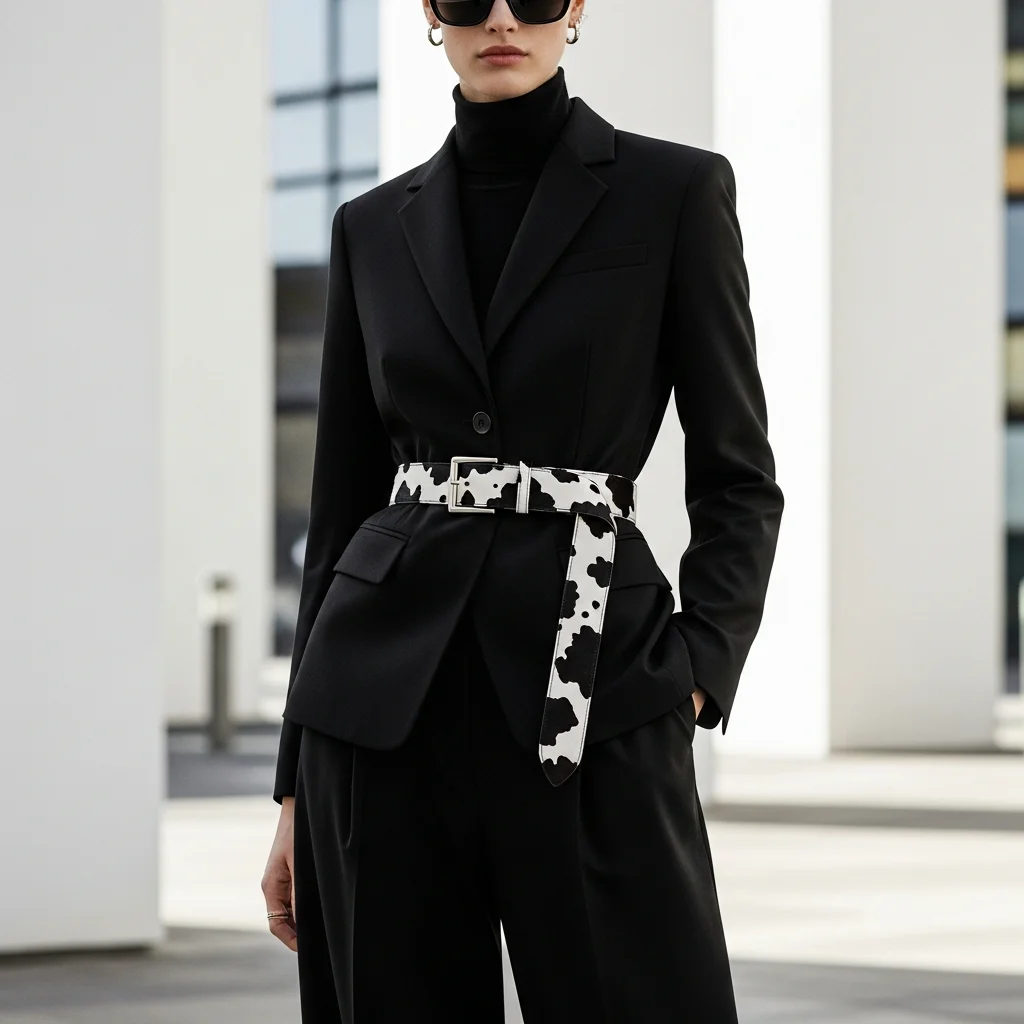
Street style adoption provided the proof of concept that runway presentations only suggested. Fashion week attendees incorporated cow print bags, boots, and jackets into their outfits in ways that felt natural rather than forced. These weren’t editorial stylings that only worked for photographs. They were practical applications showing how cow print could enhance rather than overwhelm real outfits. A cow print trend belt cinching an oversized blazer. Cowhide sneakers grounding a monochrome look. These everyday applications made the trend accessible and aspirational simultaneously.
The success of cow print in real-world contexts stems from its surprising neutrality. Unlike bold graphic prints or saturated colors, the earth tones of brown and white cow print or the classic black and white variations work with existing wardrobes. You don’t need to build an entirely new color palette around cow print trend pieces. They integrate into what people already own, which removes the barrier to entry that kills many trends before they gain traction. This practical versatility transformed cow print from runway spectacle to wardrobe workhorse.
Accessories Lead the Way
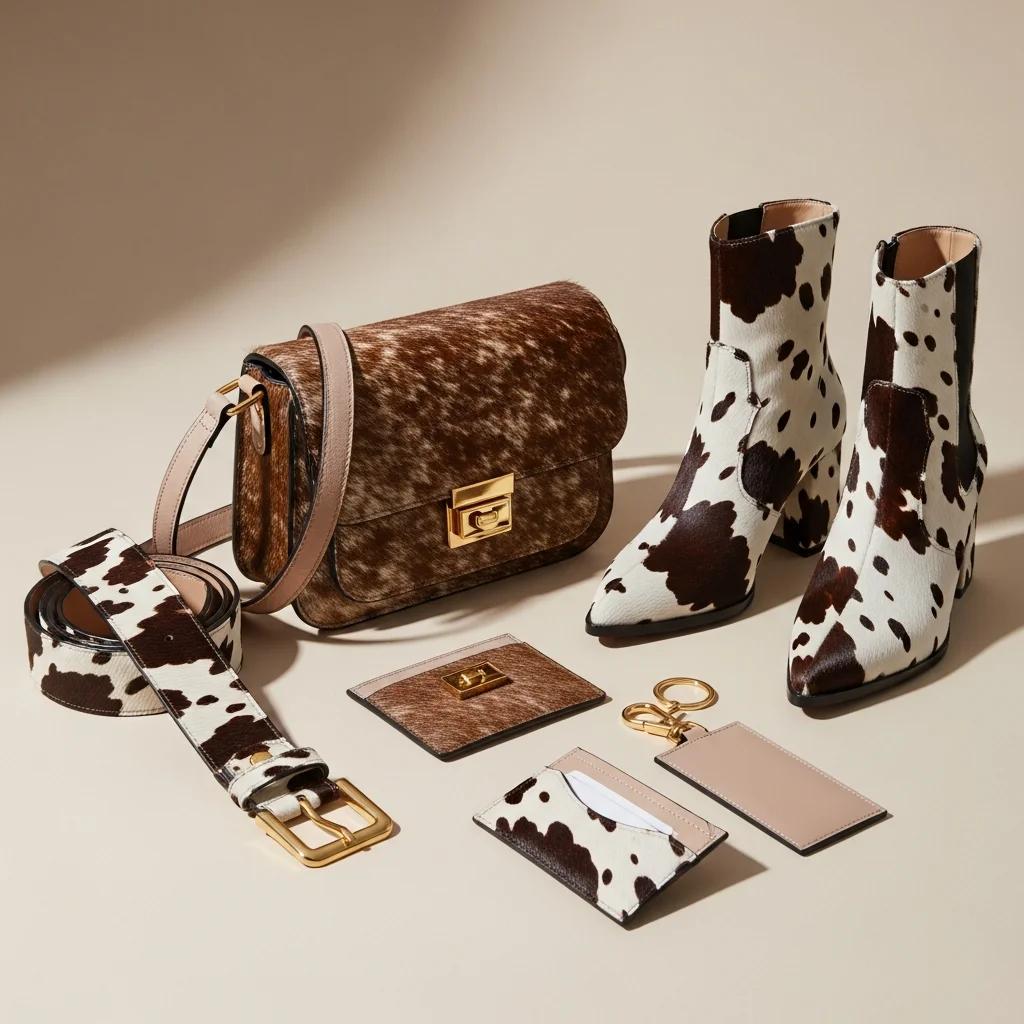
The enduring strength of the cow print trend owes much to its success in the accessories category. Bags became the gateway piece for many people hesitant to commit to cow print trend clothing. A cowhide tote or crossbody bag offered enough visual interest to make an outfit feel current without the commitment of patterned pants or a printed jacket. The texture of calf hair added dimension that made these accessories feel luxurious rather than gimmicky, elevating them beyond simple trend pieces.
Footwear emerged as another crucial category where cow print maintained momentum. Boots in particular became synonymous with the trend, offering statement-making options that still felt grounded in Western heritage. Knee-high cow print trend boots paired equally well with denim and dresses, demonstrating the versatility that keeps trends relevant across seasons and occasions. Sneakers in cow print appealed to a different demographic entirely, bringing the pattern into casual streetwear contexts and proving its range extended beyond exclusively dressy or Western applications.
Belts deserve special recognition for their role in sustaining cow print’s popularity. A cow print trend belt delivers instant visual impact while requiring minimal styling effort or wardrobe adjustment. Thread one through jeans for casual weekend wear or cinch it over an all-black outfit for evening sophistication. The belt becomes the focal point that ties everything together, functioning as both practical accessory and style statement. This dual functionality makes it one of the most wearable applications of the trend.
The genius of accessories as entry points is they allow experimentation without overwhelming commitment. Someone unsure about cow print can test it through a bag or shoes before considering larger pieces. If it doesn’t feel right, the investment is smaller and the piece easier to rotate out of regular use. But more often, these gateway accessories build confidence with the pattern, leading to expanded incorporation into wardrobes. This progression from small touches to bolder applications has sustained the trend by constantly bringing new adopters into the fold.
The Evolution of Cow Print Styling
Styling approaches have matured significantly since cow print trend first appeared on trend radars. Early adoptions often went heavy on Western theming, pairing cowhide with fringe, bandanas, and obvious cowboy references. While that aesthetic has its place, 2026 styling has become more refined and versatile. The pattern now appears in contexts far removed from ranch dressing, proving its ability to transcend its origins and function as a genuine design element rather than costume piece.
Monochrome outfits benefit tremendously from cow print accents. An all-black ensemble gains dimension and personality through cow print shoes or a bag. The pattern breaks up the solid color without introducing competing hues, maintaining the sleek simplicity of monochrome dressing while adding textural interest. This application feels modern and intentional, showing that cow print works within minimalist aesthetics rather than only maximalist or overtly trendy contexts. Click here.
The mix of cow print trend with unexpected patterns has become increasingly common and successful. Pairing cowhide with pinstripes, florals, or even other animal prints demonstrates confidence in styling and pushes the boundaries of traditional pattern mixing rules. These combinations work because cow print’s neutral tones allow it to function almost like a solid in certain contexts. The irregular organic shapes of the spots create visual interest without the rigidity of geometric patterns, making it surprisingly compatible with other prints when balanced correctly.
Proportional styling has also evolved. The early tendency was treating cow print trend as the singular focal point of an outfit, keeping everything else extremely plain to avoid competition. Current styling is more adventurous, willing to let cow print share the spotlight with other interesting elements. A cow print jacket over a sculptural dress. Cowhide pants with a statement sleeve top. These combinations work because the cow print provides texture and pattern while other elements contribute silhouette and form. The result is outfits with multiple points of interest that feel cohesive rather than chaotic.
Brown Tones Outperform Black and White
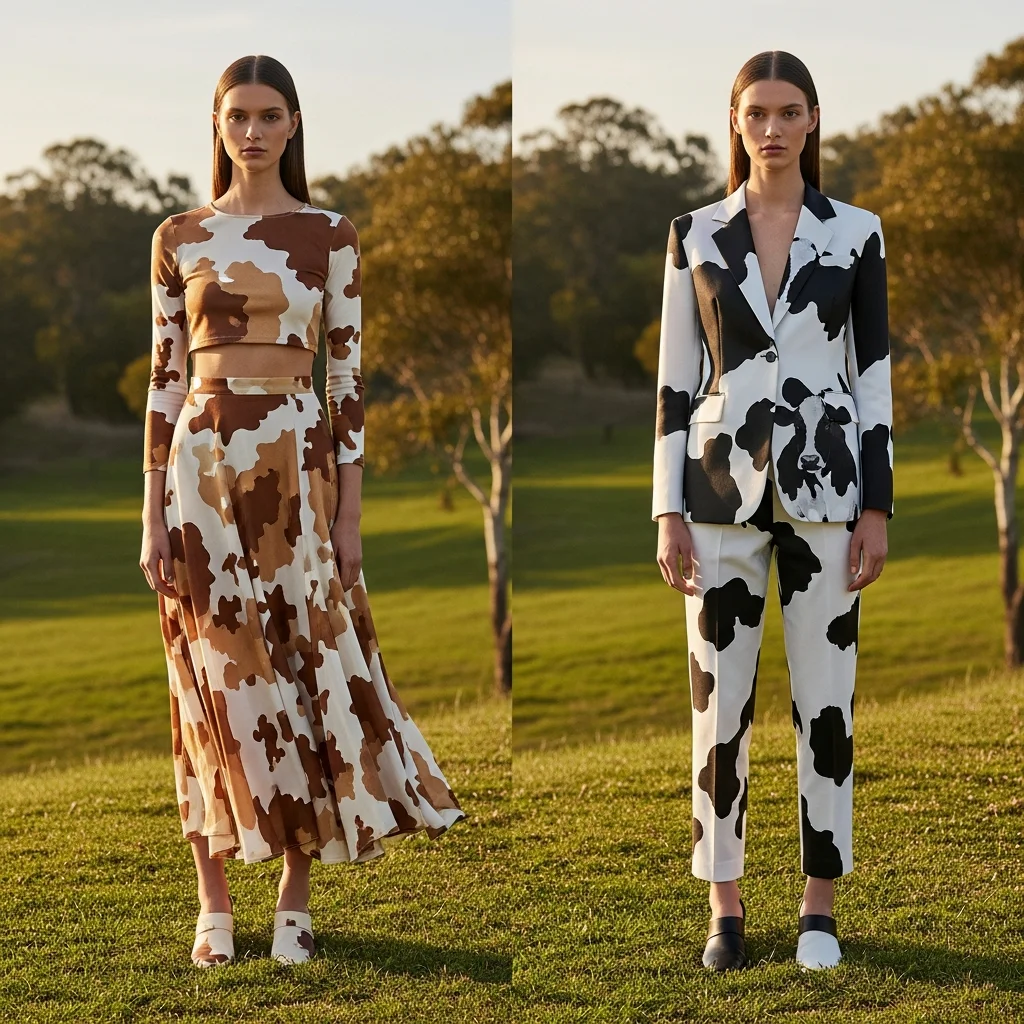
An interesting development in cow print’s evolution involves color preferences shifting toward brown and white variations over the classic black and white Holstein pattern. The softer, warmer tones of brown-based cow print feel more versatile and less stark, integrating more easily into earth-toned wardrobes that dominate contemporary fashion. This variation maintains the pattern’s recognizability while offering a gentler visual impact that appeals to those seeking subtlety over bold contrast.
The brown cow print trend aligns perfectly with the broader trend toward warm neutrals in fashion. Caramel, chocolate, cream, and tan have become wardrobe staples, and brown cow print slots seamlessly into this color family. A brown cowhide bag complements rather than contrasts with these tones, creating cohesive looks that feel intentional and polished. This harmony with existing color preferences has extended cow print’s relevance beyond those specifically seeking statement pieces.
Black and white cow print trend still has its place, particularly for those who prefer cooler color palettes or want more dramatic impact. The high contrast works beautifully in modern, graphic styling contexts and makes strong statements when that’s the desired effect. However, the brown variations have proven more commercially successful because they require less careful styling and integrate more universally across different wardrobe aesthetics. This accessibility has been crucial for maintaining broad appeal as the trend matures.
The texture differences between authentic cowhide and printed fabric also influence color preferences. Brown pony hair or calf hair accessories often look more luxurious and authentic than their black and white counterparts, which can sometimes read as synthetic or costume-like if not executed with quality materials. The organic variation in brown tones creates depth and richness that elevates pieces beyond simple trend items into investment accessories worth keeping long-term.
Designer Collections Continue Embracing the Pattern
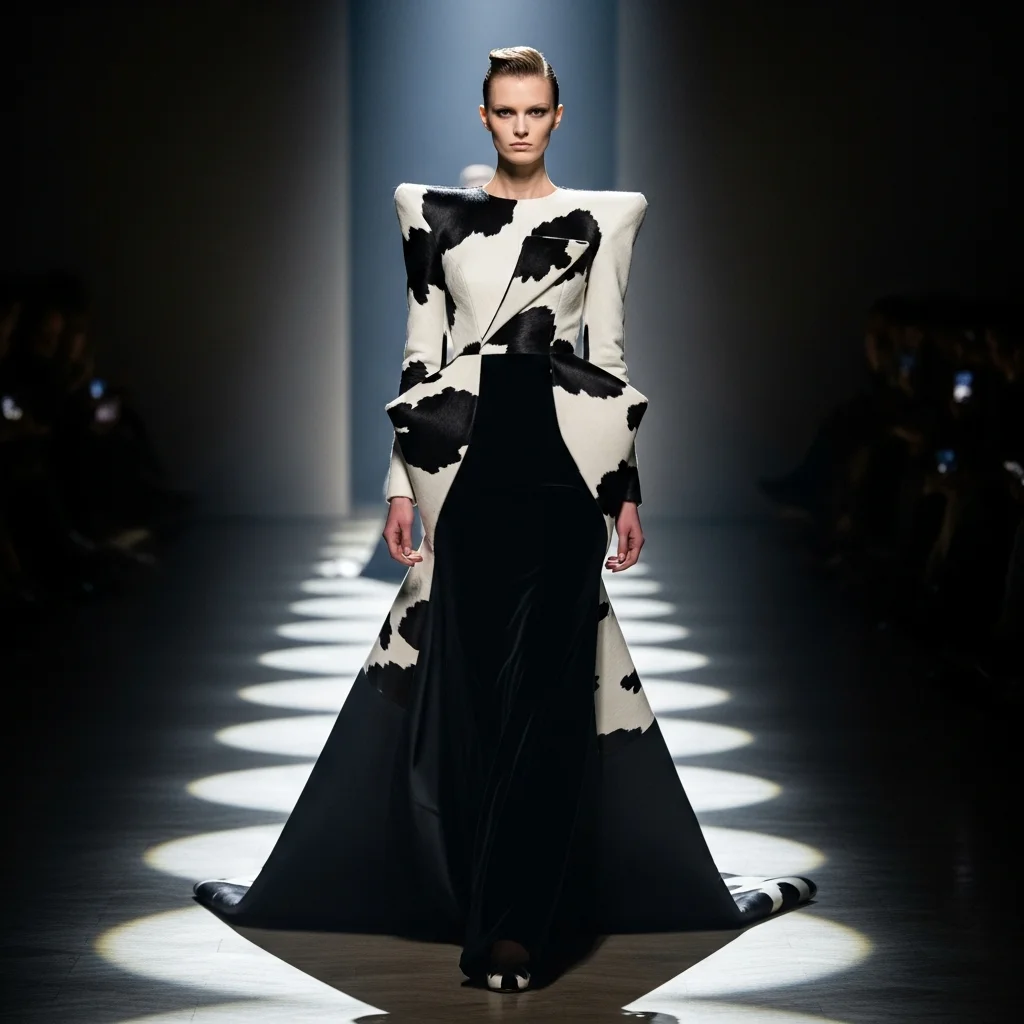
High fashion’s ongoing engagement with cow print signals staying power that extends beyond street style moments. Spring and Summer 2026 collections featured the pattern across multiple designer shows, indicating that fashion’s creative minds still see potential in bovine motifs. The applications have become more refined and unexpected, moving beyond obvious Western references into territory that feels fresh and forward-thinking.
Gestuz demonstrated sophisticated cow print styling through oversized belts cinching evening wear, creating contrast between the casual pattern and formal silhouettes. This juxtaposition highlights one of cow print’s strengths: its ability to add playfulness and texture to otherwise serious pieces without diminishing their impact. The belt becomes a conversation piece that makes the outfit memorable while the underlying garment maintains its elegance and structure.
Luxury houses experimenting with cow print in unexpected categories has kept the pattern feeling current. When cowhide appears on items beyond the expected boots and bags, it forces reconsideration of the pattern’s possibilities. Cow print trend gloves, headbands, and even small leather goods prove that the motif can scale to various applications while maintaining its distinctive character. These explorations by respected designers give permission for broader interpretation and experimentation.
The runway presentations also reveal evolving attitudes toward mixing cow print with other luxury materials. Leather, silk, cashmere, and fine wools paired with cowhide elements demonstrate that the pattern belongs in elevated fashion contexts. This legitimization matters for longevity because it prevents cow print from being relegated to casual or novelty status. When high-end designers treat it as a serious design element worthy of quality construction and thoughtful styling, it maintains relevance across market segments.
Versatility Across Seasons and Occasions
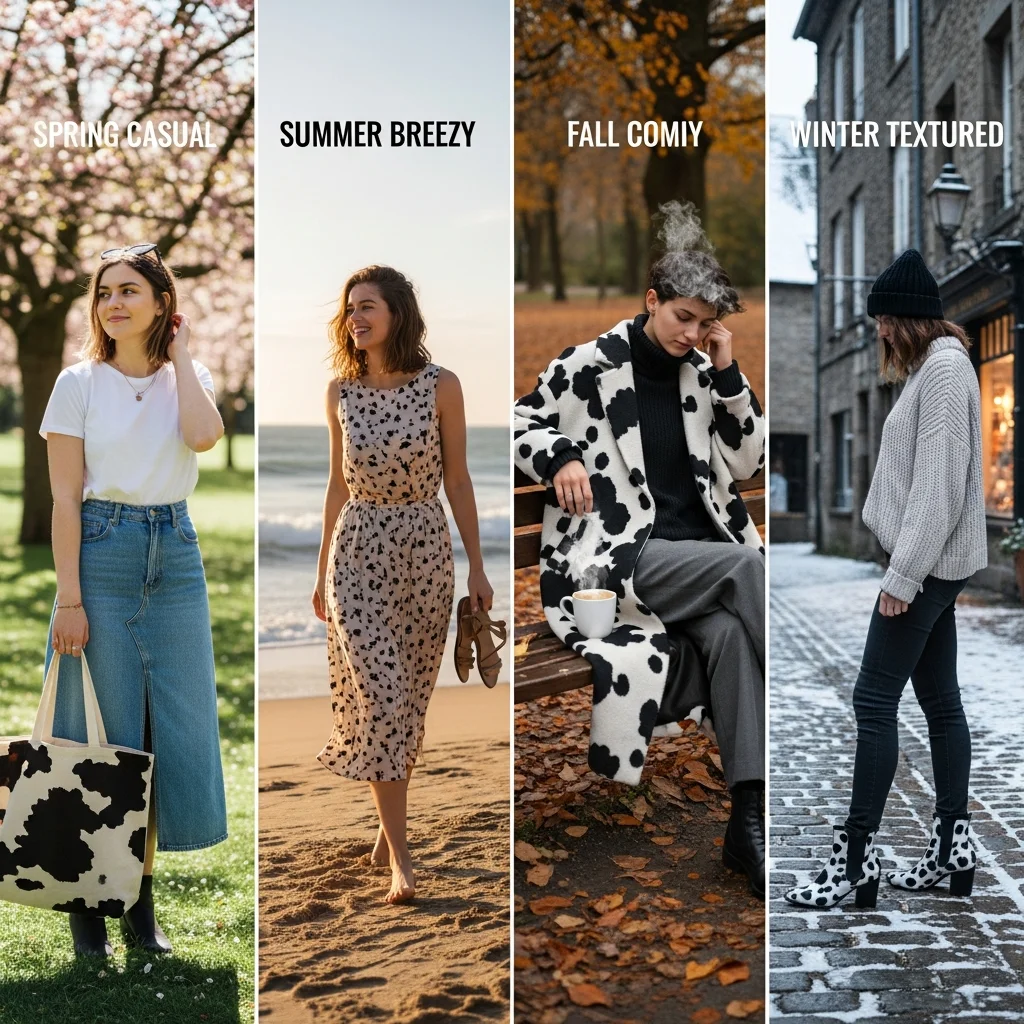
Unlike trends that only work during specific seasons, cow print has demonstrated year-round applicability. Spring and summer saw lighter applications through canvas bags, espadrilles, and breezy cow print dresses in airy fabrics. These warm-weather interpretations proved the pattern wasn’t inherently heavy or restricted to fall and winter despite its association with Western wear and cowhide materials traditionally used in colder months.
Fall and winter applications leaned into the texture and warmth of actual cowhide or faux alternatives. Fuzzy cow print coats, lined boots, and substantial bags made sense for cooler weather both practically and aesthetically. The pattern’s earth tones harmonized with autumn color palettes, while the texture added cozy visual weight appropriate for layered cold-weather dressing. This seasonal flexibility has been crucial for maintaining presence across the calendar year.
Occasion versatility matters as much as seasonal adaptability. Cow print trend has successfully transitioned from casual weekend wear to office-appropriate styling to evening events. The key lies in application and surrounding elements. Cow print trend shoes with tailored trousers and a blazer read professional. The same shoes with a slip dress and leather jacket shift evening. With jeans and a tee, they’re weekend casual. This chameleon quality allows single cow print pieces to serve multiple wardrobe needs, justifying their place in edited closets.
The pattern’s ability to scale from subtle to bold gives it range across different occasions and personal style preferences. Someone wanting minimal cow print can choose a small clutch or belt. Those comfortable making bigger statements can opt for pants, jackets, or even dresses. This spectrum of options means the trend accommodates everyone from cautious adopters testing new territory to confident dressers ready for full bovine commitment. Inclusive trends last longer because they offer something for everyone.
The Practical Neutrality Factor
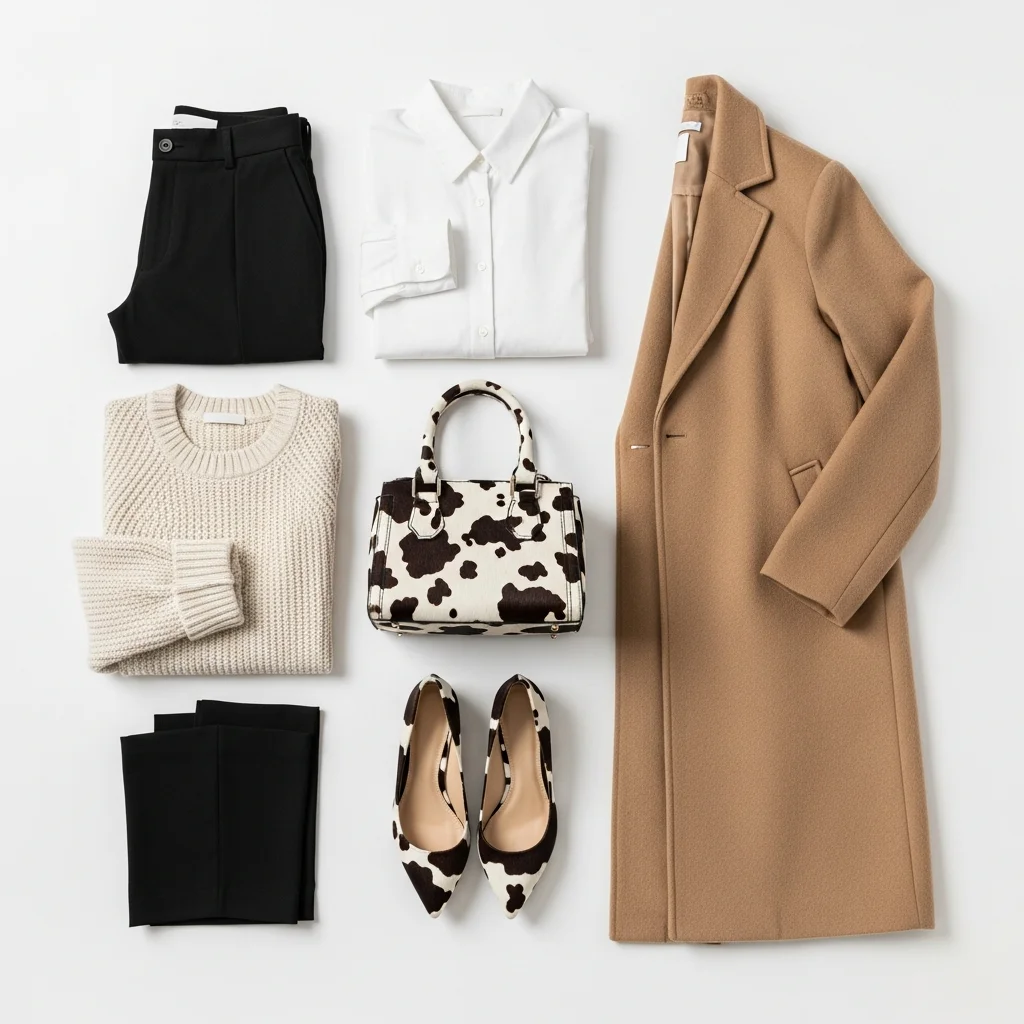
Perhaps cow print’s most underrated strength is its function as a practical neutral in many styling contexts. The irregular organic pattern doesn’t demand attention the way stripes, florals, or geometric prints do. Instead, it provides texture and visual interest while remaining relatively calm to the eye. This quality allows cow print to work as a foundation piece rather than only as an accent, expanding its utility within wardrobes.
The color composition of most cow print trend variations contributes to this neutrality. Whether black and white or brown and tan, the tones involved are inherently versatile. They pair with nearly any color without clashing, creating combinations that feel intentional rather than accidental. Navy, olive, burgundy, cream, and even brighter accent colors all work alongside cow print without competing or creating visual discord. This compatibility makes styling simpler and more intuitive.
Cow print trend print also reads as solid from a distance, another factor in its practical neutrality. Unlike busy florals or complex geometric patterns that remain visually active regardless of viewing distance, cow print often registers as a textured solid when not examined closely. This means it doesn’t overwhelm outfits or demand constant attention, allowing it to exist peacefully alongside other elements without visual competition. The pattern is there when you look for it but doesn’t shout for notice.
This quasi-neutral status has made cow print particularly popular for building capsule wardrobes and travel packing. A cow print trend bag or pair of shoes works with multiple outfits without requiring dedicated coordination. The pattern adds personality without limiting options, solving the common travel dilemma of wanting interesting pieces that still maximize outfit combinations. Practical considerations like this extend trends beyond pure aesthetics into functional territory where they prove their worth through actual use.
Sustainability and Quality Considerations
As fashion becomes more conscious about consumption and environmental impact, cow print pieces have benefited from the shift toward quality over quantity. Because cow print makes a statement, people tend to invest in well-made versions rather than disposable fast fashion iterations. A quality cowhide bag or pair of boots justifies its price through years of wear, aligning with sustainable fashion principles better than trendy pieces designed for single-season use.
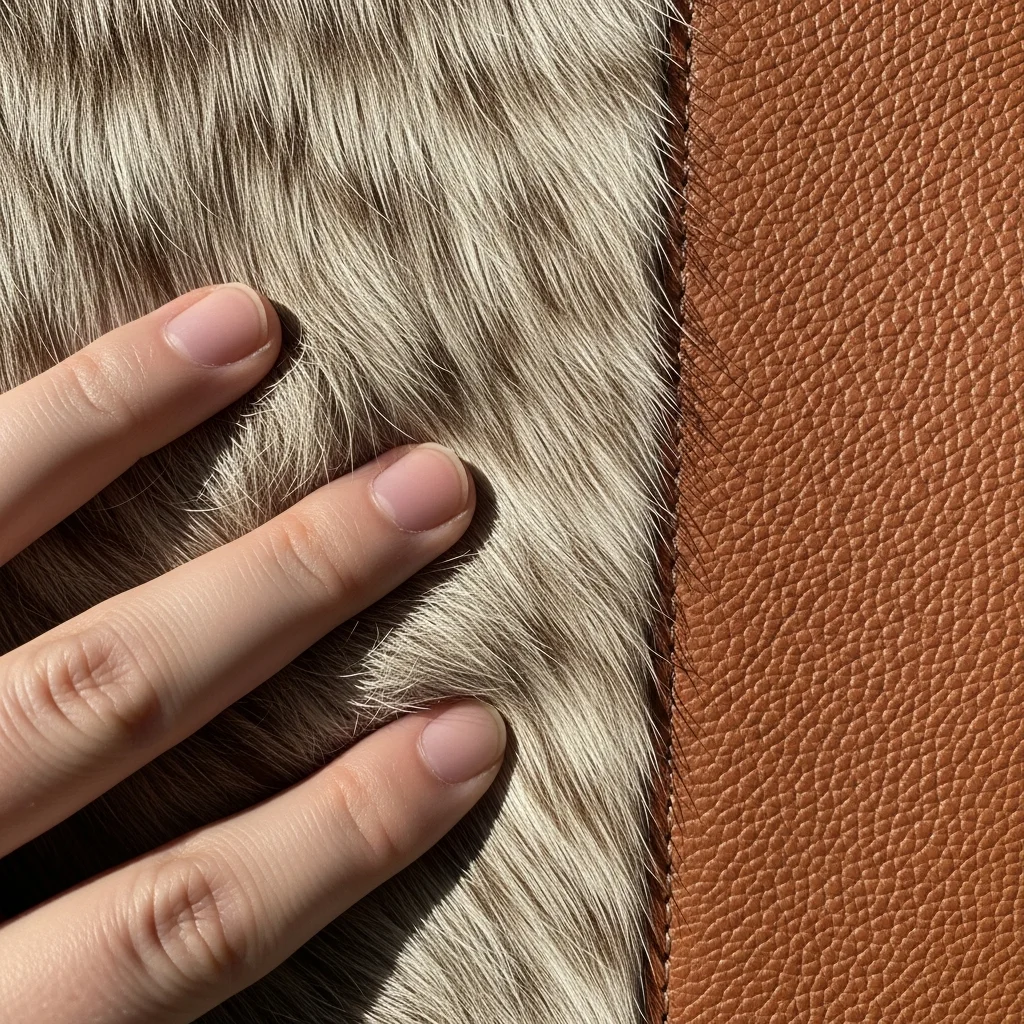
The texture and material quality of cow print items matters significantly for both aesthetics and longevity. Genuine or high-quality faux cowhide develops character over time, with wear adding authenticity rather than diminishing appeal. This aging process encourages long-term ownership rather than constant replacement, reducing overall consumption. The durability of quality cow print pieces makes them practical investments that serve wardrobes for years rather than months.
Ethical considerations around real cowhide have pushed innovation in sustainable alternatives. High-end faux cowhide now rivals authentic materials in appearance and texture while avoiding animal products. These advances allow conscious consumers to embrace the aesthetic without ethical compromises. The availability of quality alternatives has actually expanded the market for cow print by including shoppers who might otherwise avoid it due to sustainability concerns. Find more here.
The trend toward timeless pieces over fleeting fads has benefited cow print specifically. Because the pattern has proven staying power and versatility, purchasing cow print items feels like smart wardrobe building rather than chasing trends. This perception shift matters enormously for longevity. When people view cow print as a lasting element of personal style rather than a temporary trend, they treat it accordingly through both purchase decisions and long-term wear patterns.
Looking Ahead: Cow Print’s Future in Fashion

Fashion forecasting data shows cow print continuing to grow rather than decline as we move through 2026. Projected increases in consumer interest, particularly in specific categories like footwear and outerwear, suggest the pattern hasn’t peaked. New interpretations keep appearing that breathe fresh life into the motif without abandoning what made it appealing initially. This balance between innovation and consistency characterizes trends that transcend single seasons to become style staples.
The pattern’s evolution will likely continue toward more refined and unexpected applications. As the obvious Western styling becomes familiar, designers and stylists will find new contexts for cow print that challenge preconceptions about what it can be. Mixed media approaches combining cowhide with technical fabrics, digital prints reinterpreting traditional patterns, and architectural silhouettes featuring cow print elements all represent possible directions that keep the trend feeling current.
Market saturation remains a risk, as with any trend that achieves mainstream success. However, cow print has shown discipline in avoiding the overexposure that kills many patterns. It appears regularly enough to feel relevant but not so constantly that it becomes background noise. This measured presence, whether through conscious industry coordination or fortunate circumstance, has protected cow print from the fatigue that comes with seeing something absolutely everywhere simultaneously.
The integration of cow print into wardrobe classics suggests long-term viability beyond trend status. When traditional items like trench coats, loafers, and structured bags receive cow print treatments that feel permanent rather than seasonal, it signals evolution from trend to established pattern option. Leopard print achieved this status decades ago, existing perpetually as a design choice rather than a trend that comes and goes. Cow print appears to be following a similar trajectory, positioning itself as a lasting element of fashion’s pattern vocabulary.
The cow print trend’s strength heading into 2026 stems from multiple converging factors: cultural relevance, practical versatility, quality execution, and continued designer interest. The evolution from unexpected runway moment to wardrobe staple demonstrates how trends become classics when they serve real needs and adapt to changing contexts. Cow print isn’t going strong simply because fashion declared it relevant. It’s thriving because people discovered genuine uses for it that enhance their personal style and meet their practical needs.
That foundation ensures staying power that extends well beyond superficial trend cycles. As long as cow print continues offering visual interest, versatility, and quality execution, it will maintain its position in contemporary fashion, proving that sometimes the most unexpected patterns become the most enduring elements of style. Find about latest 2026 trends here.
Frequently Asked Questions
Is cow print still fashionable in 2026?
Yes, cow print remains highly relevant in 2026 and continues appearing in designer collections and street style. The pattern has evolved beyond its initial Western trend origins to become a versatile neutral that works across seasons and styles. Brown and white variations particularly continue gaining popularity for their softer, more refined aesthetic.
How do I style cow print without looking costume-like?
The key is balancing cow print with simple, clean pieces rather than layering multiple Western elements. Pair cow print accessories with modern basics like tailored trousers and minimalist tops. Choose quality materials that look refined rather than novelty items, and let the cow print be your outfit’s single statement element rather than competing with other bold patterns.
What color clothes go best with cow print?
Cow print works surprisingly well with most colors due to its neutral tone composition. Earth tones like cream, camel, olive, and brown create cohesive looks, while black, navy, and white offer clean contrast. Even jewel tones like burgundy or forest green pair beautifully with cow print without clashing, making it more versatile than many patterns.
Should I choose black and white or brown cow print?
Brown and white cow print has become more popular for its warmer, softer appearance that integrates easily with contemporary earth-tone wardrobes. Black and white offers more dramatic contrast and works well for those preferring cooler color palettes or bolder statements. Choose based on your existing wardrobe colors and personal style preferences.
What are the best cow print pieces for beginners?
Start with accessories rather than clothing for lower commitment and easier styling. A cow print bag, belt, or shoes allows you to test the trend without overwhelming your look. These pieces add personality to basic outfits while remaining practical. Once comfortable, consider expanding to larger items like jackets or skirts for bigger impact.