
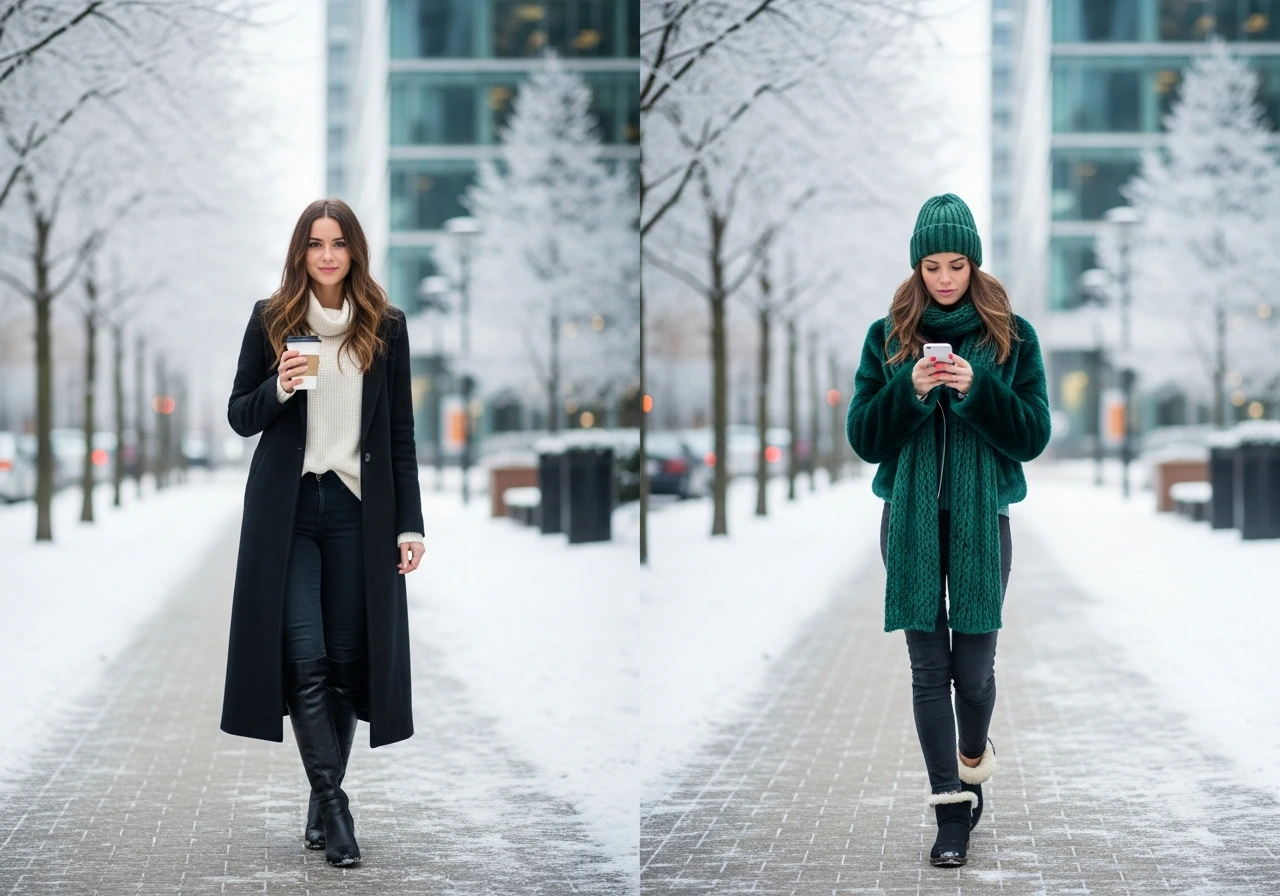
7 Cold Weather Outfits That Look Chic and Actually Keep You Warm
The annual struggle between staying warm and looking stylish has plagued wardrobes for generations. When temperatures plummet, the temptation to pile on every available layer can transform even the most fashion-conscious person into an unrecognizable bundle of fabric. But the reality is that cold weather outfits dressing doesn’t require sacrificing style for warmth or vice versa. With the right approach to layering, fabric selection, and strategic styling, you can create outfits that deliver genuine thermal protection while maintaining a polished, put-together appearance.
The key lies in understanding how different garments work together to trap heat, wick moisture, and shield you from harsh elements. Rather than randomly stacking clothes, successful winter dressing involves building thoughtful combinations where each piece serves a specific purpose. This methodical approach ensures you stay comfortable throughout the day, whether you’re commuting through icy winds, sitting in overheated indoor spaces, or navigating unpredictable weather conditions that fluctuate between bitter cold and mild warmth.
This comprehensive guide presents seven expertly curated cold weather outfits designed to keep you genuinely warm while ensuring you look effortlessly chic. Each outfit formula considers real-world practicality alongside aesthetic appeal, proving that winter fashion can be both functional and fabulous.
The Foundation of Smart Cold Weather Dressing
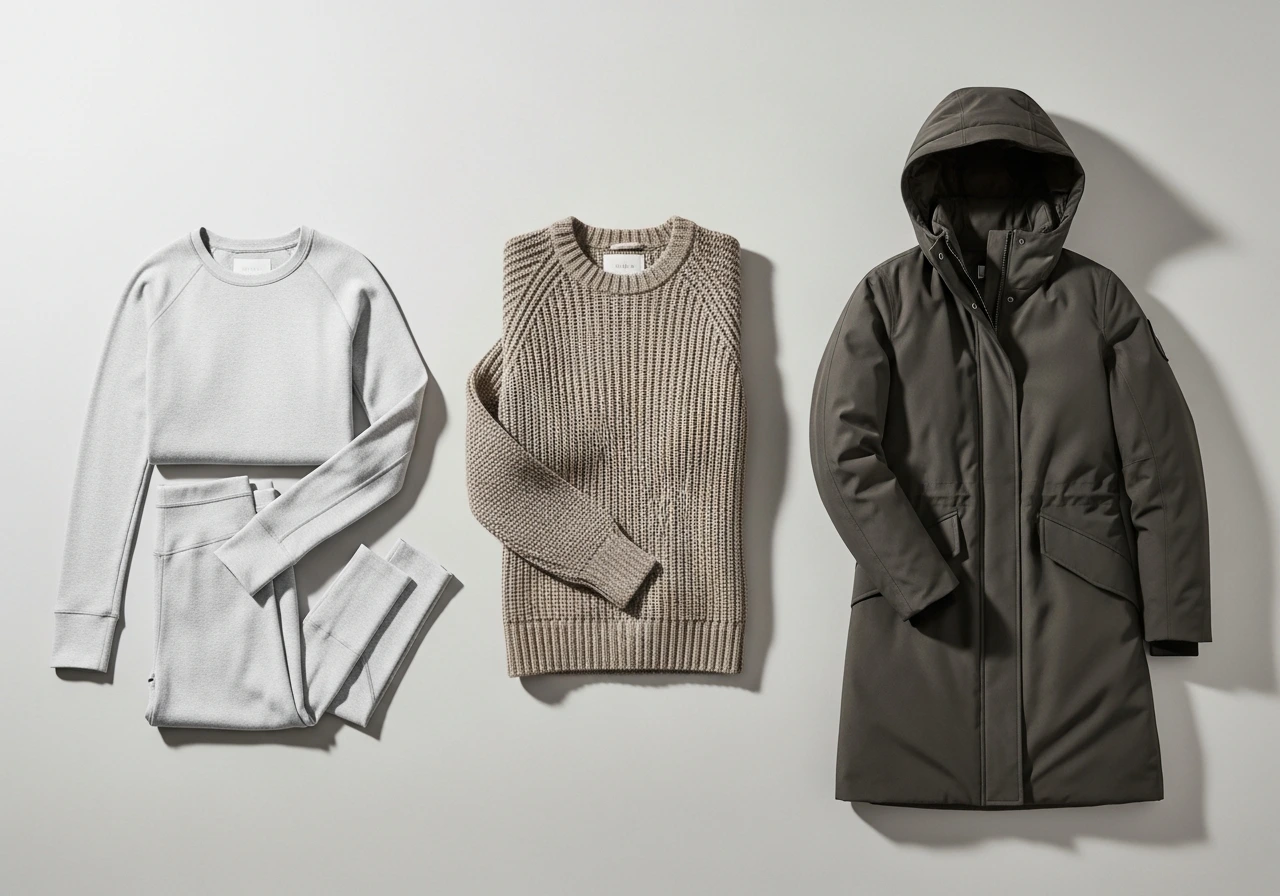
Before exploring specific outfit combinations, understanding the principles of effective cold weather dressing sets the foundation for success. The traditional layering system consists of three distinct components: a moisture-wicking base layer, an insulating middle layer, and a protective outer shell. This structure allows for temperature regulation and provides the flexibility to adapt to changing conditions throughout your day.
Base layers should fit close to the skin without restricting movement. Materials like merino wool or synthetic fabrics excel at pulling perspiration away from your body, keeping you dry and preventing the chill that comes from damp clothing. Unlike cotton, which retains moisture and can actually make you colder, these technical fabrics maintain their insulating properties even when slightly damp.
The middle layer provides the bulk of your warmth through trapped air pockets. Sweaters, fleece garments, and down vests create insulation that prevents your body heat from escaping. This layer can be adjusted based on temperature by choosing lighter or heavier options.
Your outer layer shields you from wind, rain, and snow. A quality coat with proper weather resistance creates a barrier between you and the elements while allowing moisture vapor to escape. This prevents the uncomfortable buildup of condensation inside your clothing that can leave you feeling damp and cold.
Understanding these fundamentals transforms how you approach winter dressing. Rather than simply adding more clothes when cold, you learn to build strategic combinations that work synergistically to maintain optimal body temperature.
The Classic Camel Coat Formula
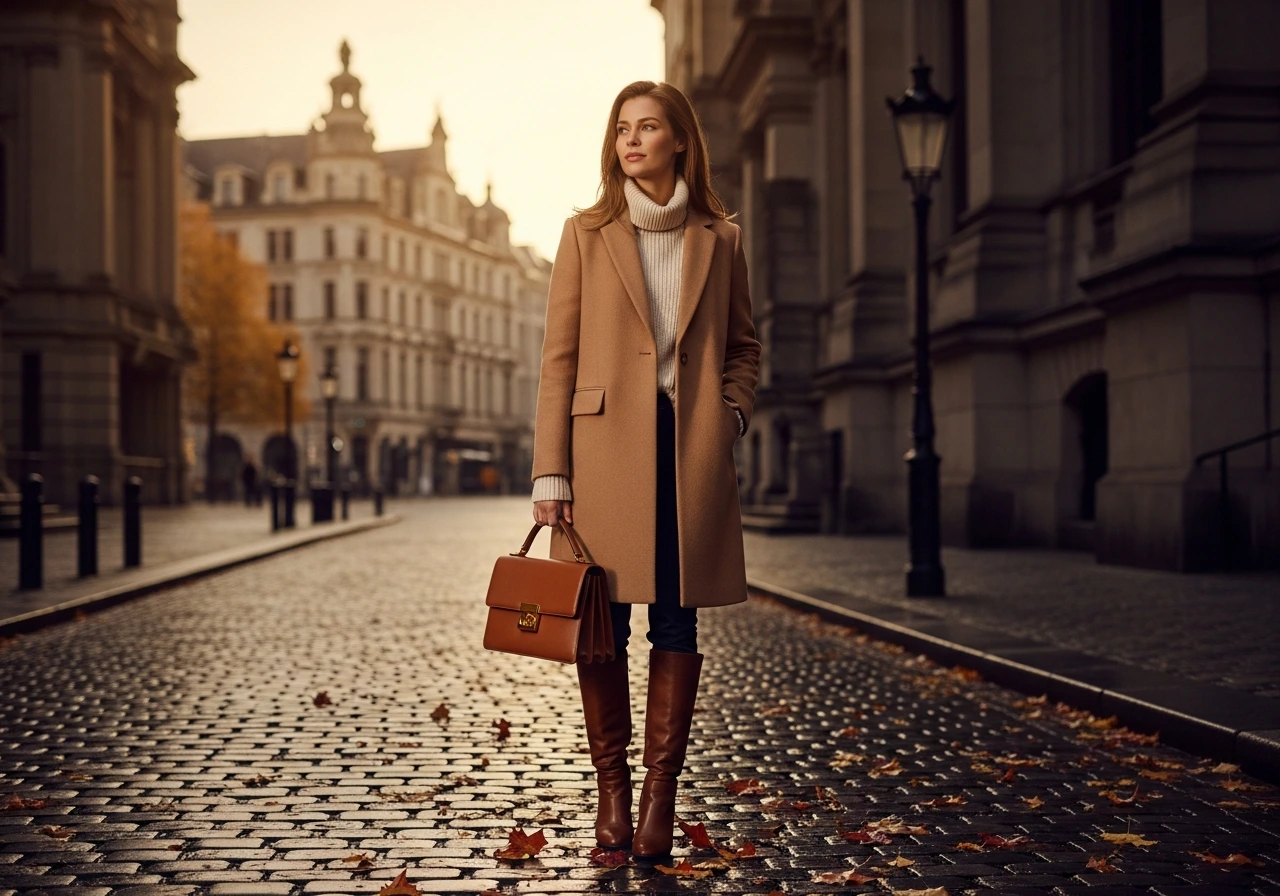
The camel coat stands as one of winter fashion’s most enduring staples, and for excellent reason. This timeless outerwear piece instantly elevates any outfit while providing substantial warmth. The neutral tone pairs beautifully with virtually every color in your wardrobe, making it an incredibly versatile investment piece that transitions seamlessly from casual weekend errands to professional work settings.
Start with a fitted turtleneck in a complementary neutral shade like cream, black, or soft gray. The high neck provides extra protection for one of your body’s most vulnerable areas to heat loss without adding bulk. Layer a chunky knit cardigan or wool vest over the turtleneck for additional insulation. This middle layer can be removed indoors without disrupting your entire outfit, offering flexibility throughout the day.
For bottoms, choose dark denim jeans or tailored wool trousers depending on the formality of your occasion. The structured silhouette of well-fitted pants creates a streamlined look that balances the volume of your coat. Knee-high leather boots in black or brown complete the ensemble while keeping your legs protected from cold and wet conditions.
Accessories make this cold weather outfits truly shine. A cashmere scarf adds another layer of warmth while introducing texture and visual interest. Leather gloves and a structured handbag maintain the polished aesthetic. The beauty of this formula lies in its adaptability. You can dress it down with sneakers and a crossbody bag for weekend activities or elevate it with ankle boots and gold jewelry for dinner reservations.
The camel coat formula works because it combines practical warmth with timeless elegance. The natural fiber composition of wool coats provides excellent insulation while allowing your body to breathe, preventing overheating in heated indoor environments.
The Luxe Leather and Knit Combination
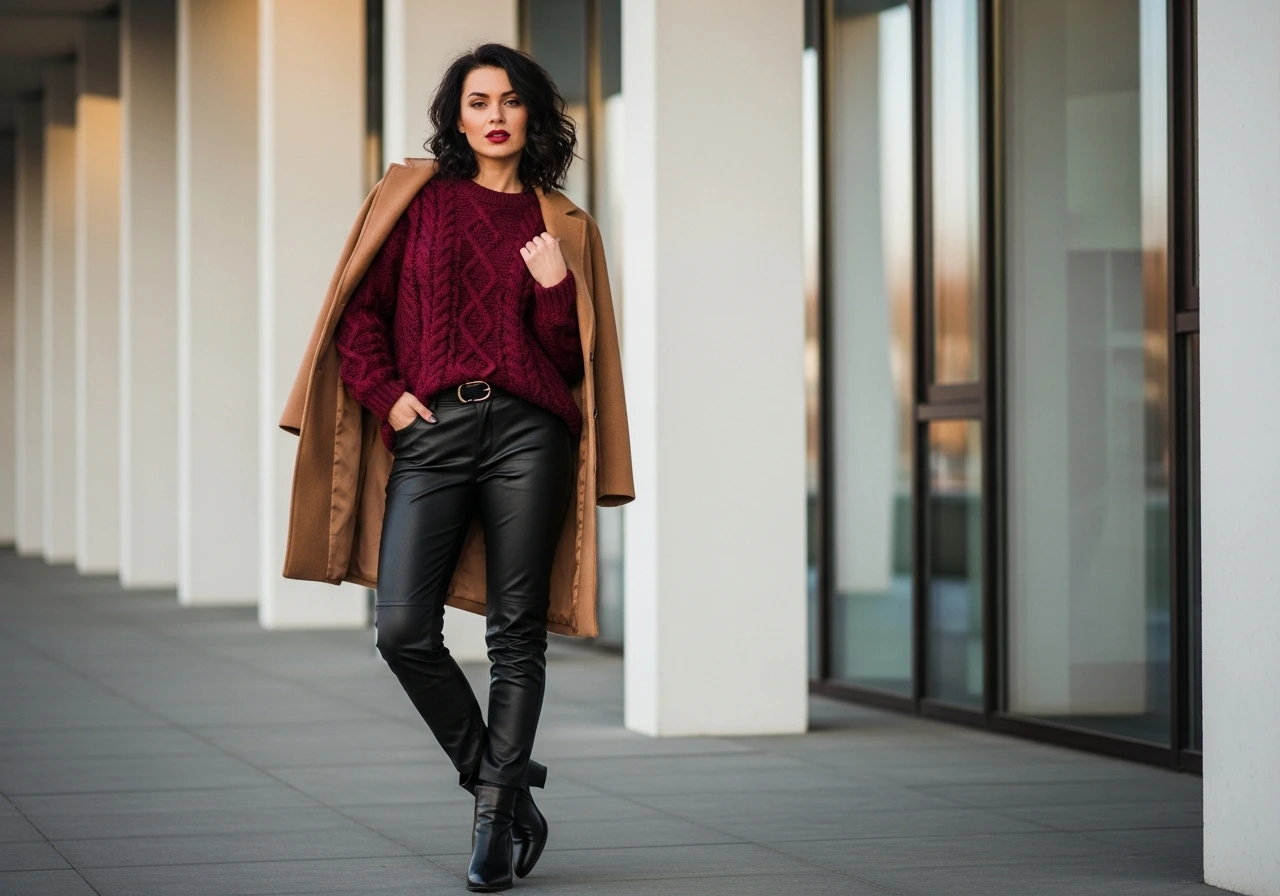
Leather and knitwear create one of winter’s most sophisticated pairings. The contrast between the smooth, structured leather and soft, cozy knits produces visual interest while delivering substantial warmth. This combination proves particularly effective for creating outfits that feel both refined and comfortable.
Begin with a fitted base layer in a neutral tone. A lightweight long-sleeve shirt or silk camisole works perfectly under your knitwear. Add a chunky cable-knit sweater in a rich color like burgundy, forest green, or navy. The textured knit provides significant insulation while the substantial weight of the garment offers wind resistance.
The star of this cold weather outfits is faux leather pants or a leather skirt. Modern faux leather options are virtually indistinguishable from genuine leather while offering better weather resistance and easier care. The pants create a sleek silhouette that balances the volume of your sweater. Surprisingly, leather pants provide excellent warmth because the material acts as a windbreak, and when paired with thermal tights underneath, they become remarkably cozy.
A wool or faux fur coat completes the ensemble. Choose a coat that hits at or below the hip to ensure full coverage of your leather bottoms. Black, camel, or chocolate brown coats work beautifully with most leather pieces.
For footwear, ankle boots with a low block heel provide stability on potentially slippery surfaces while maintaining an elegant line. The closed toe and ankle coverage keep your feet warm without requiring heavy winter boots.
This outfit excels in versatility. It works perfectly for upscale casual occasions like gallery openings or sophisticated dinners. The leather elements add an edge that prevents the look from feeling too cozy or casual, while the knit components ensure you stay genuinely warm even in frigid temperatures.
The Puffer Jacket Done Right
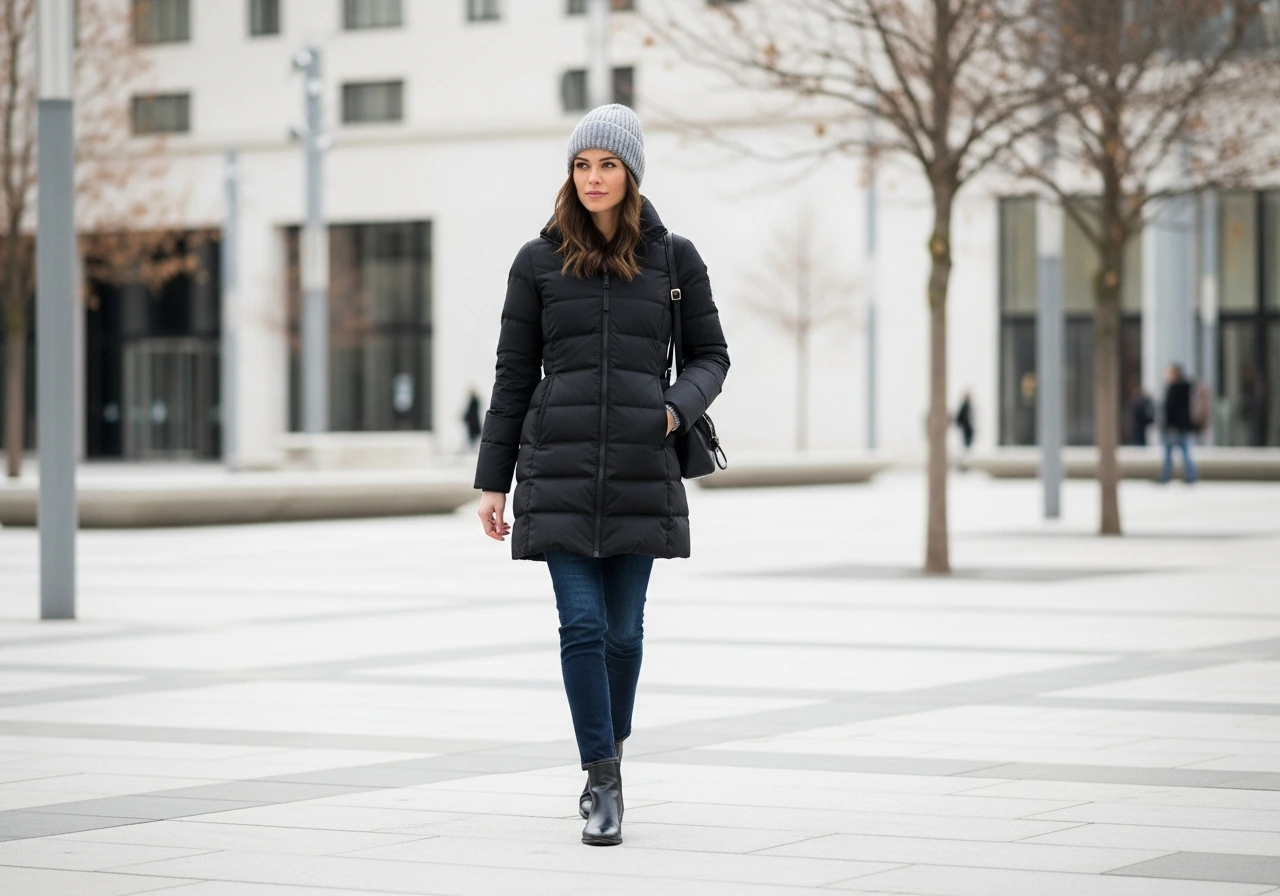
Puffer jackets have evolved dramatically from their purely utilitarian origins. Contemporary puffer designs offer serious warmth through advanced synthetic insulation while featuring tailored cuts and elegant details that make them genuinely stylish. The key to wearing a puffer jacket chicly lies in balancing its volume with streamlined pieces underneath.
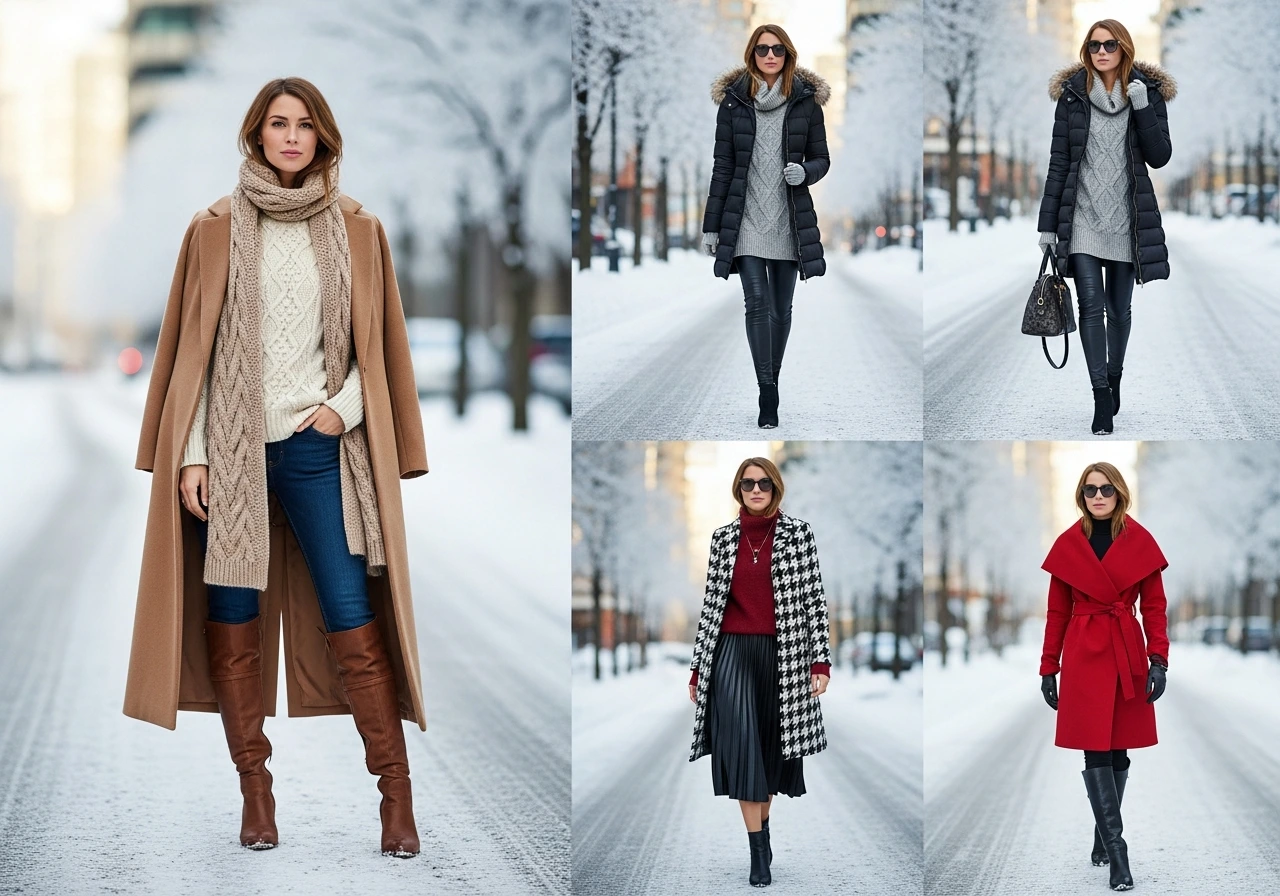
Choose a puffer jacket in a flattering silhouette. Longer lengths that hit mid-thigh or knee length create an elegant column of warmth, while cropped puffers work beautifully for creating defined proportions. Neutral colors like black, navy, or olive green offer maximum versatility, though a bold color like crimson or emerald can make a striking statement during gray winter months.
Under your puffer, keep things relatively fitted. A fine-gauge merino turtleneck or a sleek long-sleeve top provides a smooth base. Add slim-fitting jeans or leggings in a dark wash. The streamlined bottoms prevent the outfit from feeling overly bulky while allowing you to wear thermal leggings underneath for extra warmth without visible bulk.
The footwear choice significantly impacts the overall aesthetic. Sleek leather ankle boots elevate the look, while chunky lug-sole boots create a more rugged, outdoorsy vibe. Both approaches work depending on your destination and personal style.
Accessories become crucial for polish. A cashmere beanie in a coordinating color keeps your head warm while adding a refined touch. Leather gloves and a structured bag maintain sophistication. Even though the puffer jacket is inherently casual, these deliberate accessory choices elevate the entire ensemble.
This cold weather outfit formula particularly shines for active days when you’re moving between multiple locations. The puffer jacket’s exceptional warmth-to-weight ratio means you stay cozy without feeling weighed down, and the technical fabrics typically include weather resistance for added protection.
The Monochromatic Sophistication Approach
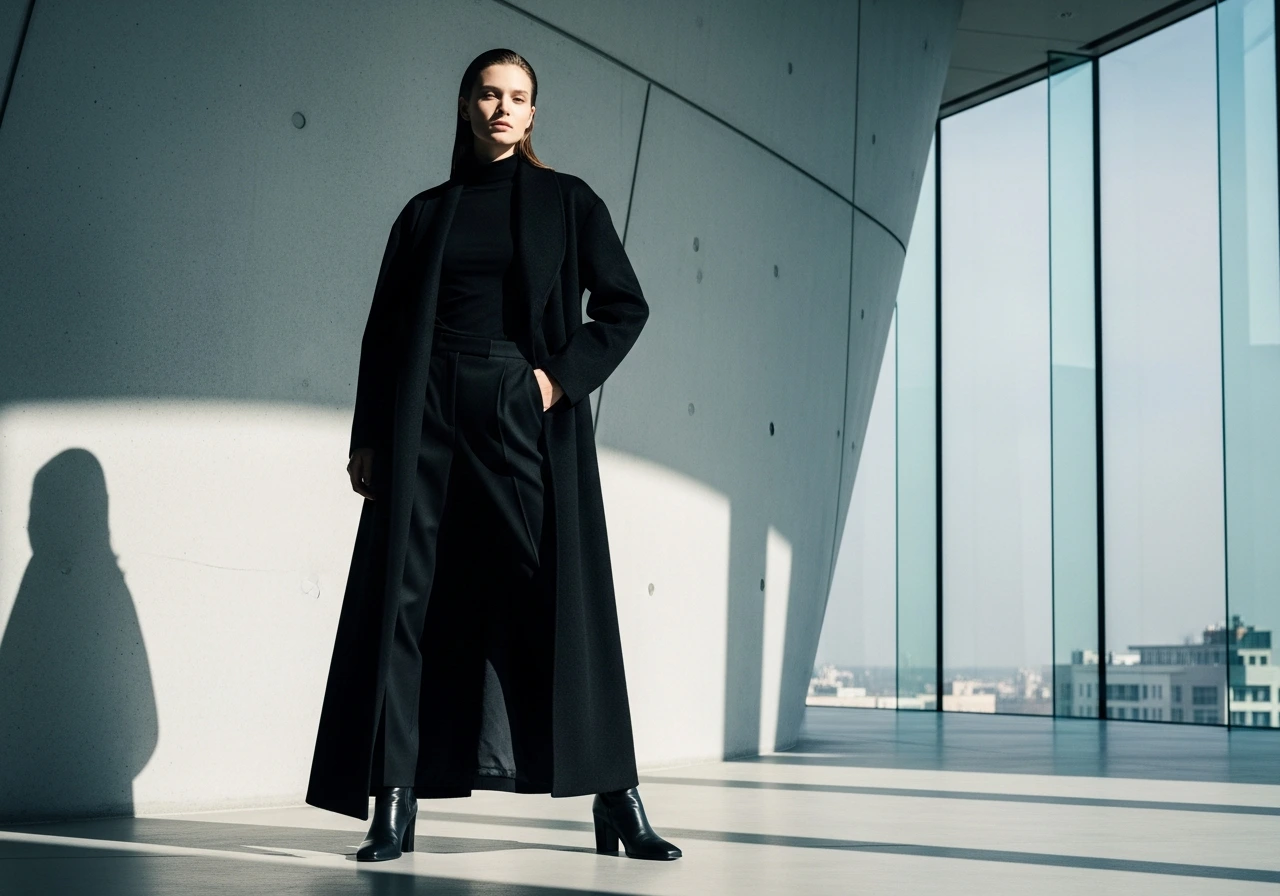
Dressing in a single color family creates instant visual harmony and projects effortless sophistication. During winter, monochromatic dressing offers the additional benefit of allowing you to layer multiple pieces without creating visual chaos. The cohesive color story keeps the look streamlined even when wearing numerous layers.
All-black remains the most classic monochromatic choice, and for good reason. Black absorbs heat from sunlight, making it genuinely warmer than lighter colors on sunny winter days. The dark color also conceals the slight variations in texture and fabric that occur when layering multiple garments.
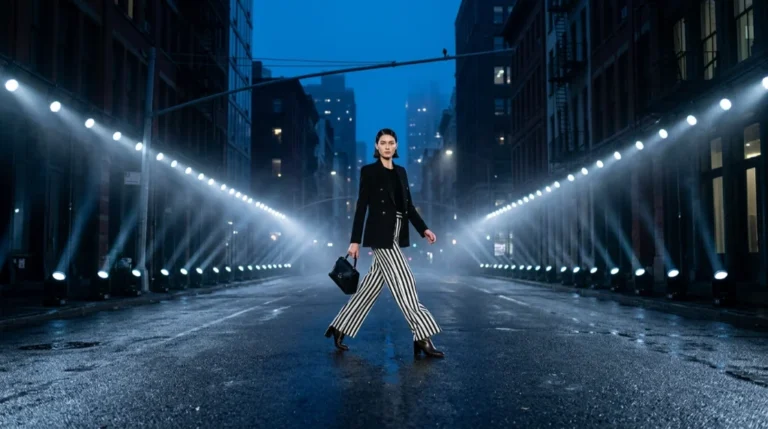
Start with black thermal leggings or fitted trousers as your base. Add a black long-sleeve turtleneck in a soft fabric like jersey or modal. Layer a black cable-knit cardigan or wool sweater over the turtleneck. The varying textures within the same color family create depth and interest without disrupting the cohesive appearance.
For outerwear, a black wool coat, either in a belted wrap style or a structured longline cut, provides elegant protection. The monochromatic approach allows you to choose a coat with interesting details like oversized buttons, unique collar treatments, or asymmetric closures without overwhelming the outfit.
Black leather or suede boots in any height complete the look. The head-to-toe black creates a lengthening effect that makes you appear taller and more statuesque.
While black is most common, other monochromatic combinations work beautifully for winter. All-camel or all-cream creates a soft, luxurious aesthetic reminiscent of high-end fashion editorials. Navy offers a sophisticated alternative that feels slightly less severe than black while maintaining similar versatility.
The genius of monochromatic dressing lies in its simplicity. You don’t need to consider color coordination or worry whether pieces complement each other. This approach particularly benefits busy mornings when you want to look polished with minimal effort.
The Velvet and Wool Evening Look
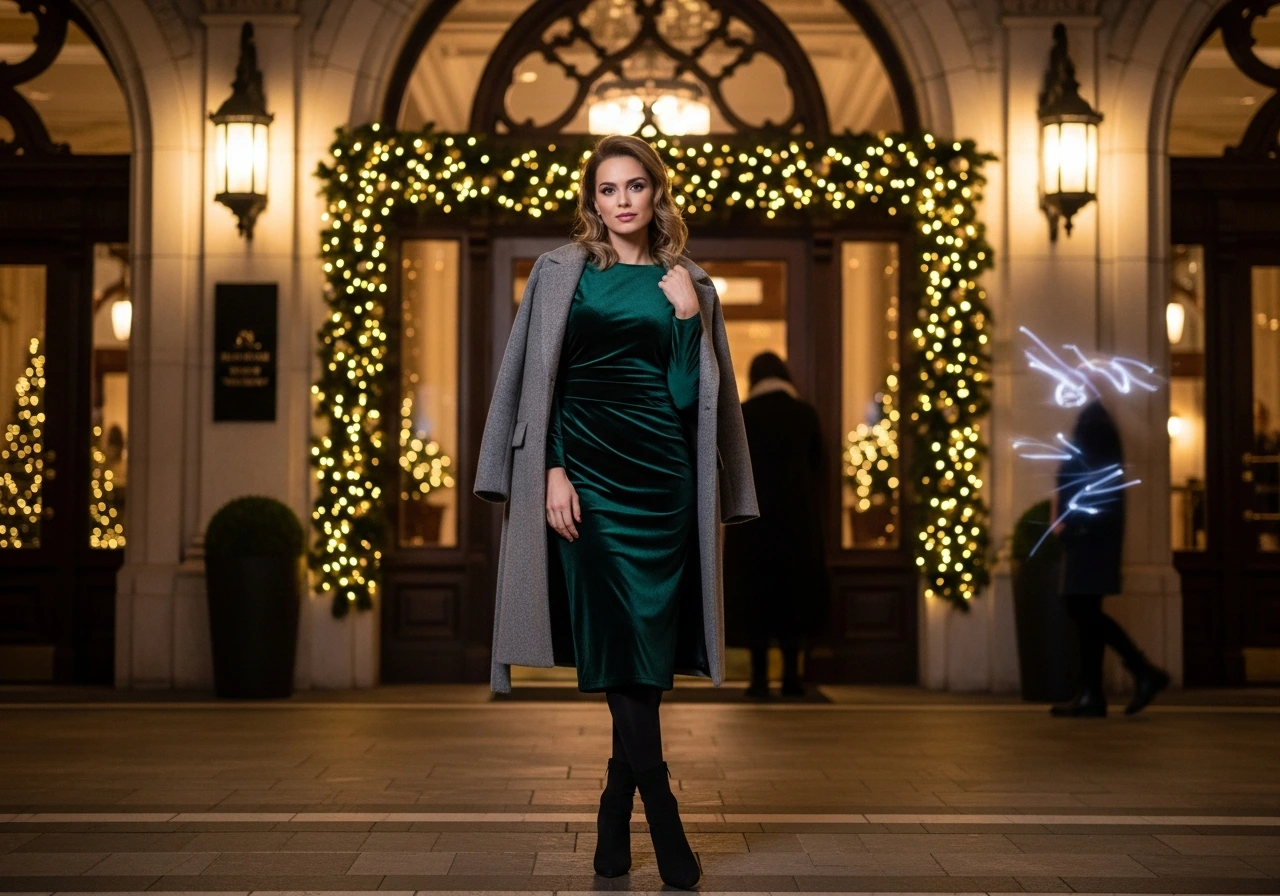
Special occasions during winter months present unique styling challenges. You want to look elegant and festive while staying warm enough for the journey to and from your destination. Velvet paired with wool creates a luxurious combination perfect for holiday parties, winter weddings, or upscale evening events.
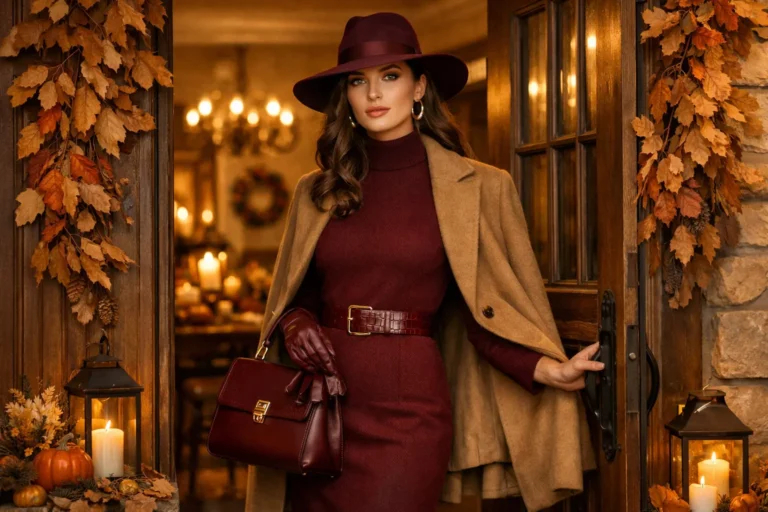
Choose a velvet midi or maxi dress in a rich jewel tone like sapphire blue, deep emerald, or burgundy. The longer length provides more coverage and warmth than cocktail-length options. Velvet’s pile creates tiny air pockets that offer surprising insulation while the fabric’s lustrous appearance reads as inherently formal and elegant.
Underneath, wear opaque tights in a matching or neutral shade. If temperatures are particularly frigid, thermal tights or even fleece-lined options work well under velvet since the dress fabric’s weight conceals any slight bulk.
The outerwear choice makes or breaks this outfit. A tailored wool coat in a complementary color preserves the elegant lines of your dress. Choose a coat long enough to cover most of your dress or opt for a sophisticated cape or wrap that adds drama while providing warmth. Faux fur stoles or shrugs offer another glamorous layering option that feels appropriate for dressy occasions.
For footwear, closed-toe heeled boots or pumps maintain the polished aesthetic while providing more warmth than strappy sandals. Consider styles with lower heels for better traction on potentially icy surfaces.
Accessories should feel intentional and refined. Statement earrings draw attention upward, while a small clutch or elegant evening bag completes the look. A pashmina or cashmere wrap provides an additional layer you can drape over your shoulders indoors if needed.
This outfit demonstrates that cold weather outfits dressing doesn’t require sacrificing elegance. With thoughtful layering and fabric choices, you can maintain a sophisticated appearance while staying genuinely comfortable.
The Casual Weekend Comfort Formula
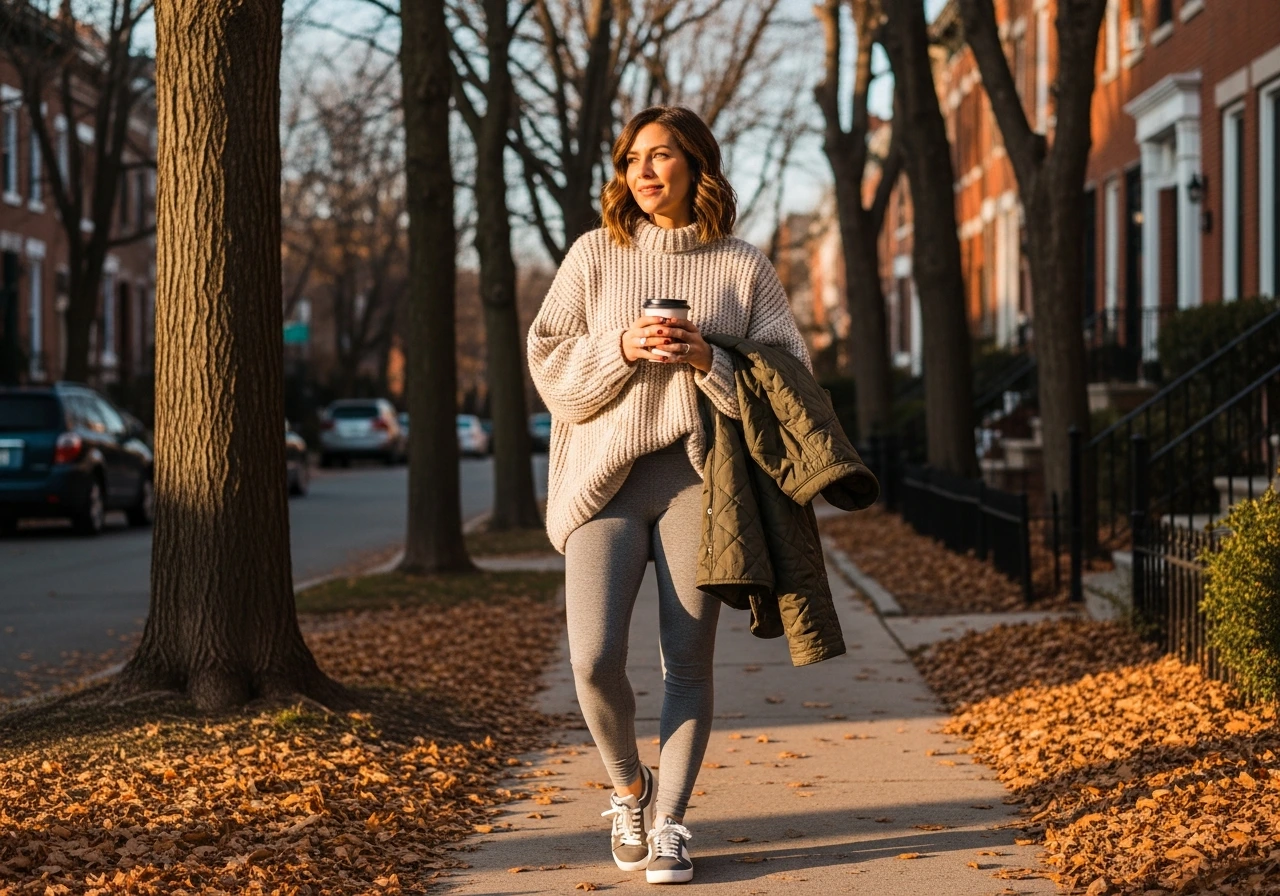
Weekend dressing demands maximum comfort without completely abandoning style. The goal is creating an outfit that feels effortless and cozy while still looking intentionally put together rather than accidentally thrown on.
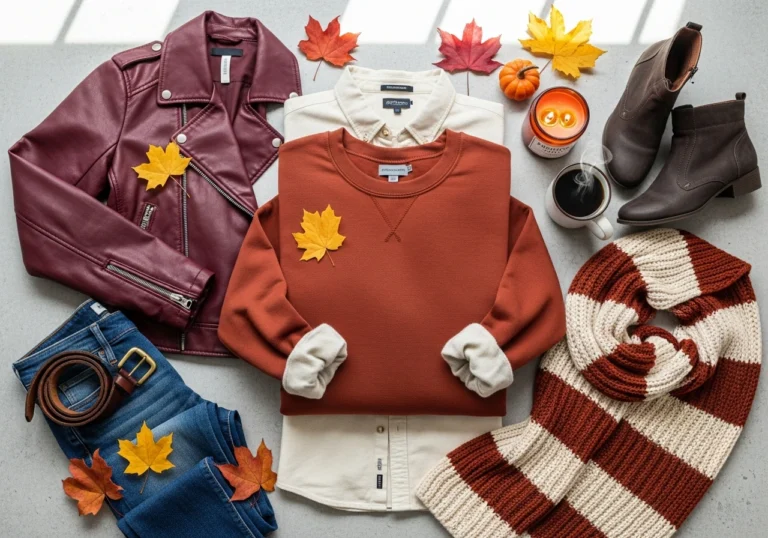
Start with a premium base layer. A soft cotton or modal long-sleeve shirt provides a smooth foundation. Layer an oversized knit sweater or hoodie over the base. The relaxed fit allows for easy movement and creates a casual, approachable aesthetic. Choose natural colors like oatmeal, gray, or soft brown for a calming, neutral palette.
High-waisted leggings or joggers in a coordinating color provide comfort and warmth. Modern athleisure pieces offer thermal properties and moisture-wicking capabilities that make them surprisingly suitable for cold weather. The fitted silhouette balances the volume of your oversized sweater, preventing the outfit from appearing sloppy.
A quilted jacket or sherpa-lined coat adds warmth without formality. These transitional layers work beautifully for moderately cold days or for layering under a heavier coat when temperatures drop significantly.
Footwear should prioritize comfort and traction. Lined sneakers, shearling-trimmed boots, or waterproof ankle boots keep your feet warm and secure on slippery surfaces. The casual nature of these shoes suits weekend activities like farmers market visits, coffee shop meetups, or neighborhood walks.
Accessories for this outfit lean practical. A knit beanie or baseball cap, a cozy scarf, and a crossbody bag or backpack allow you to keep your hands free while maintaining warmth. These utilitarian pieces serve genuine functions while contributing to the overall relaxed aesthetic.
This formula works because it acknowledges that not every outfit needs to make a fashion statement. Sometimes the goal is simply feeling comfortable and warm while running errands or spending casual time with friends. The carefully chosen pieces ensure you still look presentable and intentional despite the relaxed vibe.
you may also visit our webpage chic-winter-outfits/
Strategic Fabric Selection for Maximum Warmth
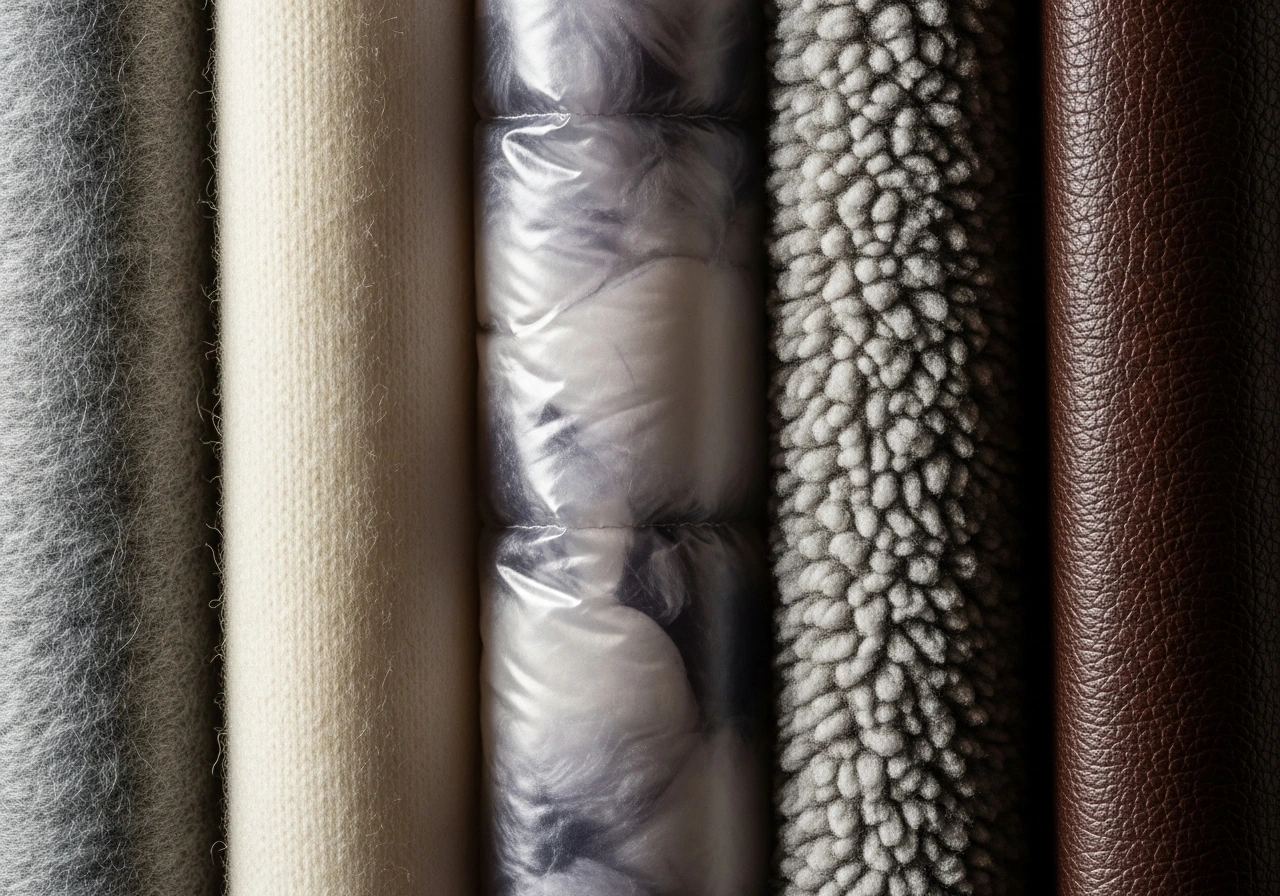
Understanding fabric properties transforms your ability to create genuinely warm outfits. Not all materials provide equal insulation, and some actively work against your goal of staying warm. Strategic fabric selection allows you to maximize warmth without excessive bulk.
Merino wool stands as one of winter’s most valuable materials. Unlike regular wool, merino features finer fibers that feel soft against skin without itching. The material naturally regulates temperature, keeping you warm when cold and preventing overheating when active. Merino also resists odors, allowing you to wear garments multiple times between washings.
Cashmere offers unparalleled luxury and surprising warmth considering its lightweight nature. The fine fibers trap heat efficiently while draping beautifully. Though expensive, quality cashmere pieces last decades with proper care, making them worthy investments for cold climates.
Down and down-alternative insulation provide exceptional warmth-to-weight ratios. These materials create thousands of tiny air pockets that trap body heat. Modern down alternatives perform nearly identically to genuine down while offering benefits like easier washing and continued insulation even when damp.
Fleece creates warmth through a different mechanism. The synthetic pile fabric traps air and wicks moisture effectively. Though less elegant than natural fibers, fleece excels as a middle layer or for highly active pursuits where moisture management matters most.
Avoid cotton as a base layer in cold weather. While comfortable in mild conditions, cotton absorbs and retains moisture, pulling heat away from your body when damp. Save cotton for outer layers where its moisture absorption matters less.
Leather and faux leather provide wind resistance that significantly contributes to warmth. While not insulating themselves, these materials block cold air penetration, making them excellent choices for outer garments or pants.
Understanding these properties empowers you to build outfits strategically. Combine a merino base layer with a cashmere sweater and down coat for optimal warmth across all three layering positions. This knowledge-based approach delivers better results than simply adding more random pieces.
Accessorizing for Style and Function
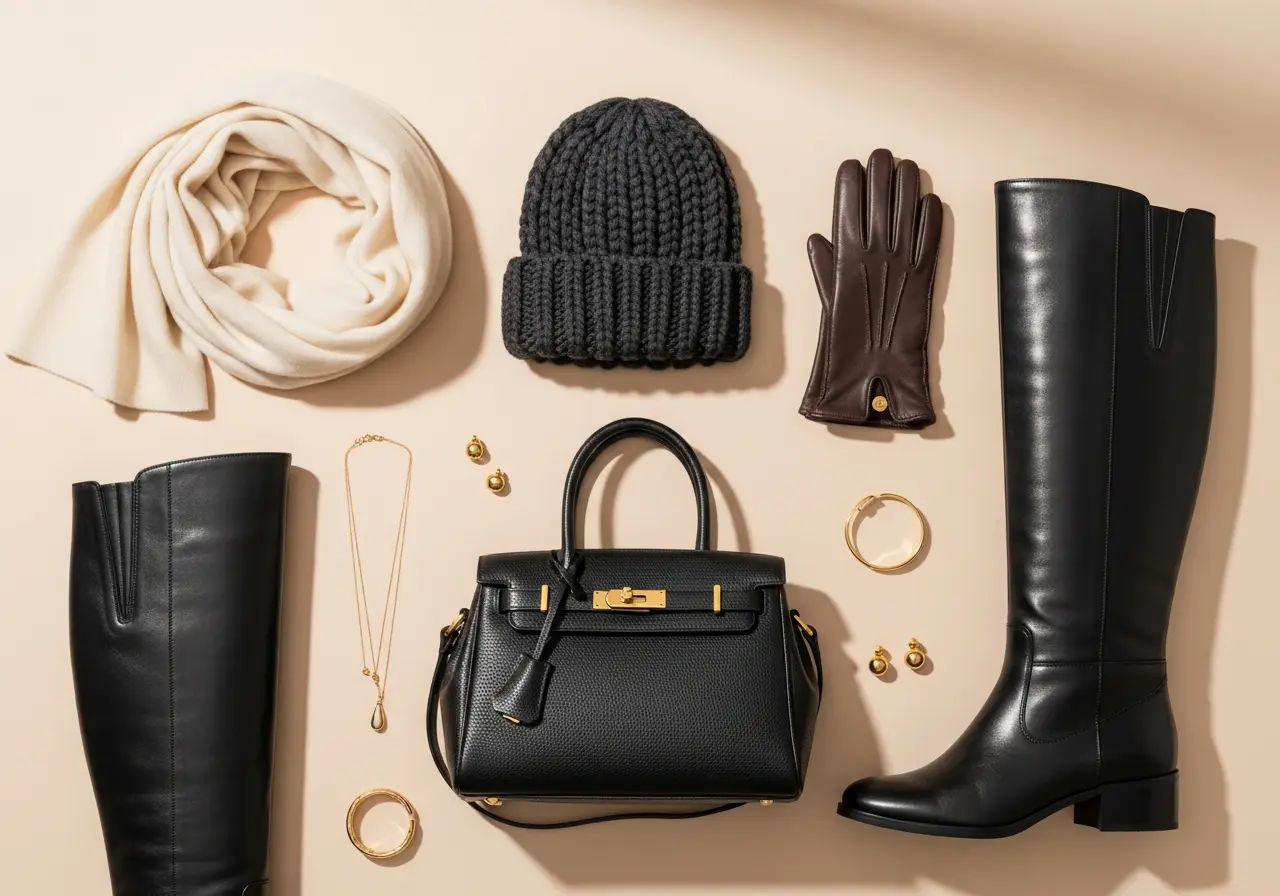
Accessories serve dual purposes during winter, providing both practical warmth and style-defining details. The right accessories transform a basic outfit into something special while ensuring you stay comfortable from head to toe.
Scarves offer remarkable versatility. A large cashmere wrap can function as a shawl, blanket, or traditional neck scarf depending on your needs. The generous size allows for creative draping that adds visual interest to your coat. Choose neutral colors for maximum versatility or select bold patterns to inject personality into monochromatic outfits.
Gloves prevent heat loss through your hands, which are particularly vulnerable to cold. Leather gloves with cashmere or fleece lining combine elegance with functionality. For extremely cold days, mittens provide more warmth than gloves by allowing your fingers to share heat. Contemporary mitten designs include smartphone-compatible fingertips so you don’t sacrifice connectivity for warmth.
Hats significantly reduce heat loss since substantial warmth escapes through your head. Knit beanies work for casual situations, while structured wool hats maintain polish for professional settings. Consider earflap styles or headbands that cover your ears without disrupting hairstyles.
Boots represent perhaps the most critical accessory decision. Your feet carry you through winter conditions and require proper protection. Leather or suede boots with rubber soles provide traction on slippery surfaces. Waterproof treatments shield against slush and snow. Interior lining or space for thick socks ensures your feet stay warm.
Bags should accommodate your winter necessities. Larger totes or backpacks hold gloves, scarves, and other items you remove indoors. Crossbody bags keep your hands free while navigating crowded streets or public transportation.
These accessories don’t just supplement your outfit. They’re essential components that ensure your cold weather clothing actually keeps you warm while contributing to your overall aesthetic. Investing in quality accessories pays dividends through years of reliable use.
Building a Practical Cold Weather Wardrobe
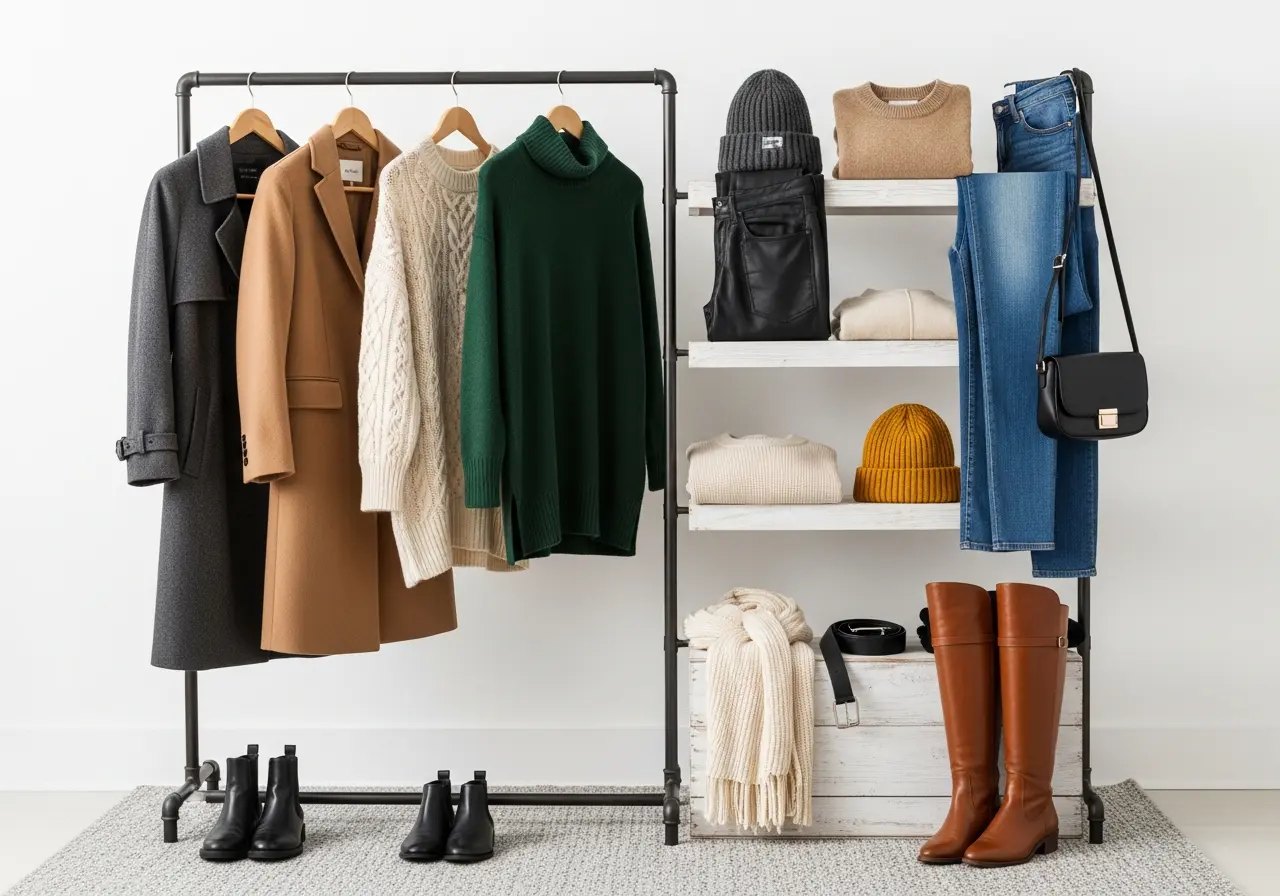
Creating a functional winter wardrobe doesn’t require endless pieces. Strategic selections that coordinate well allow you to generate numerous outfit combinations from a relatively small collection. This approach simplifies morning routine decisions while ensuring you always have appropriate options.
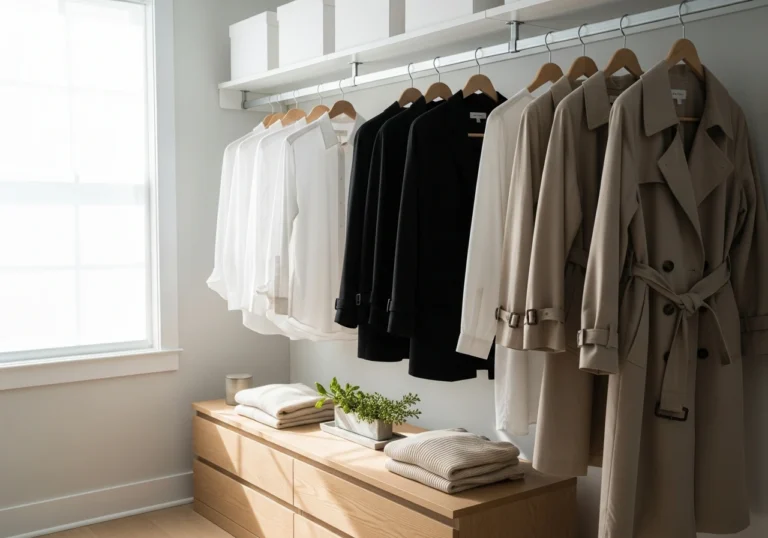
Start with versatile outerwear in neutral colors. A quality wool coat in camel, black, or navy pairs with everything and suits various occasions. Add a technical puffer jacket for extremely cold days or active pursuits. These two coats cover most winter situations.
Invest in several base layers in neutral colors. Long-sleeve shirts, turtlenecks, and thermal tops in black, white, gray, and navy create countless combinations. Natural fibers or technical synthetics outperform cotton for base layers.
Build a sweater collection featuring different weights and styles. Chunky cable knits, fine-gauge cashmere, cardigans, and pullovers each serve different purposes. Neutral colors offer maximum versatility, while one or two statement sweaters in bold colors or patterns add interest.
Include bottoms that accommodate layering. Well-fitted jeans in dark washes, wool trousers, leggings, and leather pants provide variety. Each bottom pairs differently with various tops and coats, multiplying your options.
Quality boots in complementary styles ensure appropriate footwear for any situation. Knee-high boots, ankle booties, and weatherproof boots cover different needs. Neutral colors allow pairing with multiple outfits.
Accessories fill the gaps and personalize your style. Scarves, hats, and gloves in coordinating colors complete cold weather outfits while providing necessary warmth.
This capsule approach emphasizes quality over quantity. Better to own fewer pieces made from superior materials that last for years than numerous cheap items that quickly deteriorate. Well-constructed garments from natural fibers provide better warmth, look more polished, and ultimately prove more economical.
you may also visit our webpage chic-winter-outfits/
Conclusion
Cold weather outfits dressing presents challenges, but understanding proper layering techniques, fabric properties, and strategic styling allows you to create outfits that deliver genuine warmth without compromising style. The seven cold weather outfit formulas presented here demonstrate that fashion and function need not conflict during winter months.
Success lies in approaching cold weather outfits dressing systematically rather than randomly. Build outfits from proper base layers upward, select materials based on their thermal properties, and choose pieces that work together cohesively. Accessories complete looks while providing essential protection against elements.
Remember that the most stylish cold weather outfits means nothing if you’re miserably cold. Prioritize warmth first, then apply aesthetic considerations within that framework. With thoughtful planning and quality pieces, you can stride confidently through winter looking polished and feeling comfortable regardless of how low the temperature drops.
These cold weather outfits formulas serve as starting points for developing your personal cold weather outfits style. Adapt them based on your climate, lifestyle needs, and aesthetic preferences. The principles remain constant: layer intelligently, choose appropriate fabrics, and never sacrifice necessary warmth for appearance. Master these fundamentals, and winter dressing becomes less daunting and more enjoyable, allowing you to embrace the season with both style and comfort.
Frequently Asked Questions
What temperature qualifies as cold weather outfits for dressing purposes?
Cold weather outfits typically refers to temperatures below 50 degrees Fahrenheit, though this varies based on individual tolerance and climate adaptation. True cold weather outfits that requires serious layering and insulation begins around 32 degrees Fahrenheit and below. Wind chill significantly affects how cold you feel, so factor in weather conditions beyond just the temperature reading when planning outfits.
How many layers should I wear in very cold weather outfits?
The ideal number of layers depends on the specific temperature, your activity level, and how long you’ll be outdoors. Generally, three layers work well: a moisture-wicking base layer against your skin, an insulating middle layer for warmth, and a protective outer shell against wind and precipitation. In extreme cold, you might add additional middle layers or choose heavier-weight options in each category rather than adding more distinct layers.
Can I wear dresses and skirts in winter and still stay warm?
Absolutely. Winter dresses and skirts work beautifully when paired with thermal tights or leggings underneath and knee-high or over-the-knee boots. Choose midi or maxi lengths for more coverage, and layer appropriately on top with sweaters, cardigans, and coats. Thicker fabrics like wool, velvet, and knits provide more inherent warmth than summer materials.
What fabrics should I avoid in cold weather outfits?
Avoid cotton as a base layer because it absorbs moisture and loses its insulating properties when damp, actually making you colder. Thin synthetic fabrics that don’t provide insulation also perform poorly. Save lightweight, breathable materials for layering in moderate conditions rather than relying on them for primary warmth in truly cold weather outfits.
How do I prevent my cold weather outfits from looking too bulky when layering?
Balance proportions by pairing voluminous pieces with fitted items. If wearing an oversized coat, choose streamlined bottoms. When layering multiple tops, keep each successive layer slightly larger than the previous one to avoid bunching. Monochromatic color schemes create visual continuity that minimizes the appearance of bulk. Choose fabrics that provide warmth without thickness, like merino wool and down insulation, which offer excellent warmth-to-weight ratios to the cold weather outfits.


One Comment