

I Built My Boyfriend a 10-Piece Men’s Capsule Wardrobe So He’d Stop Wearing Hiking Pants to Brunch
Every relationship has its battles. Some couples argue about whose turn it is to do the dishes. Others debate where to spend the holidays. My battle? Convincing my boyfriend that technical outdoor wear is not appropriate for every social occasion.
The breaking point came on a sunny Saturday morning when he emerged from the bedroom ready for brunch with my parents wearing moisture-wicking hiking pants, a faded band t-shirt from 2014, and trail runners that had clearly seen better days. His defense was simple: they were comfortable, practical, and technically clean. My response was equally simple: we needed to talk about men’s capsule wardrobe.
Rather than engage in an ongoing debate about appropriate attire, I decided to take action. I spent three weeks researching, planning, and carefully curating a 10-piece capsule wardrobe that would solve his fashion dilemmas without sacrificing his beloved comfort. The result? A collection of versatile, stylish pieces that could handle everything from casual weekend outings to semi-formal dinners, all while requiring minimal thought or effort on his part.
This is the story of how I transformed a hiking-pants-enthusiast into someone who actually looks forward to getting dressed, and more importantly, the exact formula I used to do it.
Understanding the Men’s Capsule Wardrobe Concept
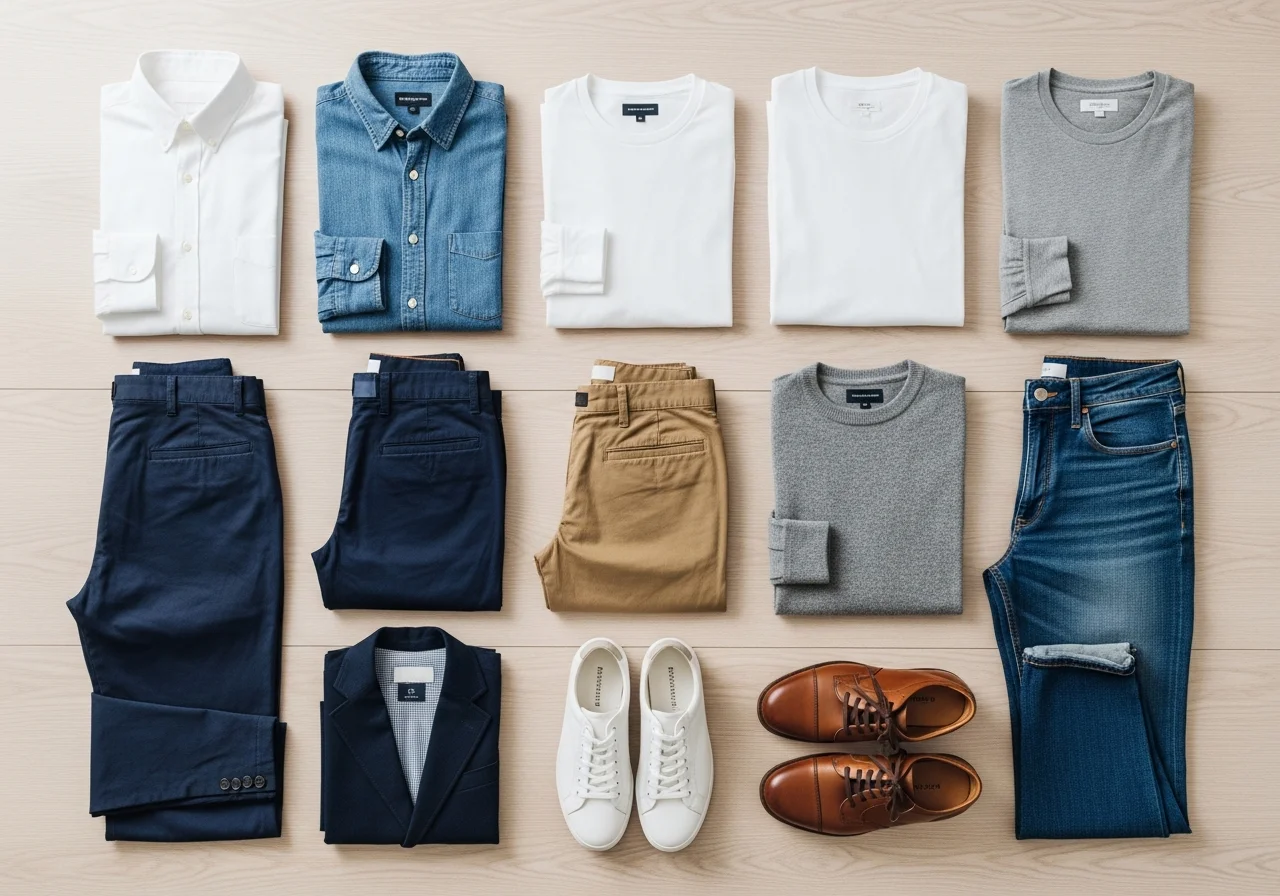
Before diving into shopping bags and fitting rooms, I needed to understand what makes a capsule wardrobe actually work. The concept, popularized in the 1970s by London boutique owner Susie Faux, revolves around owning a small collection of essential, timeless pieces that can be mixed and matched to create numerous outfits.
A men’s capsule wardrobe serves as a practical antidote to decision fatigue. Most guys I know, my boyfriend included, don’t enjoy spending mental energy on outfit selection. They want to look presentable without overthinking it. A well-constructed capsule wardrobe provides exactly that: a foolproof system where almost everything works together.
The magic number varies depending on who you ask, but I settled on 10 core pieces for several reasons. First, it was manageable enough that my boyfriend wouldn’t feel overwhelmed by too many options. Second, it was sufficient to create at least 20 different outfit combinations. Third, and perhaps most importantly, it was a quantity I could afford without requiring a second mortgage.
Why His Current Wardrobe Wasn’t Working
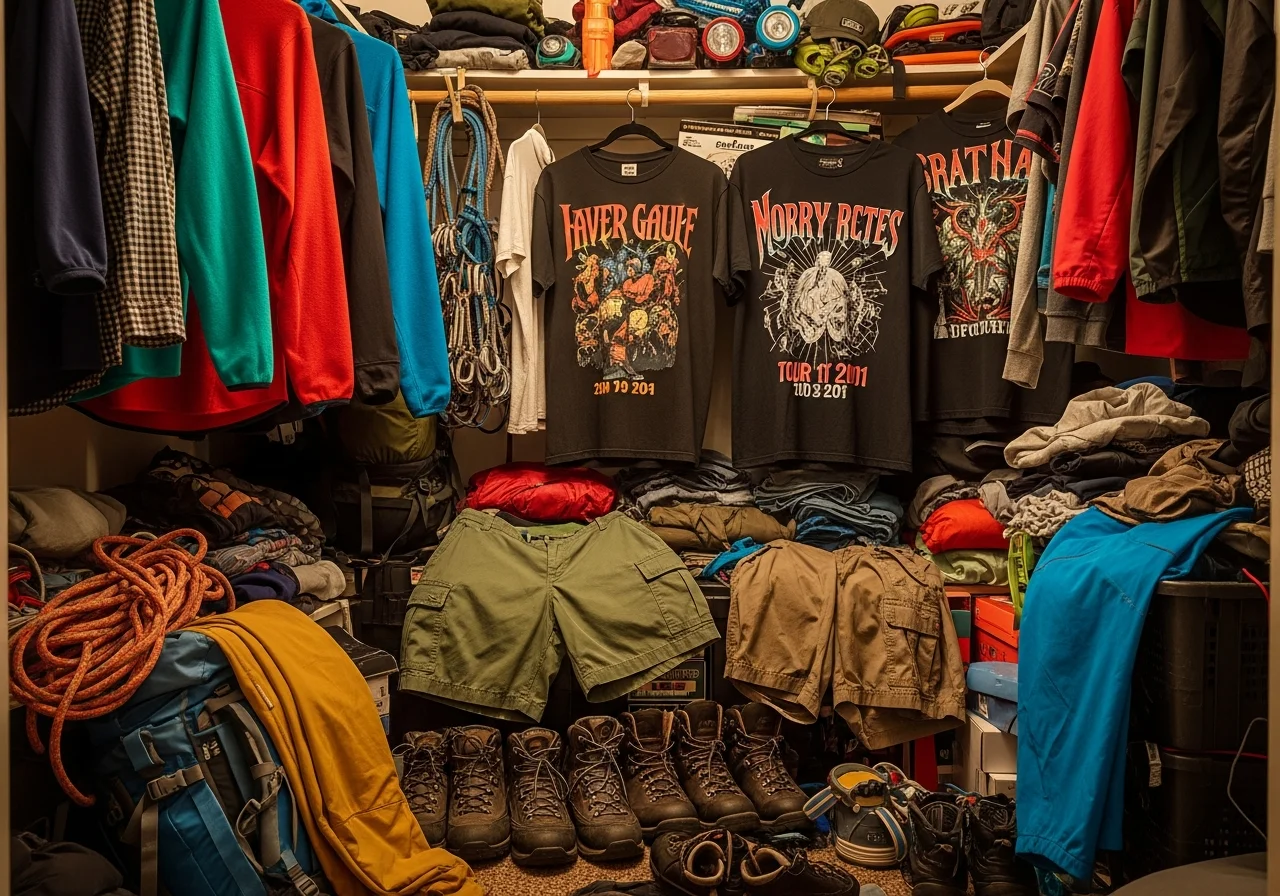
To build something better, I first had to diagnose the problem. My boyfriend’s closet told a story of someone who dressed for function over form, with a heavy emphasis on outdoor activities that rarely occurred. His wardrobe consisted primarily of performance fabrics, cargo shorts, graphic tees collected from various concerts and tech conferences, and enough fleece jackets to outfit a small mountaineering expedition.
The issue wasn’t that he looked bad in these clothes. In the right context, he looked perfectly fine. The problem was context. Hiking pants at brunch. Tech company t-shirts at birthday dinners. Running shoes at the theater. He was perpetually dressed for activities he wasn’t actually doing.
When I gently probed about why he dressed this way, his answer was revealing: he simply didn’t know what else to wear. He’d never learned the basics of building a functional wardrobe, and shopping for clothes felt overwhelming and time-consuming. So he defaulted to what felt safe and comfortable, even when it was situationally inappropriate.
The Foundation of Every Men’s Capsule Wardrobe
Armed with research and a clear understanding of the problem, I began selecting pieces. The foundation of any successful men’s capsule wardrobe rests on three principles: versatility, quality, and neutrality.
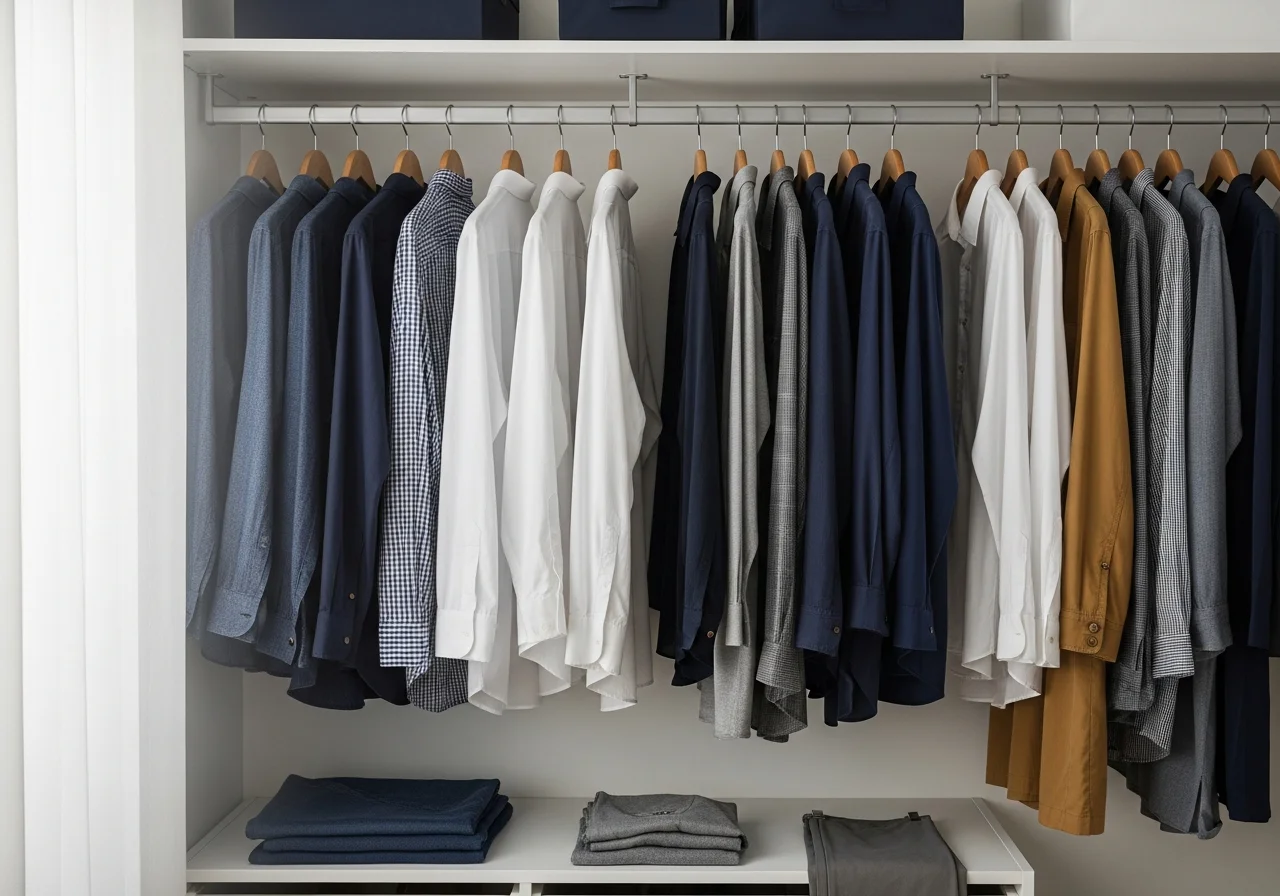
Versatility meant each piece needed to work with multiple other items. If something could only be worn one way or with one specific outfit, it didn’t make the cut. Quality meant investing in well-made items that would last beyond a single season. I’d rather spend more on fewer pieces that would survive regular wear than stock up on cheaper alternatives that would fall apart quickly.
Neutrality in color was perhaps the most crucial decision. I built the wardrobe around a palette of navy, grey, white, and khaki. These colors work harmoniously together and can be dressed up or down depending on the occasion. They also happen to suit most skin tones and don’t require complex color theory knowledge to coordinate.
The psychological aspect mattered too. Studies show that reducing daily decisions, even small ones like choosing what to wear, preserves mental energy for more important choices. By creating a wardrobe where everything coordinated, I was essentially eliminating the possibility of getting dressed incorrectly.
The Essential Tops That Anchor Any Men’s Capsule Wardrobe
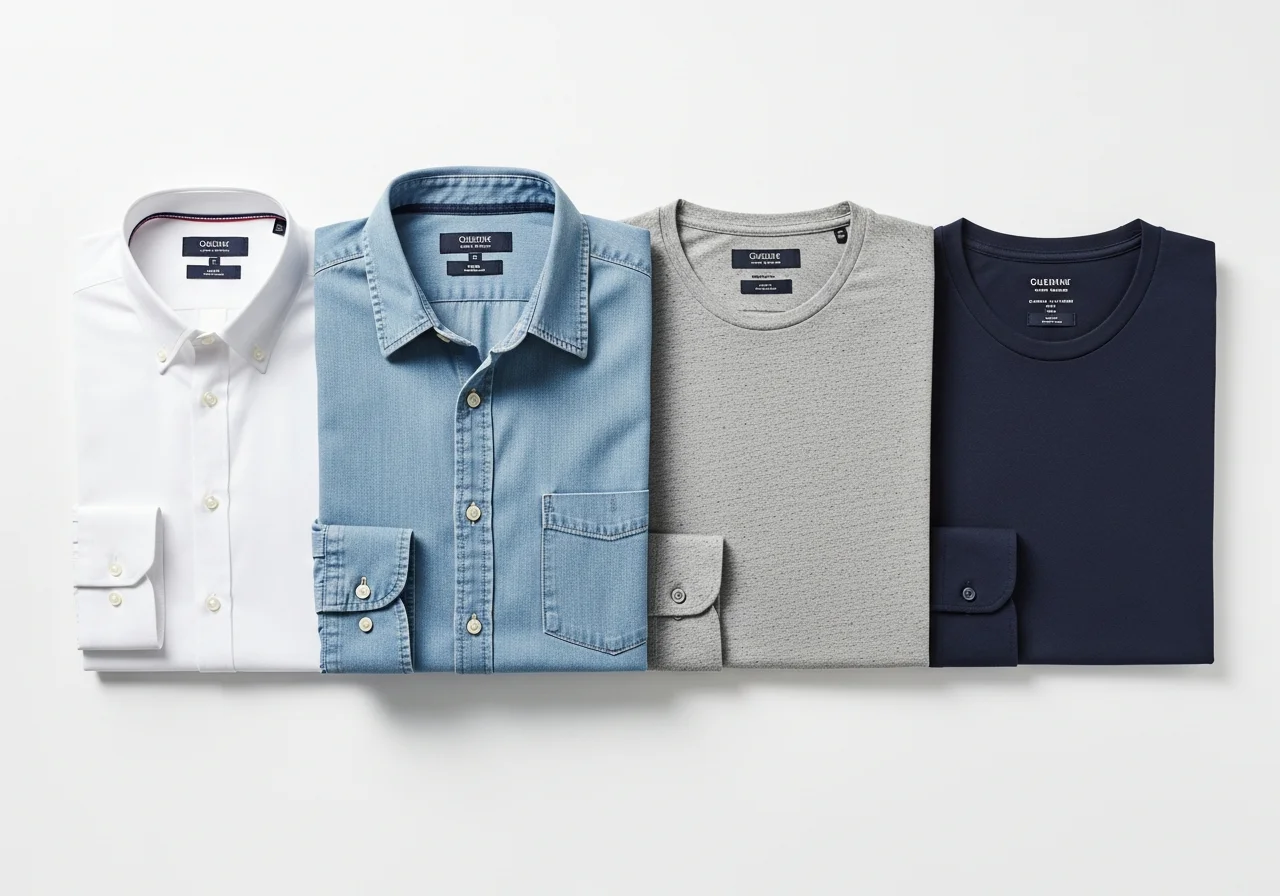
I started with tops, as they’re typically the most visible part of any outfit. For the capsule wardrobe, I selected four pieces that could handle virtually any casual to semi-formal situation.
The first was a crisp white Oxford cloth button-down shirt. This single item became the workhorse of his new wardrobe. It could be worn untucked with jeans for a casual look, tucked in with chinos for something more polished, or layered under a sweater when temperatures dropped. I chose Oxford cloth specifically because it’s more forgiving than formal dress shirting and doesn’t require ironing to look decent.
Next came a light blue chambray shirt. Similar in versatility to the white Oxford, it added visual interest while maintaining the same level of flexibility. The softer blue also proved more forgiving of minor stains, an important consideration given my boyfriend’s tendency to be enthusiastic with coffee and condiments.
For t-shirts, I selected two high-quality basics: one in heather grey and one in navy. These weren’t the thin, transparent shirts from big box stores. I invested in thicker, well-constructed tees with a proper fit through the shoulders and torso. They could stand alone on warm days or be layered under shirts and sweaters when needed.
Building the Bottom Half of a Men’s Capsule Wardrobe

Pants proved trickier than tops, mainly because my boyfriend had strong opinions about waistbands and restrictive fabrics. His love affair with hiking pants stemmed largely from their comfort and flexibility. I needed to find alternatives that felt equally comfortable while looking significantly more appropriate.
The solution came in the form of two pairs of chinos: one in navy and one in khaki. Modern chinos, I discovered, have evolved considerably from their stiff, uncomfortable predecessors. Many now incorporate slight stretch fabrics that provide comfort without looking casual. The key was finding the right fit, not too loose like his beloved hiking pants, but not restrictive either.
I also added a pair of dark indigo jeans without any distressing or fading. Quality denim in a dark wash is remarkably versatile, working equally well for casual weekend activities and slightly dressier occasions when paired with the right top and shoes. I specifically avoided trendy cuts or washes, opting instead for a straight leg that would remain stylish regardless of changing fashion trends.
These three pairs of pants formed the foundation of his bottom half wardrobe. With just these options, he could dress appropriately for approximately 90 percent of his social obligations.
Outerwear That Completes a Men’s Capsule Wardrobe
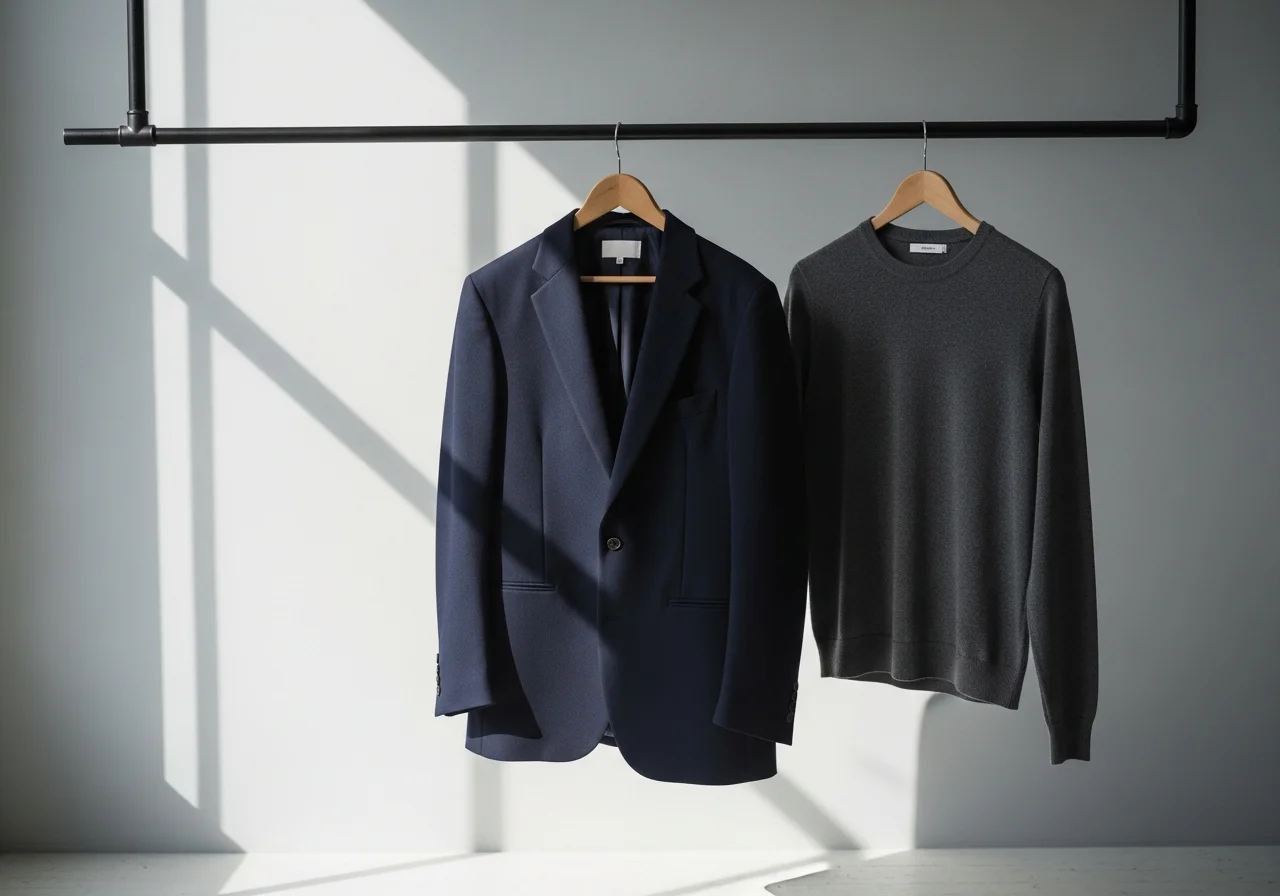
Outerwear presented both an opportunity and a challenge. My boyfriend owned plenty of jackets, but they were all technical shells designed for backcountry adventures. What he lacked was a versatile layer that could elevate his overall appearance.
I selected a navy blazer in an unstructured style. The word blazer initially made him nervous, conjuring images of stiff, formal jackets that required ties and pocket squares. However, modern unstructured blazers are entirely different creatures. Made from softer fabrics and cut more casually, they can be worn with jeans and a t-shirt just as easily as with chinos and a button-down.
The navy blazer became the secret weapon of his capsule wardrobe. It instantly made any outfit look more intentional and put-together, transforming even simple combinations into something that appeared thoughtful and stylish.
For cooler weather, I added a charcoal crewneck sweater in merino wool. This piece provided warmth while maintaining versatility. It could be worn over button-down shirts for a classic preppy look, or directly over t-shirts for something more casual. The merino wool also offered practical benefits: it regulated temperature well, resisted odors better than synthetic materials, and could be worn multiple times between washes.
Footwear Essentials for a Men’s Capsule Wardrobe
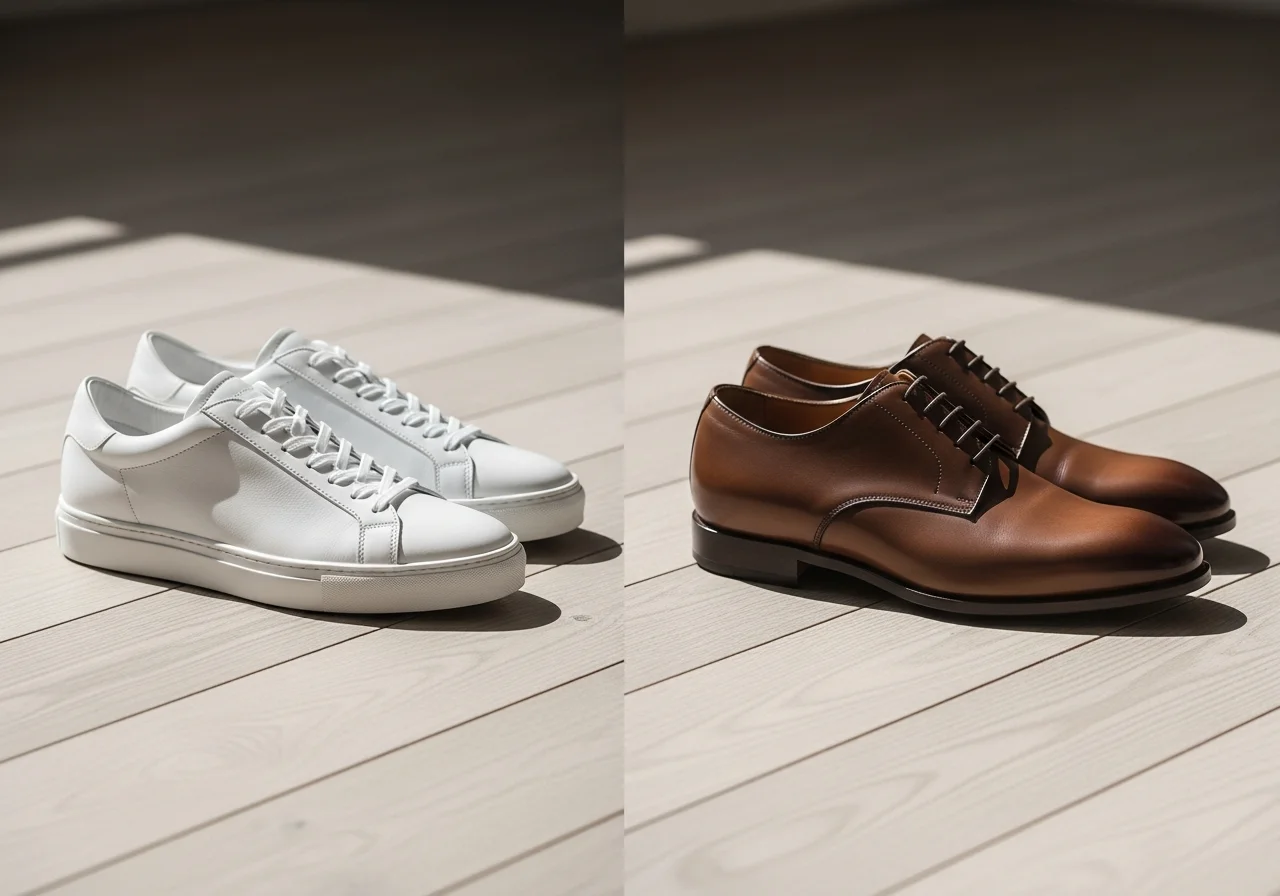
Shoes might be the most important element of any wardrobe, men’s capsules included. They ground an outfit literally and figuratively, and wearing the wrong shoes can undermine even the most carefully selected clothing.
For the capsule wardrobe, I chose two pairs that covered the spectrum from casual to dressy. The first was a pair of white leather sneakers. Not athletic shoes or running shoes, but clean, minimal sneakers in premium leather. This style has become a modern classic, appropriate for casual situations while still looking intentional and grown-up.
The second pair was brown leather derby shoes. More versatile than dress shoes but more polished than sneakers, derbies occupy a perfect middle ground. They work with jeans, chinos, and could even be worn with the blazer for more formal occasions. Brown leather, rather than black, proved more versatile for the casual-leaning wardrobe I was building.
These two pairs eliminated his reliance on trail runners for every occasion. The white sneakers satisfied his desire for comfortable, casual footwear, while the brown derbies provided an option when the situation called for something more refined.
The Color Strategy Behind This Men’s Capsule Wardrobe
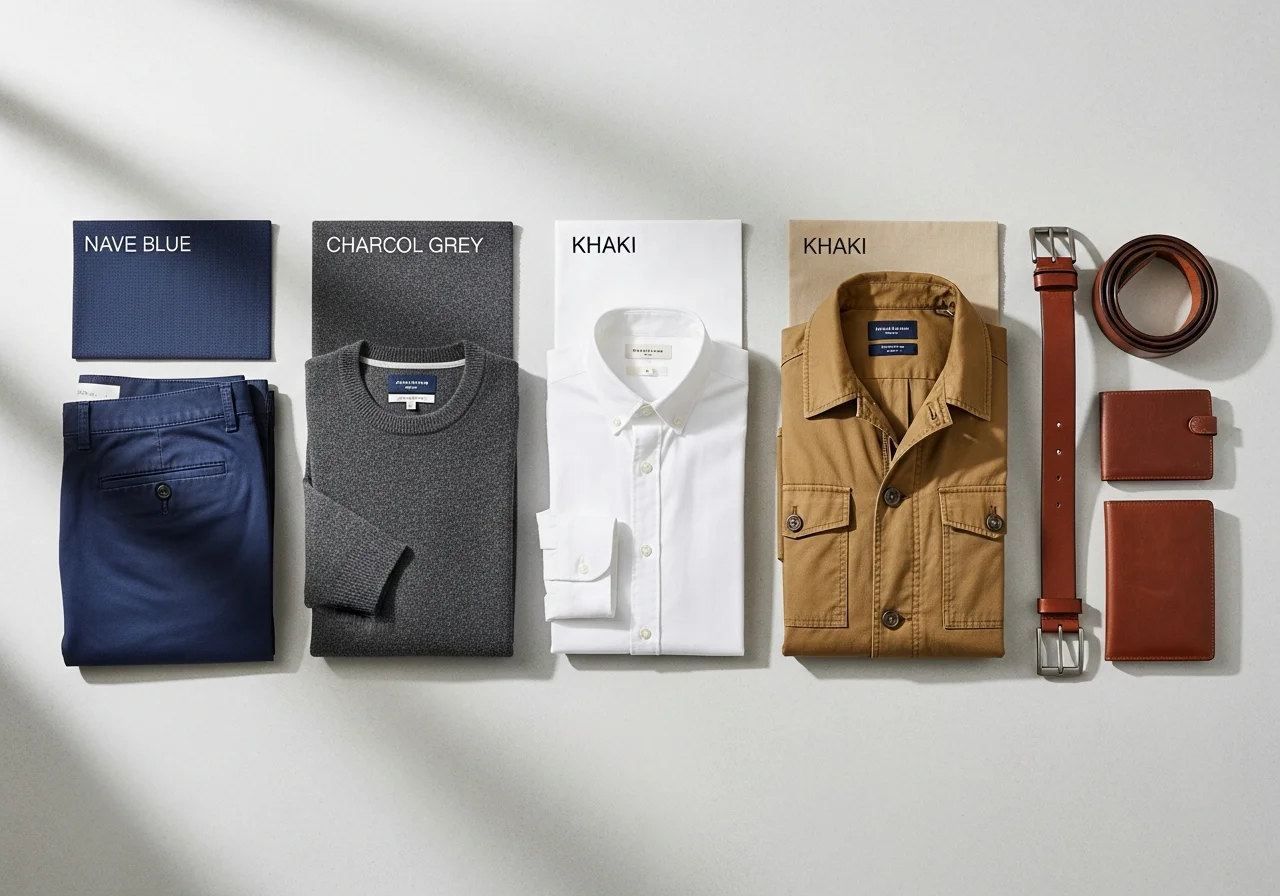
Color coordination was essential to the capsule wardrobe’s success. I deliberately built around a neutral palette that eliminated the possibility of clashing combinations. Navy, grey, white, khaki, and brown formed the core colors, with each piece selected to harmonize with everything else.
This approach meant my boyfriend could literally grab any top, any bottom, and any pair of shoes from his capsule wardrobe and create a coherent outfit. No color theory knowledge required. No second-guessing whether patterns clashed or shades coordinated. Everything simply worked together.
The neutral palette also provided a foundation for future expansion. If he wanted to add bolder pieces down the line, colored accessories like ties, pocket squares, or even a statement jacket, the neutral base would support them without requiring a complete wardrobe overhaul.
Teaching Him to Mix and Match His Men’s Capsule Wardrobe

Having the right pieces meant nothing if he didn’t understand how to combine them effectively. I spent an afternoon creating visual guides showing different outfit combinations. We organized the capsule wardrobe into clear categories: casual, smart casual, and dressy casual.
Casual combinations centered on t-shirts with jeans or chinos, paired with white sneakers. For smart casual, we elevated things with button-down shirts, chinos, and either sneakers or derbies depending on the specific occasion. Dressy casual brought in the blazer over various combinations, always with the brown derbies.
I also created a simple decision tree. “Are you seeing my parents?” meant smart casual minimum. “Are we going somewhere with a dress code?” indicated dressy casual with the blazer. “Is it Saturday and we’re getting coffee?” allowed for casual territory. These simple guidelines removed the guesswork.
The breakthrough came when he realized he could get dressed in under three minutes while still looking appropriate and intentional. The capsule wardrobe wasn’t restrictive; it was liberating. It freed him from decision fatigue and the anxiety of potentially choosing wrong.
The Cost Analysis of Building a Men’s Capsule Wardrobe

Budget was a real consideration. Building a 10-piece wardrobe from scratch required investment, but I approached it strategically. Rather than buying everything at once, we prioritized pieces in order of versatility and necessity, spreading purchases across three months.
I also focused on cost per wear rather than upfront price. A quality blazer that costs three times more than a cheap alternative but lasts five times longer represents better value. The same logic applied to shoes, where investing in well-constructed leather footwear meant not replacing them annually.
We set a total budget of around fifteen hundred dollars for the complete capsule wardrobe, averaging one hundred fifty dollars per piece. Some items came in under budget, like the t-shirts, while others exceeded it, particularly the blazer and shoes. The key was balancing quality with practicality.
Interestingly, my boyfriend later calculated that his previous approach of frequently replacing worn-out cheap clothing actually cost more over time. The capsule wardrobe represented an upfront investment that would pay dividends through longevity and versatility.
How This Men’s Capsule Wardrobe Changed Our Lives

Three months into the capsule wardrobe experiment, the results exceeded my expectations. The obvious change was visual. My boyfriend now consistently looked put-together and appropriate for whatever we were doing. No more hiking pants at brunch. No more anxiety about whether his outfit was suitable.
The less obvious changes proved equally significant. He reported feeling more confident in social situations, no longer worrying whether he was underdressed or looked out of place. Getting ready in the morning became effortless rather than stressful. He actually started enjoying shopping for clothes, understanding now what to look for and how pieces should fit.
Our relationship benefited too. We spent less time discussing his wardrobe choices and more time actually enjoying our activities together. The capsule wardrobe removed a minor but consistent source of tension, replacing it with a solution that made both of us happy.
Friends and colleagues noticed the change, offering unsolicited compliments on his appearance. Several asked what prompted the transformation, and my boyfriend found himself giving advice on building a capsule wardrobe, something he never imagined doing.
Maintaining and Evolving His Men’s Capsule Wardrobe
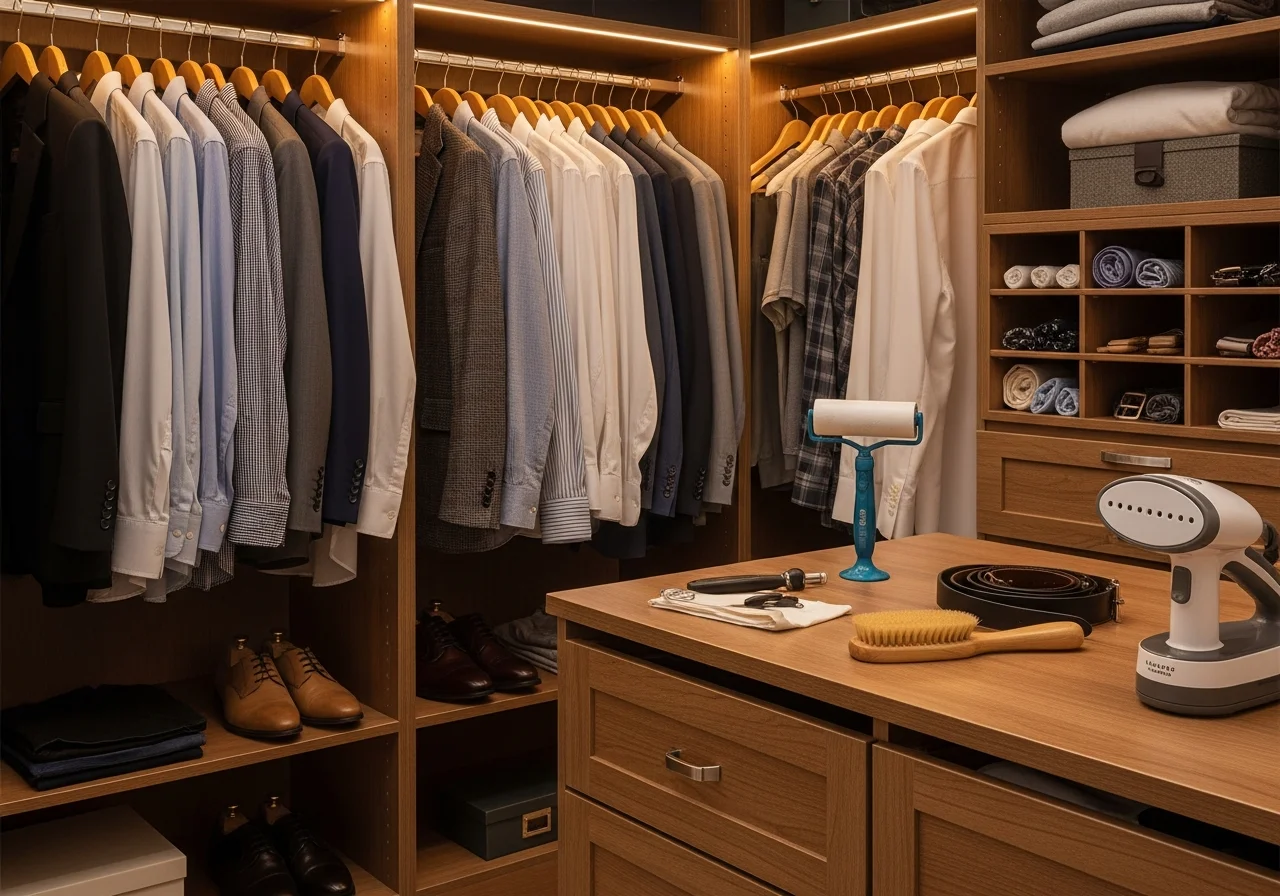
A capsule wardrobe isn’t meant to be static. Over the following year, we’ve made adjustments based on actual wear patterns and changing needs. We added a few seasonal pieces: a lightweight linen shirt for summer and a heavier wool coat for winter. These supplementary items work within the existing color palette and style framework.
We’ve also established a one-in-one-out rule. If he wants to add something new, something old must be donated or discarded. This prevents closet creep and maintains the simplicity that makes the capsule wardrobe functional.
Care and maintenance became part of the routine. Quality pieces deserve quality care. We invested in proper wooden hangers, learned basic garment care, and established relationships with a good dry cleaner and shoe repair shop. These small efforts extend the life of each piece significantly.
The capsule wardrobe also evolved his shopping habits. He now buys with intention, considering whether new pieces work with his existing wardrobe rather than making impulse purchases. This mindfulness has saved money and prevented the accumulation of orphaned items that don’t coordinate with anything else.
Conclusion
Building a 10-piece men’s capsule wardrobe for my boyfriend solved a problem that affected both of us. What started as frustration over inappropriate hiking pants evolved into a project that taught us both valuable lessons about intentional living, quality over quantity, and the power of simplicity.
The capsule wardrobe proved that less truly can be more. Ten carefully selected pieces created more outfit options and more confidence than a closet stuffed with ill-fitting, rarely worn clothing. It demonstrated that style doesn’t require fashion expertise or an enormous wardrobe, just thoughtful curation and a willingness to invest in quality basics.
Most importantly, it freed mental space for things that actually matter. My boyfriend no longer spends energy worrying about what to wear or whether he looks appropriate. He gets dressed quickly, looks great consistently, and can focus his attention on work, hobbies, and our relationship instead of his closet.
If you’re partnered with someone whose wardrobe needs intervention, or if you’re that someone yourself, consider the capsule wardrobe approach. Start with versatile basics in a neutral color palette. Focus on quality and fit over trends and quantity. Build slowly and intentionally. The result is a wardrobe that works for you rather than against you.
And yes, he still owns those hiking pants. They’re just reserved now for actual hiking, where they belong.
Explore more for work outfit ideas!!
Frequently Asked Questions
What is the ideal number of pieces for a men’s capsule wardrobe?
Most men’s capsule wardrobes contain between 10 to 20 core pieces, excluding underwear, socks, and workout clothes. Beginners should start with 10 to 12 essential items that cover basic needs, then expand based on lifestyle requirements and climate considerations.
How much should I budget for a quality men’s capsule wardrobe?
A solid capsule wardrobe typically requires between 1,000 to 2,000 dollars when building from scratch. However, this investment can be spread over several months by prioritizing essential pieces first. Focus on cost per wear rather than upfront price, as quality items last significantly longer.
Can a capsule wardrobe work for different body types?
Absolutely. The key is selecting pieces that fit your specific body properly rather than following trends. Work with a tailor if necessary to ensure shirts, pants, and jackets fit well through the shoulders, waist, and length. Proper fit matters far more than the specific pieces you choose.
How often should I replace items in my capsule wardrobe?
Quality capsule wardrobe pieces should last three to five years with proper care, sometimes longer. Replace items when they show significant wear, no longer fit properly, or become damaged beyond repair. Seasonal pieces may need more frequent rotation depending on climate and usage.
What if my job requires specific dress codes beyond a basic capsule wardrobe?
Build your capsule wardrobe as a foundation, then add profession-specific pieces as needed. For formal workplaces, include additional dress shirts, a second blazer, or dress pants. Keep work-specific items separate from your core capsule to maintain the simplicity of your everyday wardrobe.






One Comment