22 Spring Style Edit: Roses In, Violets Out
Every spring, the fashion world draws a clear and unapologetic line. Certain colors rise, certain motifs take center stage, and certain combinations that ruled last season quietly step aside. This year, that line is drawn with uncommon precision. The roses, in every form it takes across print, texture, embellishment, and color palette, is the defining story of spring 2026. Violet, which carried enormous energy through recent seasons, is making way for something warmer, more tactile, and more deeply rooted in craft.
The spring 2026 runways made florals feel genuinely fresh, with designers at Chanel, Dior, Simone Rocha, and Altuzarra each reimagining the concept of flowers in ways that felt artful and far less predictable than seasons prior. Marie Claire The result is a seasonal edit that rewards attention, rewards investment in quality pieces, and rewards the kind of dressing that feels personal rather than trend-driven.
This is not just a color story. It is a full reconsideration of how to dress with intention, and it begins with understanding what is in, what is out, and precisely why.
Why the Rose Is the Dominant Story of Spring 2026
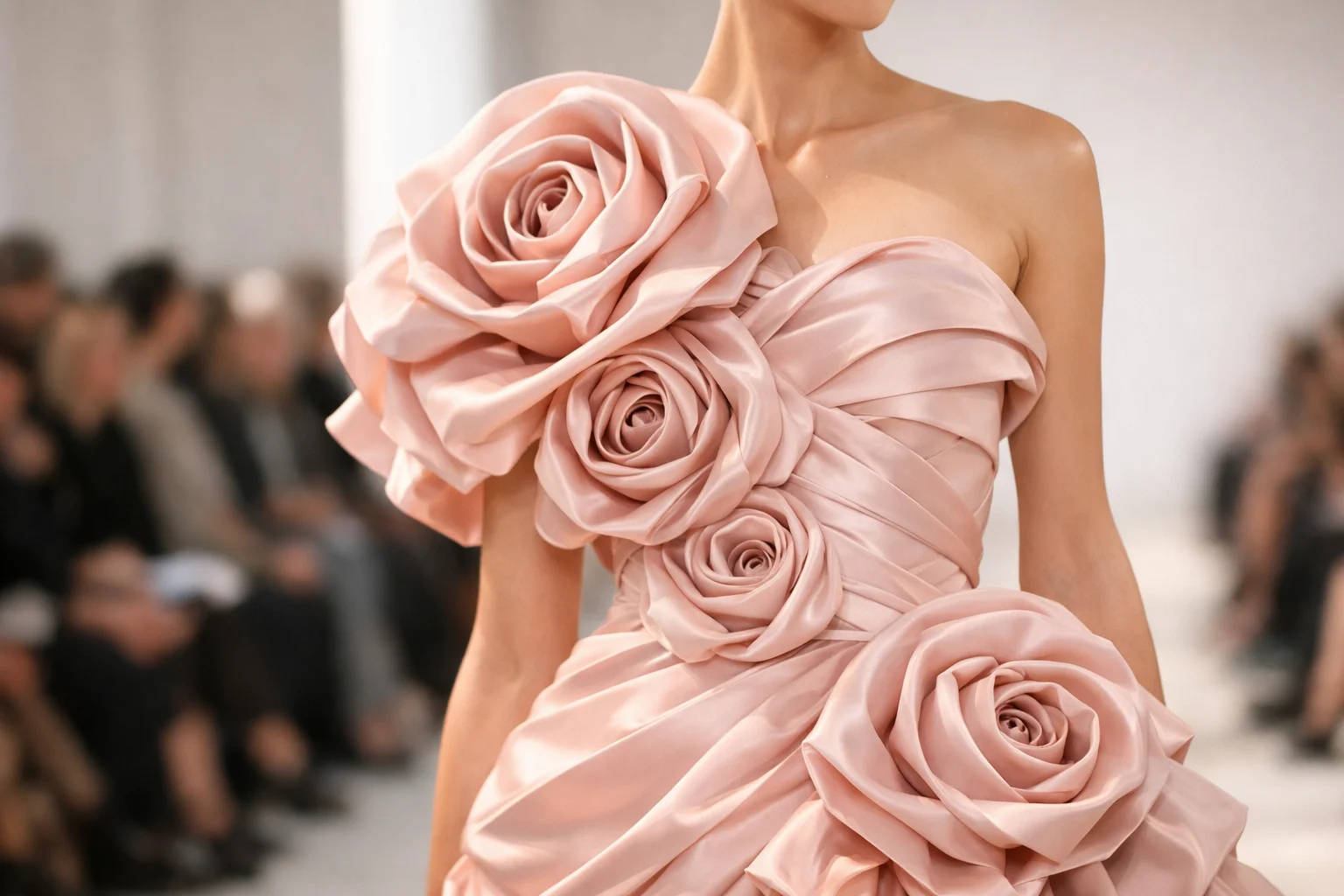
The rose has occupied a privileged place in the fashion imagination for centuries. It has appeared in couture embroidery, in fragrance branding, in textile design, and in the soft pink palettes that recur season after season. What makes it commanding again right now is not nostalgia. It is the simultaneous reinvention of the motif across multiple design languages, making it feel both timeless and urgently of this moment.
The Runway Conversation Around Roses
At Chanel, Mathieu Blazy reimagined the house’s signature camellia motifs by sending models out in ball skirts covered in feathered flowers, naked dresses dotted with beaded blooms, and rosette brooches clipped onto button-downs. Marie Claire The result was joyful without being juvenile, opulent without being excessive. It set the tone for an entire season of floral storytelling in which the rose became less a motif and more a medium.
At Dior, Jonathan Anderson brought the rose forward through soft pastel knit miniature prints. At Altuzarra, sheer dahlia strips were assembled into a free-flowing gown. At Simone Rocha, delicate floral gowns took on hoop-skirt forms that honored historical silhouettes while remaining completely of their moment.
The Cultural Moment Behind the Rose
On a popular cultural level, almost everyone seems to be becoming a hobbyist horticulturist, and wearing the rose motif can be as straightforward as throwing on a ditsy floral dress, but those more attuned to fashion will confirm there are far less predictable ways of wearing rose-inspired style. Who What Wear
This cultural shift matters because fashion does not happen in isolation. When the broader culture turns toward gardens, toward growth, toward the tactile pleasure of tending something living, the wardrobe responds. The rose this season is not a print on a fast-fashion polyester top. It is an embroidered detail, a dimensional rosette, a watercolor-blurred botanical. It is craft worn on the body.
What Roses Mean for Color This Season
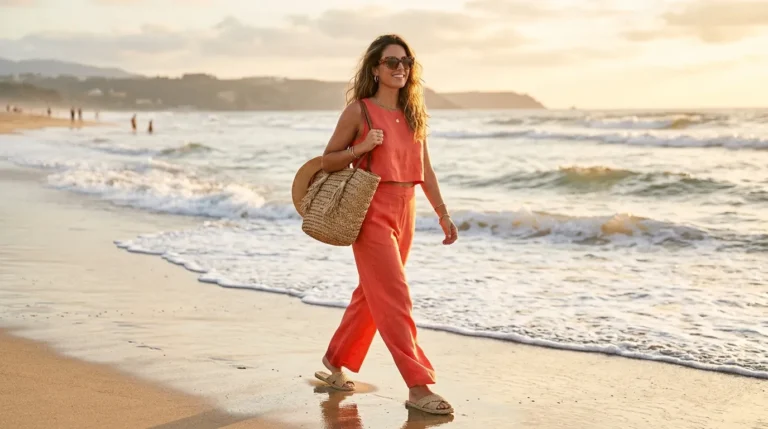
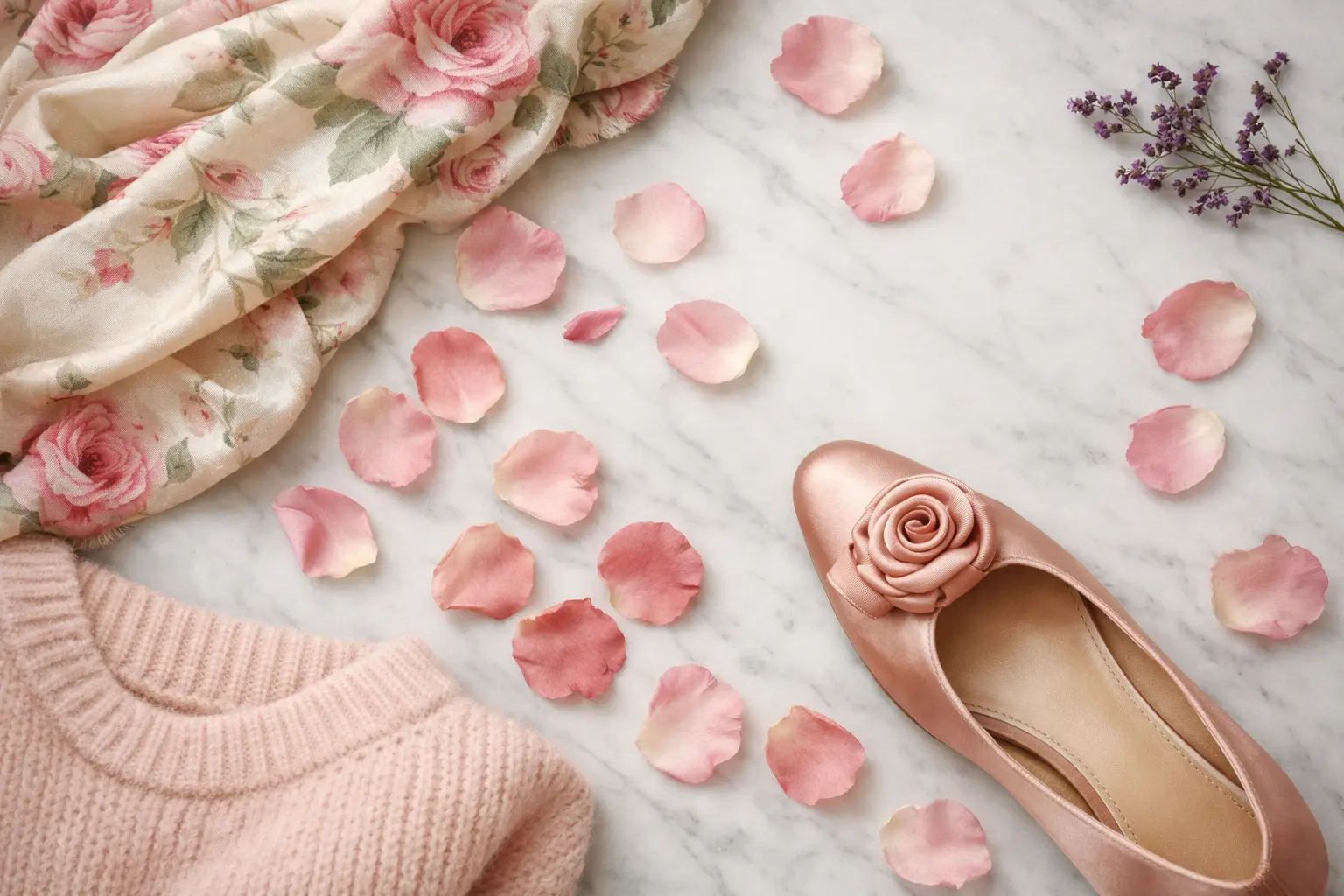
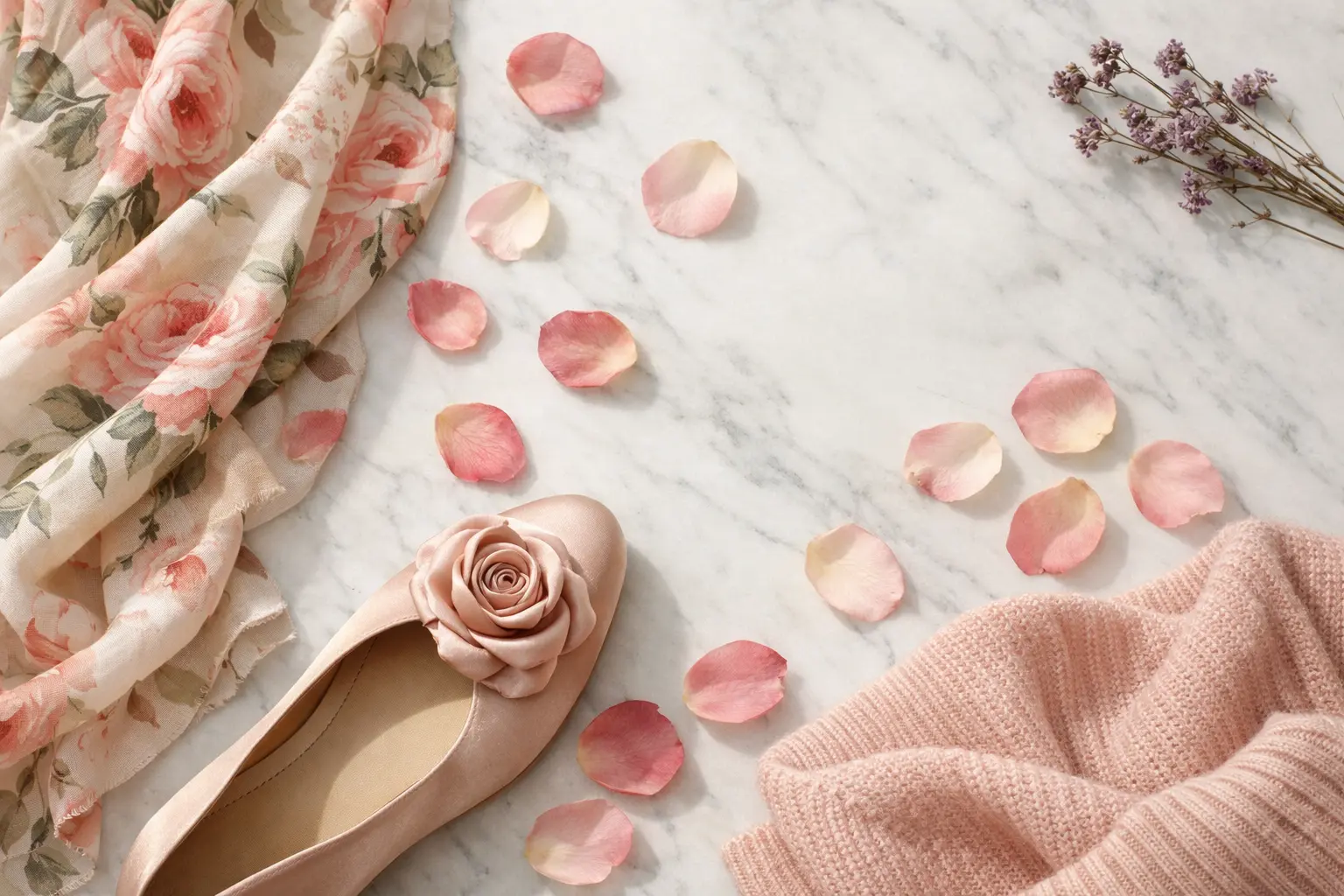
Ballet-slipper pink, a color predicted to be everywhere in 2026, speaks to the broader rose-inflected palette defining spring color dressing. Who What Wear This is not the assertive bubblegum pink of a few seasons past. It is dusty, faded, almost powdered, the color of a petal in its final and most beautiful hour. It reads as sophisticated across a wide range of skin tones and styling preferences, and it pairs with neutrals, with warm whites, with chocolate browns, and with the deep cherry red that continues to carry significant momentum.
The 22 Rose-Driven Trends Worth Knowing
Rosette Embellishments on Everyday Pieces
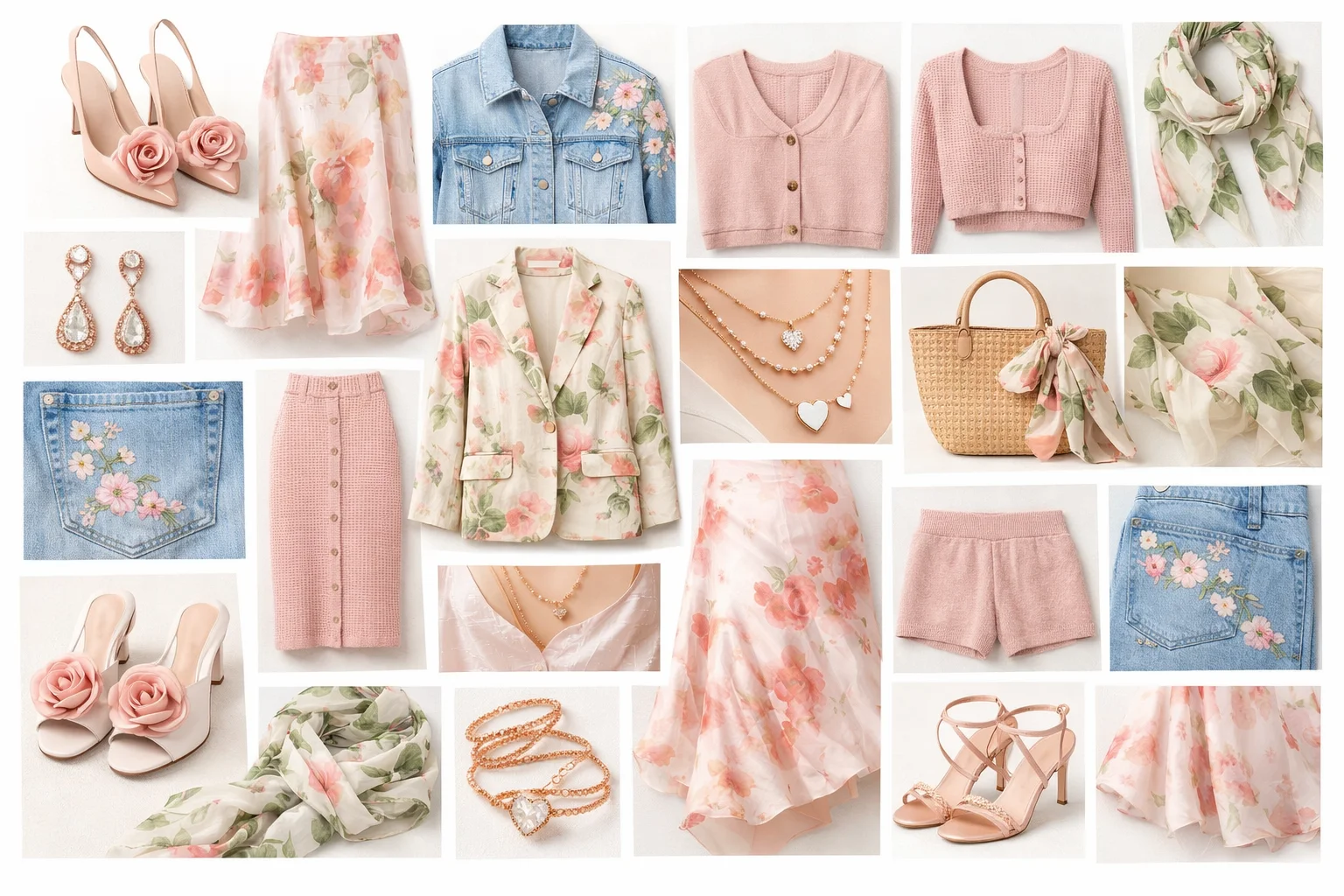
Among the most accessible entry points into the rose trend this season is the rosette as an embellishment detail. Rosette slippers like those from Simone Rocha make it easy to bring a burst of whimsy into everyday dressing, while crystal-encrusted floral mini pieces offer an effortless option for formal spring occasions. Marie Claire A single rosette on a shoe, on a hair cuff, or on the collar of a plain shirt changes the entire register of an outfit without requiring anything more.
Bedtime Florals and Their Regency Roots
A trend called bedtime florals draws subtle visual cues from the Regency era through delicate florets in soft shades, as seen at Dior where a model wore an eggshell bow-tie blouse adorned with a dainty pastel floral print, and at Shushu/Tong and Altuzarra where light pastel floral-print pieces with frilly details evoked the iconography of wallpaper or sheets in a royal bedroom. Who What Wear These prints are gentle enough for daily wear yet carry enough considered detail to read as deliberate.
Watercolor Botanical Prints
The impressionist influence on floral fashion this spring runs deep. Watercolor botanical prints, slightly blurred, painterly, and abundant, translate beautifully onto silk midi skirts, sheer overlay blouses, and lightweight linen dresses. The key is the softness of the rendering. These are not sharp, graphically crisp florals. They are more like gardens seen through morning mist, and they represent one of the more elegant interpretations of the rose trend available at every price point.
Dimensional Embroidery as a Statement of Craft
Where previous seasons leaned on printed florals, spring 2026 elevates the physical construction of the garment. Raised, dimensional rose embroidery appears across knitwear, denim, evening separates, and outerwear. The effect is tactile and considered. A simple white shirt with a single embroidered rose at the cuff communicates something entirely different from a printed floral blouse, and that difference is precisely the point.
The Additional Rose Expressions Worth Noting
Beyond these key categories, the rose manifests across the season in a number of other compelling forms: rose-printed scarves tied at the neck in the classic Parisian fashion; soft pink bouclé coats in the color of an early garden bloom; broderie anglaise tops with rose-shaped cutouts; cherry blossom-inspired prints on wide-leg trousers; rose gold jewelry replacing the silver hardware of recent seasons; floral shirting in cotton poplin; tonal rose-to-blush layering; vintage chintz on structured handbags; floral applique on loafer toes; garden-party dresses with exaggerated petal sleeves; and the quiet power of a single rose-colored cashmere knit worn against cream trousers.
Each of these is a specific, wearable decision. None requires a complete wardrobe overhaul. All of them signal that you are paying attention to a season that rewards exactly that.
Violets Out, And What That Actually Means
Why Violet Had Its Moment
A rich vibrant purple, described as a little bit 1980s with a splash of royal and aristocratic flavor, dominated some of the most headline-grabbing shows of the recent season including Balenciaga, Burberry, Valentino, and Chloe, working beautifully in head-to-toe looks or paired with the odd floral. Who What Wear It was bold, declarative, and deeply satisfying for a fashion world that had been living in neutrals for too long.
Why Violet Is Stepping Back Now
Trends move in response to what came before. After violet’s saturated authority, after many back-to-back seasons of pared-back neutrals followed by bold singular color statements, designers began working with unexpected pairings and warm, story-rich palettes rather than single dominant hues. Who What Wear Violet as a standalone fashion anthem belongs to the season just concluded. Its time was genuine, and its exit is equally honest.
How to Transition Violet Pieces Into the New Season
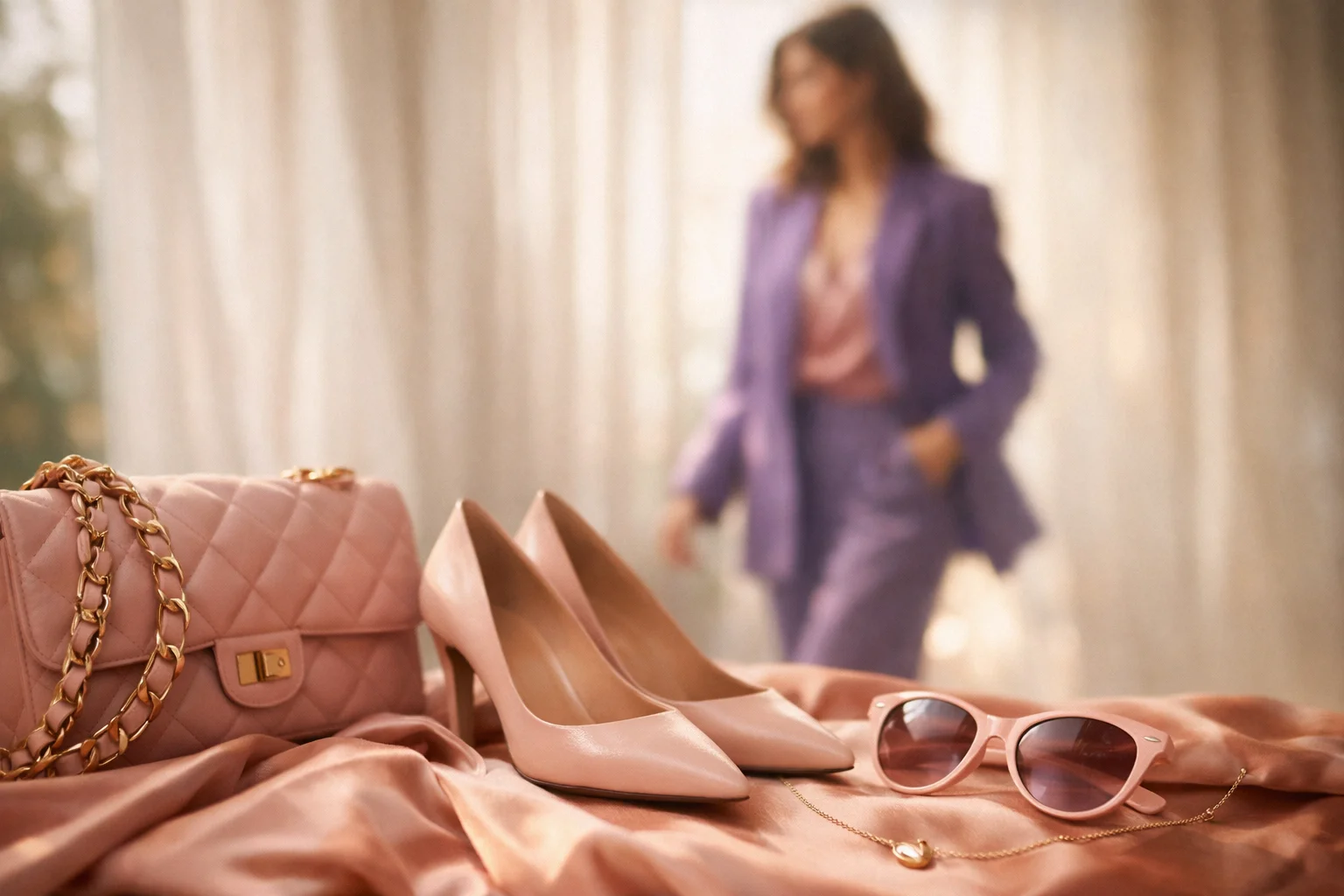
This is a style edit, not a wardrobe purge. Violet pieces you love and wear well remain entirely valid. A violet blazer paired with a rose-tinted blouse and cream trousers produces one of the more interesting color combinations of the current season. A violet bag against a soft pink dress reads as knowing and considered. The shift is one of emphasis, not elimination, and understanding that distinction is what separates genuine style knowledge from trend-chasing.
The Larger Philosophy Behind This Season
The End of Quiet Luxury and the Rise of Expressive Craft
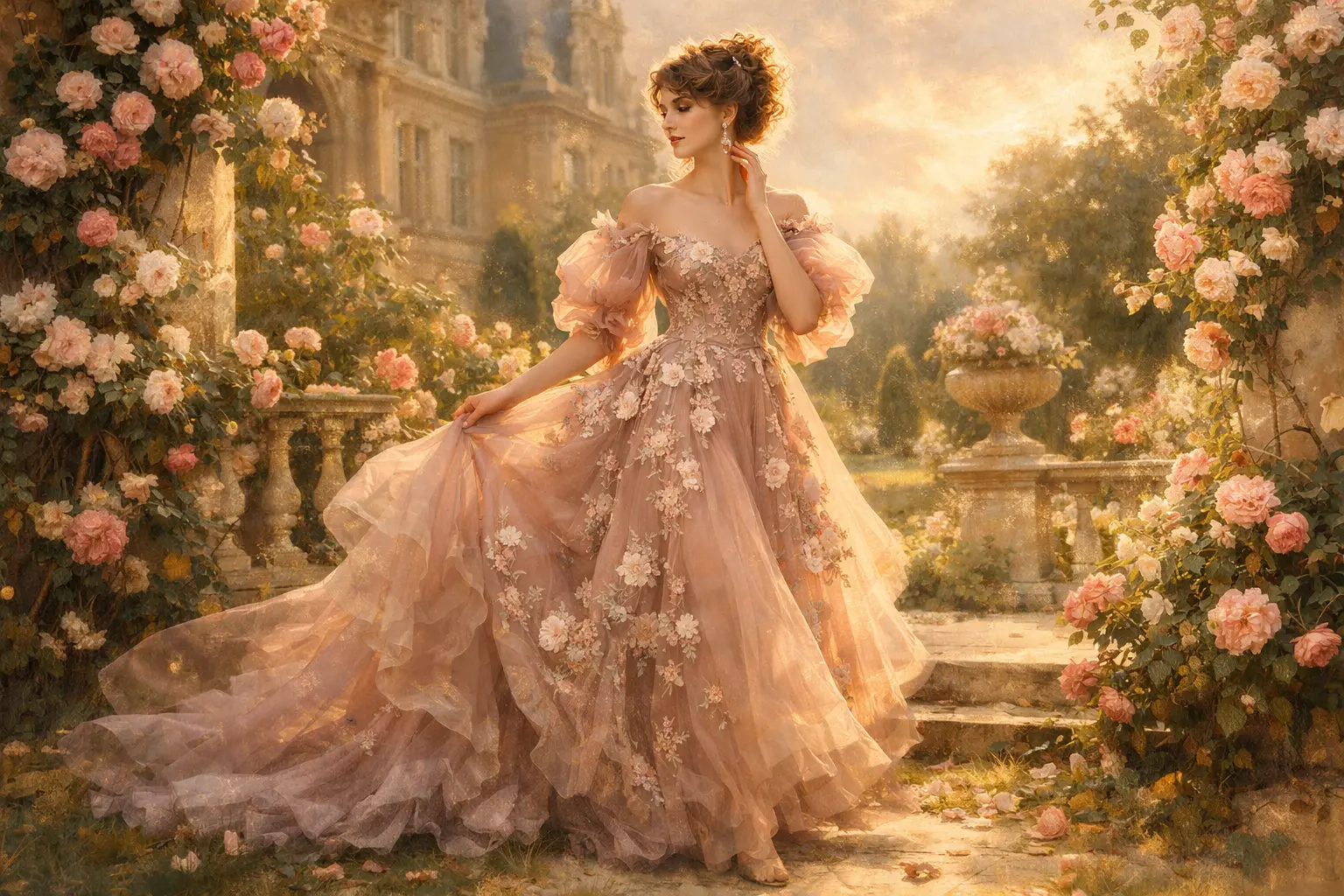
Spring 2026 has arrived with a vibrant, defiant energy. The era of quiet luxury, those muted and invisible basics of the early 2020s, has officially passed, and fashion has entered a season defined by expressive maximalism where the goal is to look intentional, artistic, and unafraid of complex layering. Snazzyholic The rose sits precisely at the intersection of those values. It is expressive without being aggressive. It is maximalist without being chaotic. It is intentional in a way that passive neutrals simply are not.
Rococo Revival as the Historical Thread
With the Victoria and Albert Museum exhibiting the Academy Award-winning costumes from Sofia Coppola’s Marie Antoinette, designers have been seeking influence from late-18th-century France, and after years of pared-back quiet luxury as well as the brashness of the Y2K movement, the runways are reflecting a genuine thirst for refinement, grace, and charm. Who What Wear The rose is the natural emblem of that thirst. It offers romance without grandeur, artistry without inaccessibility.
Individuality as the Season’s True Trend
What solidified the season’s ethos was Alessandro Michele’s debut runway collection for Valentino, which suggested personal ways of wearing things and brought a sense of individuality to the forefront of the fashion conversation. Who What Wear The rose is not a prescription. It is an invitation. How you respond to it, whether through a single embroidered shoe or a head-to-toe dusty pink ensemble, is a reflection of something authentic about how you choose to dress.
How to Build a Rose-Led Spring Wardrobe Practically
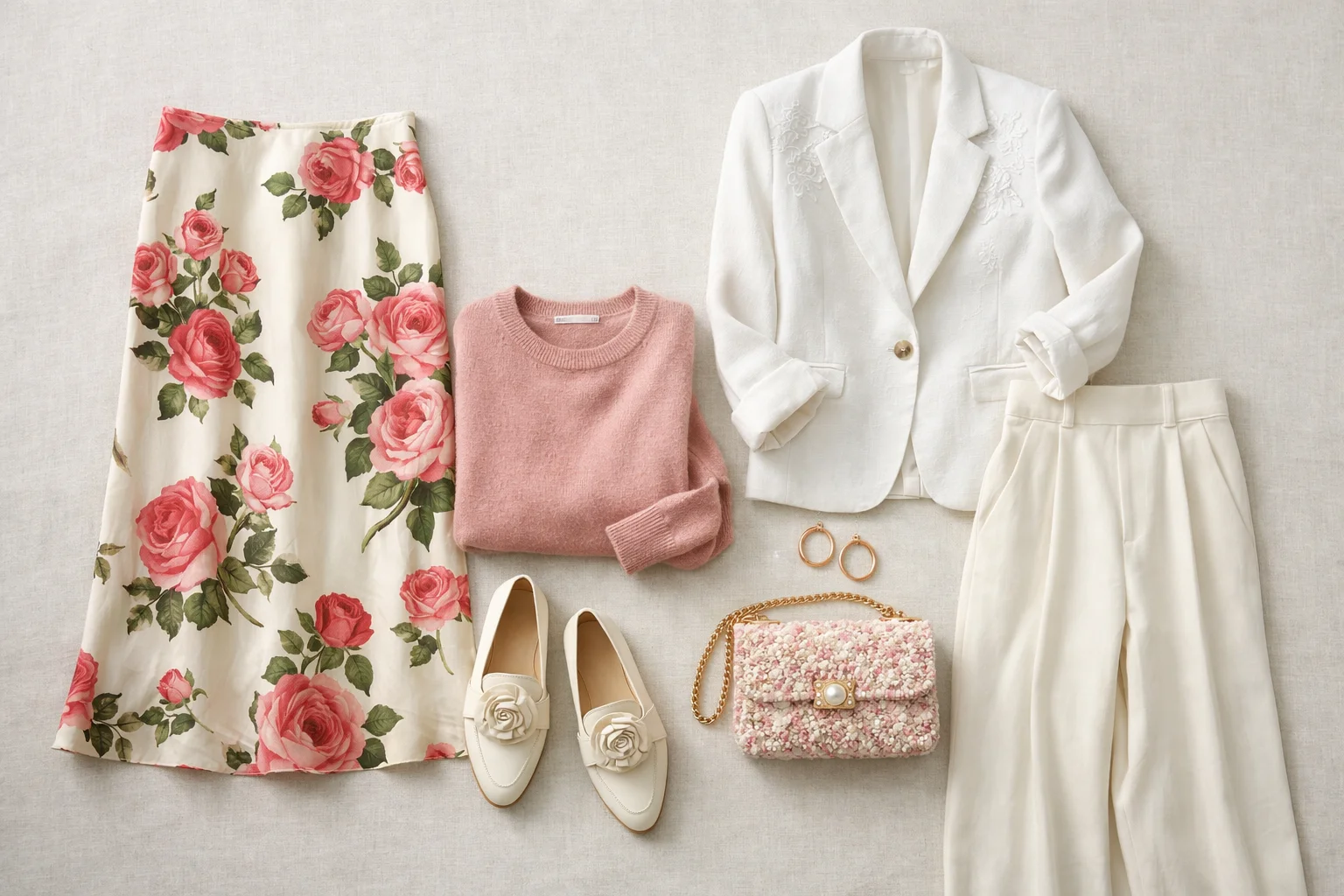
Starting With What You Already Own
Most wardrobes already contain at least one piece that can anchor this seasonal edit. A dusty pink cashmere sweater you have been wearing since last autumn. A floral silk blouse waiting for the right moment. A white dress that has been styled with silver accessories but would read entirely differently with rose gold and a delicate botanical scarf. Begin there. The most intelligent wardrobe refresh is always the one that builds on existing investment rather than replacing it wholesale.
The Key Pieces Worth Adding
If you are building with purpose, a few categories stand out. A rose-print silk midi skirt transitions from office to weekend with ease. A rosette-detailed flat or loafer elevates the most straightforward outfit. A soft pink knit set delivers the season’s color story without complexity. A floral-embroidered linen blazer crosses the line between professional and personal. When wearing vibrant florals or primary colors, pairing them with neutral tones such as beige, white, or black creates a balanced and wearable outfit, and letting statement accessories such as brooches, hats, or sculptural jewelry enhance the look without overwhelming it is what makes seasonal trends feel personal rather than costume-like. Aza Editorials
Styling Rules That Make the Rose Work
Three principles guide the rose-dressed wardrobe this spring. First, let one rose piece lead and keep everything else quiet. If the blouse is embroidered, the trousers should be plain. If the skirt is printed, the top should be a clean solid. Second, lean into the warmth of the palette. Rose tones want to sit alongside cream, warm white, soft camel, and dusty blush rather than against cold grays or stark blacks. Third, consider scale. A large watercolor print reads differently than a small ditsy floral, and a single oversized rosette accessory reads differently than an all-over embellishment. Understanding the scale of your rose detail is the difference between a look that feels considered and one that feels accidental.
you may also liked our post dress-like-a-mob-wife/
Conclusion
A great spring style edit is never simply a list of things to buy and things to discard. It is a way of looking at the season clearly, understanding what the fashion world is responding to culturally and aesthetically, and then translating that understanding into actual decisions about how to dress.
This spring, the rose answers the question of how to dress with elegance, warmth, and a quiet authority that does not need to announce itself. Violet had its brilliant moment. Roses are where fashion is going now. The distance between the two is not as dramatic as a trend edit might suggest. It is simply a shift in warmth, a movement from declaration toward craft, and an invitation to dress in a way that rewards the person looking closely enough to notice.
The wardrobe refresh begins now. The roses are in.
Frequently Asked Questions
Q1: What is a spring style edit and why does it matter?
A spring style edit is a curated guide identifying which trends, colors, silhouettes, and pieces are worth adding to your wardrobe for the season and which belong to a season that has passed. It helps you make focused, intentional choices rather than buying reactively or chasing every trend simultaneously. A well-constructed style edit saves both money and wardrobe space.
Q2: Why are roses specifically the defining trend of spring 2026 rather than other florals?
Roses have emerged as dominant because multiple major designers reinvented the motif simultaneously, each through a different lens including 3D rosette embellishment, dimensional embroidery, watercolor botanicals, and jacquard weave. The rose also resonates with the season’s broader cultural appetite for craft, romance, and considered dressing, which makes it feel less like a trend and more like a genuine shift in fashion values.
Q3: Does violets being out mean I should remove all purple from my wardrobe?
Absolutely not. Style edits reflect changes in fashion emphasis rather than rigid rules of elimination. Violet pieces you love and wear well remain entirely valid wardrobe choices. The guidance simply recognizes that violet is no longer the dominant color narrative of the season. Pairing violet with rose-toned pieces is, in fact, one of the more interesting and current color combinations available right now.
Q4: How can I incorporate the rose trend without spending a significant amount of money?
The most accessible and high-impact entry points are accessories. A rosette-detailed shoe, a floral-print scarf, a rose-tinted earring, or a simple floral brooch can bring the season’s signature aesthetic into any existing outfit. You can also revisit pieces you already own in blush, dusty pink, or soft floral prints and restyle them with the season’s other key elements such as cream separates, warm-toned jewelry, and ballet flats.
Q5: Is the rose trend wearable across different ages, body types, and personal styles?
Yes, because the rose trend expresses itself across such a wide range of forms. From architectural dimensional embroidery to subtle printed silk to soft solid-color knitwear in blush and dusty rose, every expression of this trend can be calibrated to suit individual preferences. The approach is always to choose the scale and intensity of the motif that feels most natural to your existing wardrobe and aesthetic, rather than adopting any single interpretation wholesale.